
How to Develop an Effective Institutional Policy: From Research to Implementation
A practical guide to institutional policy development, covering policy research, problem definition, stakeholder engagement, policy options, drafting, validation, implementation, monitoring, evaluation and periodic review.
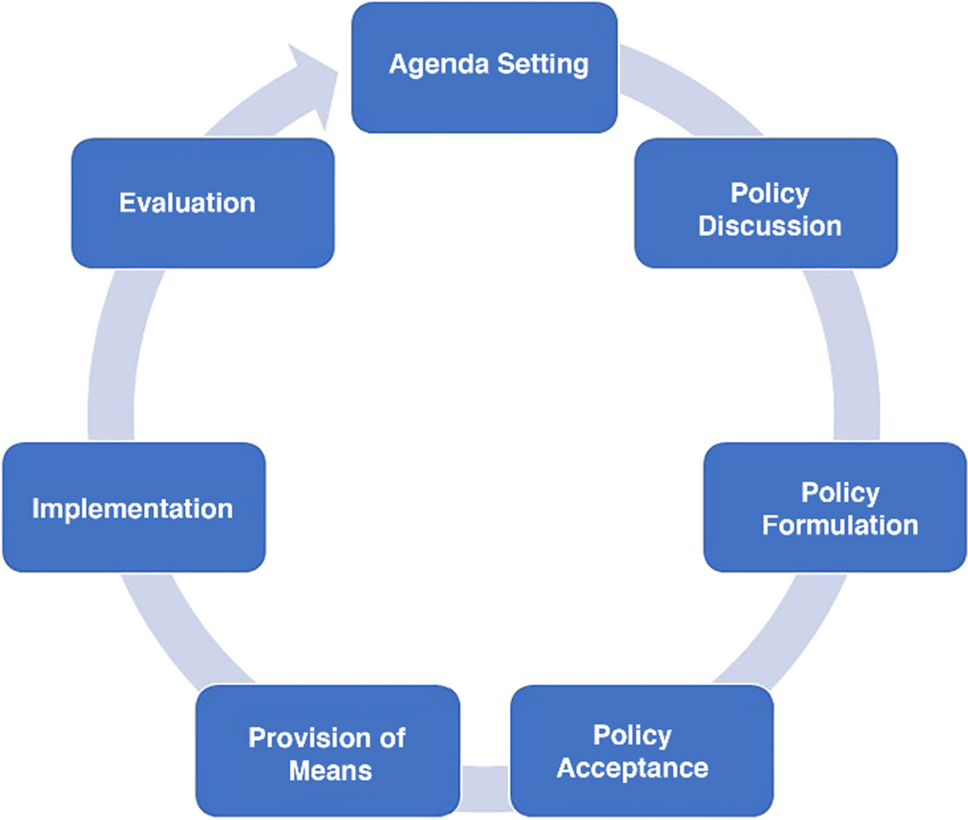
Institutional policies provide the principles, rules and decision frameworks through which organizations translate mandates, strategies and regulatory requirements into consistent action. A well-designed policy can clarify responsibilities, establish standards, guide decisions, manage institutional risks and create a common basis for accountability.
However, effective policy development involves considerably more than drafting a document. Policies developed without sufficient research, stakeholder participation, implementation planning or monitoring arrangements can be technically sound on paper but difficult to apply in practice.
A strong institutional policy should therefore emerge from a structured process that connects evidence, organizational needs, stakeholder perspectives, policy choices, implementation responsibilities and measurable results.
This guide presents a practical approach to institutional policy development from initial research and problem definition through drafting, consultation, approval, implementation, monitoring, evaluation and eventual review.
1. What Is an Institutional Policy?
An institutional policy is an authoritative statement of principles, intentions, rules or expectations that guides organizational decisions and actions within a defined area.
Depending on the institution, policies may address areas such as:
- human resource management;
- information and communication technology;
- data governance and protection;
- cybersecurity;
- finance and procurement;
- research;
- risk management;
- business continuity;
- environmental sustainability;
- customer service;
- communications;
- monitoring and evaluation;
- workplace conduct;
- digital transformation; and
- institutional governance.
The exact nature of a policy depends on the organization's mandate, legal environment, governance structure and operational requirements.
2. Policy, Strategy, Procedure and Guideline Are Not the Same
Organizations sometimes use the terms policy, strategy, procedure and guideline interchangeably. Although they can be closely connected, they perform different functions.
Policy
A policy establishes principles, rules, positions or decision parameters. It explains what the organization intends, requires or permits within a particular area.
Strategy
A strategy establishes direction, priorities and intended results over a defined period. It explains how the organization intends to move toward particular objectives.
Procedure
A procedure describes the steps through which a particular activity or requirement should be carried out.
Guideline
A guideline provides recommended approaches or good practices and may allow greater discretion than a formal policy or procedure.
These instruments should complement one another. A policy may establish the institutional position, a strategy may identify how broader change will be achieved, and procedures may translate policy requirements into operational steps.
3. Why Institutional Policies Matter
Policies can strengthen organizational governance by creating consistency in how recurring decisions and activities are handled.
Effective policies can help an organization:
- translate legal and regulatory requirements into institutional practice;
- clarify organizational expectations;
- define roles and responsibilities;
- standardize decision-making;
- manage operational and institutional risks;
- protect organizational resources;
- improve accountability;
- strengthen service delivery;
- support compliance;
- reduce ambiguity;
- preserve institutional knowledge; and
- provide a basis for monitoring performance.
A policy should therefore solve or manage a genuine institutional need. Developing policies simply because other organizations have them can produce unnecessary documents that employees neither understand nor use.
4. Begin With the Policy Problem
Before drafting begins, the organization should clearly define why the policy is required.
The starting question should not be:
What should we write in the policy?
It should be:
What institutional problem, risk, requirement or opportunity is this policy intended to address?
A policy need may arise from:
- legislation or regulation;
- changes in organizational mandate;
- audit findings;
- operational inconsistencies;
- emerging technology;
- institutional risks;
- stakeholder concerns;
- new strategic priorities;
- organizational restructuring;
- service-delivery challenges;
- industry standards; or
- lessons from implementation experience.
Clear problem definition helps prevent the policy-development process from becoming a drafting exercise without a well-defined purpose.
5. Step 1: Establish the Policy Development Mandate
The organization should first establish who has authorized development or review of the policy and what the assignment is expected to achieve.
The initiation stage can clarify:
- the policy subject;
- the institutional need;
- scope;
- policy ownership;
- responsible department;
- governance arrangements;
- stakeholders;
- expected outputs;
- timeline;
- approval authority; and
- resources required.
Where a policy-development committee or technical working group is established, its responsibilities and decision-making arrangements should also be clear.
6. Step 2: Conduct Policy Research and Document Review
Good policy begins with evidence.
The research stage should establish the institutional, legal, regulatory, strategic and operational context within which the proposed policy will operate.
Depending on the subject, documents reviewed may include:
- relevant legislation;
- regulations;
- government policies;
- sector standards;
- organizational strategic plans;
- existing institutional policies;
- procedures and manuals;
- organizational structures;
- audit reports;
- performance reports;
- risk registers;
- research findings;
- evaluation reports; and
- relevant international or professional frameworks.
The objective is not simply to accumulate references. Research should help identify requirements, policy gaps, inconsistencies, institutional constraints and relevant good practices.
7. Review the Existing Policy Environment
A proposed policy rarely operates independently of other institutional instruments.
The organization should therefore determine:
- which existing policies relate to the subject;
- whether any requirements overlap;
- whether existing documents contradict one another;
- whether some policies are outdated;
- which procedures will need revision;
- which institutional roles are already defined elsewhere; and
- whether the proposed policy creates new governance or reporting requirements.
This policy-mapping exercise can reduce duplication and help create a coherent institutional framework.
8. Step 3: Conduct a Situational and Gap Analysis
Policy development should examine the difference between the current institutional situation and the desired state.
A gap analysis may consider:
- current practices;
- existing institutional controls;
- legal or regulatory requirements;
- organizational capacity;
- roles and responsibilities;
- technology;
- resources;
- skills;
- governance arrangements;
- monitoring systems; and
- implementation challenges.
The analysis should distinguish between problems that genuinely require policy intervention and those better addressed through procedures, management decisions, training, technology or resource allocation.
9. Step 4: Identify and Analyse Stakeholders
Policies affect different stakeholders in different ways. Understanding these relationships is essential before policy positions are finalized.
Stakeholders may include:
- governing bodies;
- management;
- employees;
- customers or service users;
- regulators;
- government agencies;
- professional bodies;
- partners;
- suppliers;
- communities; and
- other affected institutions.
Stakeholder analysis can assess each group's interests, influence, responsibilities, information needs and potential concerns.
This helps determine who should be consulted, who should participate in drafting and who will eventually be responsible for implementation.
10. Step 5: Engage Stakeholders
Consultation improves both the evidence base and practical implementability of institutional policy.
Depending on the policy, engagement methods may include:
- key informant interviews;
- staff surveys;
- focus group discussions;
- technical workshops;
- management consultations;
- stakeholder forums;
- written submissions;
- validation workshops; and
- specialist review.
Consultation should have a defined purpose. Asking stakeholders broad questions without linking the responses to policy decisions can generate large volumes of information with limited analytical value.
Instead, engagement should explore specific problems, implementation constraints, policy alternatives, responsibilities and likely effects.
11. Step 6: Define Policy Objectives
Once the problem and evidence are understood, the policy should establish what it is intended to achieve.
Policy objectives should be:
- clearly related to the identified problem;
- consistent with the organization's mandate;
- aligned with applicable requirements;
- realistic within institutional capacity; and
- sufficiently clear to support implementation and monitoring.
Broad aspirations should be translated into specific policy objectives wherever possible.
For example, rather than simply stating that an organization will “improve information management,” the policy may establish objectives relating to information classification, ownership, access, quality, security, retention and accountability.
12. Step 7: Develop and Assess Policy Options
Policy development should not automatically assume that the first proposed intervention is the best solution.
Where important choices exist, alternative policy options should be considered.
Options may be assessed according to:
- effectiveness;
- cost;
- feasibility;
- legal compatibility;
- institutional capacity;
- stakeholder impact;
- implementation complexity;
- risk;
- equity;
- sustainability; and
- alignment with organizational strategy.
This introduces analytical discipline into policy formulation and makes the rationale for major policy choices more transparent.
13. Evidence-Based Policy Development
Evidence can come from multiple sources.
Depending on the policy question, relevant evidence may include:
- administrative data;
- surveys;
- financial information;
- operational statistics;
- stakeholder feedback;
- research studies;
- audit findings;
- risk assessments;
- comparative institutional practice;
- monitoring information; and
- professional or technical standards.
Evidence should inform judgement rather than substitute for it. Policy decisions may also require consideration of institutional values, resources, legal responsibilities, stakeholder interests and implementation feasibility.
GSC's article on data analytics and evidence-based decision-making examines how organizations can move from fragmented data toward structured evidence for management and institutional decisions.
14. Step 8: Establish the Policy Structure
A clear structure makes institutional policy easier to understand and implement.
Although requirements differ by organization and policy subject, a policy may contain:
- title;
- policy statement;
- background or rationale;
- purpose;
- objectives;
- scope;
- legal and institutional framework;
- definitions;
- guiding principles;
- policy provisions;
- roles and responsibilities;
- implementation arrangements;
- resource considerations;
- monitoring and reporting;
- compliance arrangements;
- review provisions; and
- approval and effective date.
The structure should reflect the complexity of the subject. Not every organizational policy requires a lengthy document.
15. Step 9: Draft Clear Policy Provisions
Policy language should be sufficiently precise to guide action without becoming unnecessarily complicated.
Effective drafting should aim for:
- clarity;
- consistency;
- logical organization;
- appropriate terminology;
- clear responsibilities;
- minimal ambiguity;
- alignment with related institutional instruments; and
- practical implementability.
Where terms such as shall, must, should and may are used, the organization should understand that they can communicate different levels of obligation or discretion.
Policies should also avoid unnecessarily technical language where the intended users include non-specialists.
16. Define Roles and Accountability
A policy that establishes requirements without identifying responsibility can be difficult to implement.
The document should make clear, where relevant:
- who owns the policy;
- who provides oversight;
- who implements specific provisions;
- who provides technical support;
- who monitors compliance;
- who receives reports;
- who manages exceptions; and
- who initiates review.
Responsibilities should correspond with the organization's actual governance and management structure.
17. Align Policy With Institutional Strategy
Policies should support rather than operate separately from organizational strategy.
For example, if an organization's strategic plan prioritizes digital service delivery, related policies may need to address data governance, cybersecurity, ICT use, information management and digital accessibility.
If the strategy prioritizes institutional resilience, business continuity, risk management and emergency-response policies may require alignment.
This relationship creates a useful hierarchy:
Mandate → Strategy → Policy → Procedures → Operational Practice → Performance Evidence
GSC's strategic planning guide provides a broader framework for translating institutional mandates and evidence into strategic objectives, implementation arrangements and performance measures.
18. Integrate Risk Considerations
Many institutional policies exist partly to manage risk.
Policy development should therefore consider what could prevent the policy from achieving its objectives and what risks the policy itself is intended to control.
Relevant risks may include:
- operational risk;
- financial risk;
- legal and compliance risk;
- reputational risk;
- technology risk;
- information-security risk;
- data-protection risk;
- human-resource risk;
- implementation risk; and
- third-party risk.
Risk assessment can help determine where stronger controls, approvals, safeguards or monitoring mechanisms are required.
19. Consider Implementation While Drafting
One of the most common policy-development weaknesses is postponing implementation planning until after the document has been approved.
Policy writers should ask during development:
- What will change when this policy takes effect?
- Which departments will be affected?
- What procedures must be developed or revised?
- What systems will need modification?
- What resources are required?
- What competencies are needed?
- What training will be required?
- What communication is necessary?
- How will compliance be monitored?
- What data will demonstrate whether implementation is working?
These questions expose practical problems before approval rather than after implementation begins.
20. Step 10: Validate the Draft Policy
Validation allows stakeholders and decision-makers to examine whether the draft accurately reflects the evidence, institutional context and agreed policy direction.
A validation process may test:
- technical accuracy;
- legal consistency;
- clarity;
- completeness;
- feasibility;
- resource implications;
- roles and responsibilities;
- stakeholder concerns;
- implementation arrangements; and
- monitoring provisions.
Comments should be documented and considered systematically. Validation does not necessarily mean accepting every proposed amendment; rather, significant comments should be assessed against evidence, policy objectives and institutional requirements.
21. Step 11: Obtain Formal Approval
An institutional policy should be approved by the authority designated within the organization's governance framework.
Depending on the institution and subject, approval may rest with:
- the board or governing body;
- executive management;
- a council or committee;
- the chief executive;
- a government authority; or
- another formally designated office.
The approved version should clearly indicate the effective date, approving authority, document owner and review cycle.
Version control is particularly important where policies are revised periodically.
22. Step 12: Develop an Implementation Plan
Approval does not implement a policy.
A practical implementation plan should translate the policy into specific actions.
The plan may identify:
- implementation activity;
- responsible unit;
- timeline;
- required resources;
- supporting procedure or tool;
- communication requirement;
- training requirement;
- performance indicator; and
- reporting responsibility.
For major institutional policies, implementation can be phased rather than attempted simultaneously across every area.
23. Communicate the Policy
Employees cannot implement requirements they do not know or understand.
Policy communication may include:
- staff circulars;
- management briefings;
- orientation sessions;
- training;
- FAQs;
- intranet publication;
- departmental meetings;
- implementation manuals; and
- stakeholder communication.
The communication approach should explain not merely that a policy exists but what has changed, who is affected and what action is required.
24. Build Institutional Capacity for Implementation
Some policy requirements depend on competencies that the organization may not currently possess.
Implementation may therefore require:
- staff training;
- specialist recruitment;
- technical assistance;
- new systems;
- revised job responsibilities;
- additional resources; or
- institutional restructuring.
Where substantial capability gaps exist, they should be recognized during policy development rather than assuming that policy approval automatically creates implementation capacity.
GSC's guide on organizational capacity needs assessment explains how institutions can identify competency and capacity gaps and translate them into structured development interventions.
25. Step 13: Monitor Policy Implementation
Organizations should establish mechanisms for determining whether the policy is actually being implemented.
Monitoring may examine:
- completion of implementation activities;
- compliance with policy requirements;
- adoption across departments;
- staff awareness;
- service-delivery changes;
- incidents or exceptions;
- implementation costs;
- stakeholder feedback; and
- performance indicators.
Monitoring should focus not only on whether activities occurred but also on whether the policy is producing the intended institutional changes.
26. Develop Meaningful Policy Indicators
Indicators should reflect the objectives of the policy.
For example, depending on the subject, indicators might measure:
- compliance rates;
- processing times;
- number of incidents;
- service accessibility;
- staff competency;
- stakeholder satisfaction;
- data quality;
- risk reduction;
- system availability;
- implementation progress; or
- achievement of defined policy outcomes.
Where possible, baseline values should be established so that change can be measured over time.
27. Policy Monitoring, Evaluation and Learning
Monitoring tells management what is happening during implementation. Evaluation can examine whether the policy remains relevant, effective, efficient and capable of producing its intended results.
Learning should then influence management decisions and future policy revisions.
This creates a cycle:
Policy → Implementation → Evidence → Review → Learning → Adaptation
GSC's Monitoring, Evaluation and Learning guide provides a more detailed framework for indicators, baselines, targets, data collection, reporting, evaluation and learning loops.
28. Step 14: Review and Update the Policy
Institutional policies should not remain unchanged indefinitely.
Review may be triggered by:
- the scheduled review cycle;
- legislative changes;
- regulatory changes;
- organizational restructuring;
- technology change;
- audit findings;
- implementation problems;
- significant incidents;
- evaluation findings; or
- changes in organizational strategy.
The review should determine whether the policy remains necessary, appropriate, effective and aligned with the organization's operating environment.
29. Using Data and Analytics in Policy Development
Policy development can increasingly benefit from organizational data and analytical methods.
For example, organizations may use:
- survey analysis;
- operational performance data;
- financial analysis;
- trend analysis;
- risk data;
- stakeholder sentiment;
- service-demand patterns;
- compliance statistics;
- monitoring dashboards; and
- evaluation findings.
These sources can strengthen problem definition, policy-option assessment and subsequent evaluation.
However, quantitative evidence should be interpreted alongside qualitative evidence, institutional context, stakeholder experience and professional judgement.
30. A Multidimensional Perspective on Policy Decisions
Institutional policy problems are often multidimensional.
A policy option may perform well according to one criterion while creating challenges in another. For example, a highly automated process may improve efficiency while introducing new cybersecurity, privacy, affordability or workforce-capacity considerations.
Policy analysis should therefore consider multiple dimensions of evidence rather than relying on a single indicator.
This principle is consistent with GSC's Multidimensional Data-Driven Approach (MDDA), which emphasizes the integration of multiple dimensions of evidence to support more informed decisions.
MDDA should not be interpreted as replacing established policy-analysis methodologies. Its relevance is the broader principle of examining complex institutional decisions through multiple interacting dimensions rather than isolated variables.
31. Common Policy Development Mistakes
Mistake 1: Drafting Before Research
Beginning with wording rather than evidence can result in a policy that does not address the actual institutional problem.
Mistake 2: Copying Another Organization's Policy
External examples can provide useful reference points, but institutional mandates, structures, risks and capacities differ.
Mistake 3: Limited Stakeholder Engagement
Policies developed without input from the people who implement or experience them can overlook practical constraints.
Mistake 4: Confusing Policy With Procedure
Excessive operational detail can make policies difficult to maintain, while insufficient implementation guidance can make them difficult to apply.
Mistake 5: Unclear Responsibilities
Requirements without ownership can lead to implementation gaps.
Mistake 6: Ignoring Resource Requirements
A policy may be technically desirable but impossible to implement without adequate people, systems, financing or infrastructure.
Mistake 7: Weak Communication
Publishing a policy does not ensure that employees understand it.
Mistake 8: No Monitoring Framework
Without indicators and reporting arrangements, management may not know whether the policy is being implemented effectively.
Mistake 9: Treating Approval as Completion
Formal approval is the beginning of implementation, not the end of policy development.
Mistake 10: Failing to Review
Policies can become outdated as legislation, technology, strategy and organizational circumstances change.
32. A Practical Institutional Policy Development Roadmap
A complete policy-development process can therefore be organized into the following stages:
- Identify the policy need. Define the problem, requirement, risk or opportunity.
- Establish the mandate. Confirm scope, ownership, governance and approval authority.
- Conduct research. Review legal, regulatory, strategic, institutional and technical evidence.
- Map existing policies. Identify related instruments, overlaps and gaps.
- Assess the current situation. Determine existing practices, capabilities and constraints.
- Analyse stakeholders. Identify affected parties, responsibilities and interests.
- Conduct consultations. Gather structured evidence and stakeholder perspectives.
- Define objectives. Establish what the policy is intended to achieve.
- Develop policy options. Identify credible alternative approaches.
- Assess options. Compare feasibility, cost, impact, risk and institutional implications.
- Determine policy direction. Select the preferred approach.
- Draft the policy. Translate the chosen direction into clear provisions.
- Define accountability. Assign governance and implementation responsibilities.
- Validate the draft. Test technical accuracy, clarity and implementability.
- Obtain approval. Complete the organization's formal governance process.
- Develop the implementation plan. Define actions, owners, resources and timelines.
- Communicate and build capacity. Prepare stakeholders for implementation.
- Implement. Operationalize policy provisions through systems, procedures and management action.
- Monitor and evaluate. Measure implementation and results.
- Learn and review. Use evidence to update the policy when required.
33. From Policy Document to Institutional Practice
The true measure of policy quality is not the appearance or length of the final document. It is whether the policy can guide decisions and influence organizational practice.
Before approval, organizations should therefore ask:
- Is the policy addressing a clearly defined institutional need?
- Is it supported by credible evidence?
- Is it consistent with applicable requirements?
- Does it align with organizational strategy?
- Were relevant stakeholders engaged?
- Are its provisions clear?
- Are responsibilities defined?
- Does the organization have the capacity to implement it?
- Are resource implications understood?
- Can implementation be monitored?
- Are review arrangements established?
If these questions cannot be answered satisfactorily, further work may be required before the policy is finalized.
Conclusion
Effective institutional policy development is a structured process connecting research, evidence, stakeholder engagement, policy analysis, drafting, governance, implementation and learning.
The strongest policies begin with a clearly defined institutional problem and an understanding of the legal, strategic and operational environment. They assess alternative responses, establish clear responsibilities and consider implementation requirements before approval.
Most importantly, policy development should not end when the document is signed. Communication, implementation planning, capacity development, monitoring, evaluation and periodic review determine whether policy intentions are translated into institutional practice.
Organizations that approach policy development as an evidence-based management process rather than simply a documentation exercise are better positioned to create policies that remain relevant, implementable and responsive to changing institutional needs.
Global Signature Consultancy supports organizations with policy research, institutional assessments, stakeholder consultation, policy analysis, policy development and review, implementation frameworks, strategic planning, monitoring and evaluation, data analytics and institutional capacity development. This integrated approach helps connect policy design with the organizational systems required for effective implementation.
Related Projects
Related Expertise
Explore GSC services connected to this Insight and complementary expertise that can support wider institutional outcomes.

Policy Development & Institutional Frameworks
Supporting organizations to develop, review and strengthen institutional policies, governance frameworks, procedures, manuals, SOPs and implementation arrangements that improve consistency, accountability and organizational effectiveness.
Explore Service →
Strategic Planning
Strategic planning establishes institutional direction and priorities, while policies and governance frameworks can translate strategic requirements into formal organizational rules, responsibilities and implementation arrangements.
Explore Service →
Business Planning & Organizational Development
Organizational-development assignments may identify structural, governance, role or process requirements that need to be formalized through institutional policies, procedures and supporting frameworks.
Explore Service →
Research & Surveys
Research, stakeholder consultation and evidence review can provide an evidence base for policy development, policy review and the assessment of institutional needs and implementation issues.
Explore Service →
Digital Transformation & ICT Consulting
Specialist ICT policy, ICT governance, technology governance and digital-governance requirements can connect institutional policy development with GSC’s Digital Transformation & ICT Consulting expertise.
Explore Service →
Business Continuity Planning
Institutional policy architecture may include business continuity policy requirements, while specialist BIA, RTO/RPO, continuity strategies, BCP development, testing and ISO 22301-aligned arrangements are addressed through Business Continuity Planning.
Explore Service →