
Software Development & Information Systems
Designing and developing custom software, management information systems, web applications, databases, APIs, system integrations, e-commerce platforms and digital solutions tailored to organizational requirements.
Service Overview
Global Signature Consultancy provides custom software development and information systems services to organizations seeking practical digital solutions for managing operations, information, transactions, workflows and service delivery.
We support public institutions, private companies, NGOs, universities, professional bodies and other organizations with the analysis, design, development and implementation of management information systems (MIS), web applications, databases, portals, workflow systems, e-commerce platforms, APIs, payment integrations and other custom software solutions.
Our approach begins with understanding the business problem, users, processes, information requirements, functional requirements, existing systems and operating environment. These requirements are translated into an appropriate system architecture, database design, user interfaces, application modules, workflows, integrations, security requirements and implementation plan.
GSC emphasizes practical and maintainable systems that respond to genuine organizational requirements. Development is supported by requirements validation, iterative review, testing, user acceptance, deployment, documentation and knowledge transfer so that stakeholders can evaluate the solution throughout the development lifecycle.
Where an organization first needs to determine its wider digital direction, technology governance, ICT strategy or transformation roadmap, the assignment can connect with GSC’s Digital Transformation & ICT Consulting service. Where specialized predictive analytics, machine learning or AI models are required, these can connect with Data Analytics & Artificial Intelligence.
The objective is to translate organizational and user requirements into reliable information systems that improve processes, information management, service delivery, transactions, reporting and operational efficiency.
Custom Software Development
Organizations sometimes require software that cannot be adequately addressed by standard off-the-shelf applications. Custom software development enables the system to be designed around specific users, processes, information requirements, workflows and organizational objectives.
Global Signature Consultancy supports clients to translate operational requirements into purpose-built software solutions. Development begins with requirements analysis and progresses through system design, database design, interface development, application development, testing, user acceptance and deployment.
Depending on the requirement, a custom solution may support internal operations, customer or stakeholder services, workflow automation, information management, transactions, reporting or integration with other digital platforms.
The objective is not to develop software merely because technology is available, but to build a solution that addresses a defined organizational problem and can be practically implemented, used and maintained.
- Business and user requirements
- Custom application development
- Application architecture
- Workflow automation
- User roles and permissions
- Database-backed applications
- Testing and quality assurance
- Deployment and support
Management Information Systems (MIS)
Management Information Systems help organizations capture, manage, process and retrieve operational information through a structured digital platform. An effective MIS should reflect the organization’s actual workflows, users, data requirements, controls and reporting needs.
GSC supports the design and development of management information systems for organizations seeking to replace fragmented spreadsheets, paper-based records, disconnected tools or inefficient manual processes.
A system may include modules for data capture, records management, workflow processing, approvals, user administration, operational reporting, document management, notifications and other functions appropriate to the organization.
Where advanced dashboards, predictive analytics or machine-learning models are required beyond the system’s operational reporting functions, those requirements can connect with GSC’s Data Analytics & Artificial Intelligence service.
- MIS requirements analysis
- Functional modules
- Data capture and records management
- Workflow and approval processes
- User and role management
- Operational reporting
- Notifications and system controls
- MIS implementation and support
Web Applications, Portals and Workflow Systems
Web applications enable users to access operational systems and digital services through a web browser while supporting functionality that goes beyond a conventional informational website.
Global Signature Consultancy develops web-based applications, institutional portals and workflow systems that can support functions such as applications, registrations, approvals, service requests, records, transactions, customer or stakeholder accounts and internal administrative processes.
Development considers user roles, workflows, data requirements, business rules, interfaces, security, responsiveness and integration with other systems where required.
A transactional portal or operational web application belongs within Software Development & Information Systems. Ongoing management of a primarily public-facing corporate website, including routine content updates, technical maintenance, performance and search visibility, is addressed through GSC’s Website Management & Digital Presence service.
- Web application development
- Institutional portals
- Customer and stakeholder portals
- Workflow systems
- Online forms and applications
- Approval and transaction workflows
- Responsive user interfaces
- Administrative back-office functions
Database Design and Information Management
Reliable software depends on a well-structured approach to storing, organizing, retrieving and protecting information. Database design determines how important organizational records and relationships are represented within the system.
GSC supports database design as an integral part of custom software and information-system development. This includes identifying data entities, attributes, relationships, validation requirements, access requirements and the ways information will be created, updated, retrieved and reported.
Where an existing system or manual process is being replaced, implementation may also require data preparation, migration planning, validation and reconciliation to reduce the risk of incomplete or inconsistent records.
Database design is aligned with the application’s functional requirements, user permissions, reporting requirements, security controls and future integration needs.
- Conceptual and logical data modelling
- Database schema design
- Data relationships and validation
- Data access requirements
- Data migration planning
- Data validation and reconciliation
- Database security considerations
- Reporting and integration readiness
API Development and Systems Integration
Organizations increasingly rely on multiple digital systems that need to exchange information or coordinate transactions. Systems integration can reduce duplicate data entry, fragmented workflows and manual transfer of information between platforms.
Global Signature Consultancy supports API development and integration requirements within custom software projects. Depending on the systems involved, integration may enable applications to exchange data, trigger transactions, synchronize records or connect with approved third-party services.
Integration requirements are assessed in relation to available interfaces, authentication methods, data formats, business rules, error handling, security requirements and the capabilities of the external platform.
The feasibility and scope of an integration depend on the technical interfaces, permissions and documentation made available by the systems or service providers involved.
- API requirements analysis
- API development
- Third-party service integration
- Data exchange and synchronization
- Authentication and authorization
- Integration workflows
- Error handling and transaction logging
- Integration testing
M-Pesa, Payment and E-Commerce System Integration
Digital payment and e-commerce functionality can enable organizations and businesses to provide more efficient online transactions, ordering and service-delivery processes.
Global Signature Consultancy supports the development of software solutions that can integrate approved payment services such as M-Pesa where this functionality is required and technically available. Depending on the project, payment integration may support checkout, order processing, payment confirmation, transaction recording and related administrative workflows.
E-commerce systems may include product catalogues, product variants, inventory availability, customer accounts, shopping carts, checkout, order management, payment integration, delivery or collection options and administrative reporting according to the agreed requirements.
Payment and e-commerce functionality is designed as part of the wider information system, with attention to transaction status, validation, records, user experience, access controls and operational administration.
- M-Pesa integration
- Payment workflow integration
- Online checkout
- Transaction recording
- E-commerce systems
- Product and inventory integration
- Order management
- Delivery or collection workflow integration
Software Testing, Deployment and Maintenance
Software development is not complete when coding ends. A system must be tested, validated, deployed and supported so that users can apply it reliably within the intended operating environment.
GSC incorporates appropriate functional testing, integration testing, usability review, security checks and user acceptance into the development lifecycle. Identified issues are reviewed and resolved before or during agreed deployment stages according to their significance and the project plan.
Deployment includes preparing the agreed production environment, configuring the application, establishing required system settings and supporting the transition from development to operational use. Documentation and administrator or user knowledge transfer are provided where required.
Post-deployment support may include corrective maintenance, technical support, updates and agreed enhancements. This concerns the developed software application or information system; ongoing management of a public-facing corporate website is handled separately through Website Management & Digital Presence.
- Functional testing
- Integration testing
- Usability review
- User Acceptance Testing (UAT)
- Production deployment
- Technical and user documentation
- Post-deployment support
- Corrective maintenance and enhancements
Our Methodology
- Clarify the business problem, system objectives, scope and expected outcomes
- Identify users, stakeholders, business processes and information requirements
- Review existing systems, data sources, workflows, infrastructure and integration requirements
- Gather and document functional and non-functional requirements
- Develop the system requirements specification and obtain stakeholder validation
- Design the system architecture, application modules, database structure, workflows and interfaces
- Develop wireframes, user-interface designs or prototypes where appropriate
- Define security, access-control, audit, backup and data-protection requirements
- Develop the software application and database components
- Develop required APIs, payment connections and third-party system integrations
- Conduct functional, integration, security, performance and usability testing as appropriate
- Facilitate user review and User Acceptance Testing (UAT)
- Resolve validated issues and finalize the production-ready system
- Deploy and configure the system in the agreed production environment
- Prepare technical, administrative and user documentation
- Conduct administrator or user knowledge transfer where required
- Provide agreed post-deployment support, corrective maintenance and system improvement
Benefits to Your Organization
- Software designed around specific organizational and user requirements
- Improved automation of operational and administrative processes
- Reduced dependence on fragmented manual and paper-based processes
- More centralized and structured management of organizational information
- Improved accuracy, consistency and accessibility of operational data
- Faster processing of transactions, requests and workflows
- Better coordination between users, departments and system functions
- Improved visibility of operational information and system activity
- Integration of previously disconnected systems and services where required
- Improved customer, staff or stakeholder access to digital services
- Stronger access control, accountability and auditability
- Ability to support online transactions and digital payments where required
- More scalable foundations for future system enhancement and integration
- Improved operational efficiency and service delivery
- Better availability of structured data for reporting and analysis
Typical Deliverables
- Software Development Inception Report and Work Plan
- Business and User Requirements Assessment
- System Requirements Specification
- Business Process and Workflow Models
- System Architecture
- Database Design and Data Model
- User Interface Wireframes or Prototypes
- Custom Software Application
- Management Information System where applicable
- Web Application or Digital Portal where applicable
- Database and Information Management Components
- System Integration Components where applicable
- M-Pesa Payment Integration where applicable
- E-Commerce Functionality where applicable
- Testing and Quality Assurance Report
- User Acceptance Testing Report
- System Deployment
- Technical Documentation
- User Manual
- Administrator Manual
- Knowledge Transfer Materials where required
- Post-Deployment Support and Maintenance Plan
Related Expertise
Explore complementary GSC services that can strengthen this assignment and support wider institutional outcomes.



Related Consultancy Engagements
Explore selected projects connected to this service area.
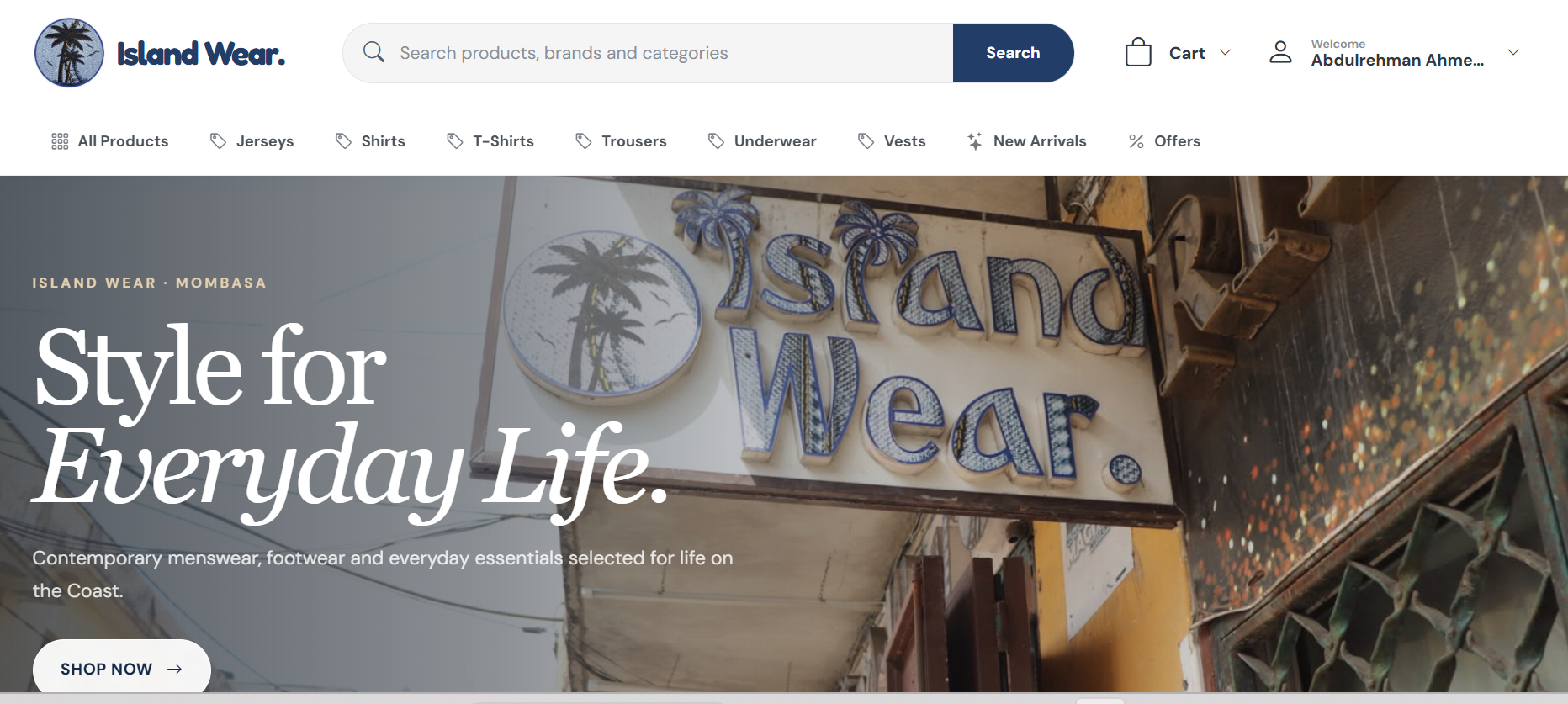
Island Wear E-Commerce & Inventory Management System
Global Signature Consultancy designed an integrated e-commerce and inventory management system for Island Wear to support the company's...

Global Signature Consultancy Corporate Website & Digital Platform
Global Signature Consultancy designed and developed its corporate website and digital platform as an integrated environment for present...
Frequently Asked Questions
Answers to common questions about Software Development & Information Systems.
What does a custom software development company do?
What is the difference between custom software and off-the-shelf software?
What is an MIS?
What is the difference between a website and a web application?
What is systems integration?
Can a custom system integrate with M-Pesa?
What happens after custom software is developed?
Ready to Develop a Software or Information System?
Discuss your custom software, MIS, web application, database, systems integration, M-Pesa, e-commerce or other information-system requirements with Global Signature Consultancy.
Discuss Your Software or Information System Requirements