
How Data Analytics Can Improve Evidence-Based Decision-Making in Organizations
Explore how organizations can use data analytics to transform fragmented information into actionable evidence, improve strategic and operational decisions, identify patterns and risks, monitor performance and strengthen evidence-based decision-making.

Organizations generate large volumes of information through financial systems, operational processes, customer interactions, surveys, programme monitoring, human-resource systems, digital platforms, research activities and external data sources.
Yet the existence of data does not automatically lead to better decisions.
Many organizations still make important strategic and operational decisions using fragmented reports, isolated spreadsheets, historical assumptions or information that is difficult to combine across departments. In other cases, organizations invest in sophisticated information systems but use only a small proportion of the evidence those systems can provide.
Data analytics helps bridge the gap between information and decision-making. It enables organizations to organize, examine, interpret and communicate data so that decision-makers can better understand performance, identify patterns, investigate problems, anticipate developments and evaluate possible actions.
This article explains how data analytics can strengthen evidence-based decision-making, the different levels of analytics organizations can use, how analytics connects with artificial intelligence and decision intelligence, and the organizational capabilities required to translate analytical findings into practical action.
What Is Data Analytics?
Data analytics is the systematic examination of data to identify patterns, relationships, trends and insights that can support understanding and decision-making.
It can involve relatively simple techniques such as descriptive statistics and dashboards or more advanced approaches involving forecasting, machine learning, optimization and artificial intelligence.
The appropriate level of sophistication depends on the decision problem.
An organization does not necessarily need artificial intelligence to become data-driven. In many situations, better data quality, carefully selected indicators, appropriate statistical analysis and well-designed dashboards can create substantial decision value.
The objective should therefore be to apply the analytical method that is appropriate to the organizational question rather than using technology for its own sake.
What Is Evidence-Based Decision-Making?
Evidence-based decision-making involves systematically using relevant and credible information when evaluating problems, selecting actions, allocating resources and monitoring results.
Evidence can come from multiple sources, including:
- organizational performance indicators;
- financial information;
- operational records;
- customer or beneficiary data;
- research and surveys;
- monitoring and evaluation systems;
- employee and workforce information;
- market and sector data;
- geographic information;
- stakeholder consultations;
- historical trends; and
- external environmental information.
Evidence-based decision-making does not mean that data makes decisions automatically. Management judgment, professional expertise, organizational context, stakeholder considerations and ethical responsibilities remain important.
Analytics strengthens those decisions by providing a more systematic understanding of the available evidence.
From Data to Decisions
A useful way to understand organizational analytics is as a progression:
DATA → INFORMATION → ANALYSIS → INSIGHT → DECISION → ACTION → RESULTS → LEARNING
Data consists of recorded facts, observations and measurements.
Information emerges when data is organized and given context.
Analysis examines the information for patterns, relationships, differences and trends.
Insight represents an interpretation that is relevant to an organizational problem or opportunity.
Decision involves selecting an appropriate course of action.
Action translates the decision into implementation.
Results provide evidence about what happened following implementation.
Learning allows the organization to refine future decisions.
The value of analytics therefore depends not only on producing reports but on connecting analysis with organizational action and learning.
Four Levels of Organizational Data Analytics
Organizations can use analytics at different levels depending on the questions they need to answer.
1. Descriptive Analytics: What Happened?
Descriptive analytics summarizes historical and current information.
Examples include:
- monthly revenue;
- service-delivery volumes;
- customer numbers;
- programme beneficiaries reached;
- employee turnover;
- project expenditure;
- website traffic;
- inventory levels; and
- performance against targets.
Dashboards, summary statistics, charts and management reports commonly support descriptive analytics.
This level helps management understand the current situation but may not explain why it occurred.
2. Diagnostic Analytics: Why Did It Happen?
Diagnostic analytics investigates factors that may explain observed performance or events.
For example, an organization experiencing declining service performance might examine:
- staffing levels;
- workload;
- process delays;
- system availability;
- customer demand;
- resource allocation;
- geographic differences; and
- changes over time.
Techniques such as segmentation, correlation analysis, comparative analysis, drill-down analysis and statistical modelling can help identify important relationships.
Diagnostic analytics should be interpreted carefully because an observed association does not automatically establish causation.
3. Predictive Analytics: What Is Likely to Happen?
Predictive analytics uses historical and current information to estimate future outcomes or classify observations.
Potential organizational applications include:
- demand forecasting;
- revenue forecasting;
- customer churn prediction;
- programme risk identification;
- workforce forecasting;
- equipment-failure prediction;
- fraud or anomaly detection;
- beneficiary or customer segmentation; and
- operational risk monitoring.
Statistical modelling and machine-learning techniques can support predictive analytics when sufficient and appropriate data is available.
Predictions should be treated as estimates rather than certainties. Their usefulness depends on data quality, model assumptions, validation and the environment in which the model is applied.
4. Prescriptive Analytics: What Should We Consider Doing?
Prescriptive analytics goes beyond prediction by helping decision-makers evaluate possible actions.
It may involve:
- optimization;
- scenario analysis;
- simulation;
- resource-allocation models;
- decision rules;
- cost-benefit analysis; and
- comparison of alternative strategies.
Prescriptive analytics does not eliminate management responsibility. Instead, it provides structured evidence that can support the evaluation of available options.
How Data Analytics Improves Organizational Decision-Making
The practical value of analytics becomes clearer when it is connected to specific management decisions.
1. Improving Understanding of Organizational Performance
Organizations often monitor many performance indicators independently.
Analytics can integrate these measures to reveal relationships between operational activity, financial performance, service quality, staffing, customer experience and strategic outcomes.
This can help management distinguish isolated performance fluctuations from more systematic organizational problems.
2. Identifying Trends Earlier
Historical reports often explain performance after significant changes have already occurred.
Trend analysis can help organizations identify emerging changes earlier.
Examples may include:
- declining customer engagement;
- increasing operating costs;
- changes in service demand;
- emerging programme implementation gaps;
- changes in workforce requirements; or
- increasing operational incidents.
Earlier visibility can give decision-makers more time to investigate and respond.
3. Supporting Better Resource Allocation
Organizations operate with limited financial, human and operational resources.
Analytics can help determine where resources may generate the greatest organizational value by comparing demand, performance, need, cost and expected outcomes.
This can support decisions about staffing, programme funding, infrastructure, inventory, service locations and strategic investments.
4. Understanding Customers and Beneficiaries
Organizations rarely serve completely homogeneous populations.
Customer, beneficiary or stakeholder data can be analysed to identify meaningful segments based on characteristics, behaviour, needs or outcomes.
This can support more targeted services, communications, interventions and resource allocation.
5. Strengthening Risk Management
Risk information is often distributed across operational systems, incident records, financial information, audit findings and management reports.
Analytics can bring these sources together to identify patterns, concentrations of risk and emerging warning indicators.
Where appropriate, predictive techniques can also help estimate the likelihood of particular events or identify observations that differ significantly from normal patterns.
6. Improving Monitoring and Evaluation
Monitoring systems generate valuable information about programme implementation and organizational performance.
Analytics can help move monitoring beyond reporting individual indicators toward understanding relationships between activities, outputs, outcomes, locations, populations and contextual factors.
Dashboards and analytical models can also help management identify areas requiring further investigation.
7. Strengthening Strategic Planning
Strategic planning should be informed by evidence about organizational performance and the external environment.
Data analytics can strengthen strategic planning through:
- historical performance analysis;
- stakeholder analysis;
- financial trend analysis;
- customer or beneficiary analysis;
- market and sector analysis;
- risk analysis;
- scenario analysis; and
- monitoring of strategic indicators.
This can help organizations move from strategy based primarily on assumptions toward strategy informed by systematically analysed evidence.
Integrating Multiple Sources of Evidence
Many organizational problems cannot be understood adequately through a single dataset.
For example, declining organizational performance may involve interactions between workload, staffing, financial resources, processes, technology, customer demand and external conditions.
Analysing these dimensions independently may provide only a partial explanation.
A multidimensional approach can combine relevant evidence to create a more comprehensive understanding of the decision problem.
This principle is central to MDDA – the Multidimensional Data-Driven Approach, a research-driven framework developed from doctoral research by Dr. Abdulrahman A. M. Almutwafy and being translated into broader organizational decision-intelligence applications.
Explore MDDA and its Multidimensional Decision-Intelligence Framework →
MDDA emphasizes the progression from defining the decision problem and integrating multiple data sources through analysis, optimization and validation to action and continuous monitoring.
Data Analytics and Artificial Intelligence
Artificial intelligence and machine learning have expanded the analytical tools available to organizations.
Machine-learning methods can help identify complex patterns, classify observations, forecast outcomes and detect anomalies where traditional approaches may be insufficient.
However, artificial intelligence should not be treated as a replacement for data strategy or analytical discipline.
An organization with poor data quality, unclear objectives and weak governance will not necessarily improve its decisions simply by introducing AI.
A stronger progression is:
DECISION PROBLEM → DATA → ANALYTICS → APPROPRIATE AI/ML WHERE NEEDED → VALIDATION → DECISION SUPPORT
This keeps technology aligned with organizational requirements.
From Business Intelligence to Decision Intelligence
Business intelligence traditionally helps organizations organize, visualize and monitor information through reports and dashboards.
Decision intelligence extends this perspective by connecting data, analytics, predictive models, organizational knowledge and decision processes.
The distinction is useful because dashboards alone do not make an organization data-driven.
A management dashboard may show that performance has declined. Decision intelligence asks additional questions:
- Why has performance changed?
- Which factors appear most important?
- What may happen if the trend continues?
- Which groups or locations are most affected?
- What intervention options exist?
- What evidence supports each option?
- What uncertainty remains?
- What should be monitored after action?
The objective is therefore to connect analytical evidence with the actual process through which organizations make and evaluate decisions.
Data Visualization and Management Dashboards
Analytical results need to be communicated effectively.
Decision-makers may not need to examine every underlying statistical calculation. They need information presented in a way that helps them understand what matters.
Effective dashboards can provide:
- key performance indicators;
- trends over time;
- comparisons between locations or units;
- performance against targets;
- risk indicators;
- exceptions requiring attention;
- forecast information; and
- drill-down capabilities.
Visualization should clarify evidence rather than decorate it. Excessive charts, poorly selected indicators or visually complex dashboards can make decision-making more difficult rather than easier.
The Importance of Data Quality
Analytical conclusions can only be as reliable as the evidence on which they are based.
Common data-quality problems include:
- missing information;
- duplicate records;
- inconsistent definitions;
- incorrect values;
- outdated records;
- different reporting periods;
- incompatible systems; and
- biased or unrepresentative samples.
Organizations should therefore treat data quality as an ongoing management responsibility rather than something addressed only when analysis begins.
Data Governance and Responsible Analytics
As organizations use increasingly sophisticated analytics, governance becomes more important.
Data may contain confidential, personal, commercially sensitive or institutionally sensitive information.
Organizations therefore need appropriate arrangements for:
- data ownership;
- access control;
- privacy and confidentiality;
- information security;
- data retention;
- quality assurance;
- documentation;
- model governance; and
- accountability for analytical decisions.
When machine learning or artificial intelligence affects people or access to services, organizations should also consider fairness, explainability, transparency and appropriate human oversight.
Human Judgment Remains Essential
Data analytics should support professional and management judgment rather than replace it automatically.
Models operate on representations of reality contained in data. Important contextual factors may not always be measurable or available.
Decision-makers therefore need to consider analytical findings alongside:
- professional expertise;
- organizational objectives;
- legal requirements;
- ethical considerations;
- stakeholder perspectives;
- implementation constraints; and
- uncertainty in the evidence.
This is particularly important for decisions with significant consequences for individuals, communities or institutions.
Common Barriers to Data-Driven Decision-Making
Organizations can invest substantially in technology while still struggling to use data effectively.
Common barriers include:
- fragmented information systems;
- poor data quality;
- unclear ownership of data;
- limited analytical capability;
- weak integration between analysts and decision-makers;
- overreliance on manual spreadsheets;
- reporting without meaningful interpretation;
- lack of appropriate governance;
- resistance to evidence that challenges existing assumptions; and
- introducing advanced technology before establishing basic data foundations.
Addressing these barriers requires organizational change as well as technical solutions.
Building an Evidence-Based Decision-Making Capability
Organizations seeking to strengthen their analytical capability can follow a practical sequence:
- Define priority decisions. Identify the management, operational or policy questions where better evidence would create value.
- Identify relevant data. Determine what internal and external information is required.
- Assess data quality. Understand gaps, inconsistencies and limitations before relying on the evidence.
- Integrate information. Bring relevant data together where appropriate.
- Select appropriate analytical methods. Use techniques proportionate to the problem.
- Validate findings. Test analytical results technically and contextually.
- Communicate insights clearly. Present findings through appropriate reports, dashboards or decision-support tools.
- Connect analysis to decisions. Establish processes through which evidence reaches responsible decision-makers.
- Monitor outcomes. Determine what happens after decisions are implemented.
- Learn and improve. Use results to strengthen subsequent analysis and decisions.
A Practical Data-to-Decision Framework
The overall organizational process can therefore be summarized as:
DEFINE THE DECISION → IDENTIFY DATA → INTEGRATE → ANALYZE → INTERPRET → VALIDATE → DECIDE → ACT → MONITOR → LEARN
This process is more valuable than focusing exclusively on individual software products or algorithms because it keeps analytical activity connected to organizational outcomes.
When Should an Organization Consider Advanced Analytics?
Advanced analytics can become valuable when an organization has a clearly defined decision problem, relevant historical data and a practical reason for moving beyond descriptive reporting.
Potential situations include:
- forecasting future demand;
- identifying complex patterns across multiple variables;
- classifying large numbers of observations;
- detecting unusual behaviour or anomalies;
- optimizing resource allocation;
- analysing geographic patterns;
- segmenting customers or beneficiaries; and
- supporting repeated decisions using large datasets.
Even in these situations, advanced models should be evaluated against simpler alternatives. Greater technical complexity is useful only when it creates sufficient additional decision value.
Data Analytics as an Organizational Capability
The long-term objective should not simply be to complete isolated analytics projects.
Organizations can obtain greater value by developing an institutional capability that connects data governance, technology, analytical skills, management processes and organizational learning.
This may require investment in:
- appropriate information systems;
- integrated data architecture;
- data governance;
- analytical skills;
- management dashboards;
- research and evaluation capacity;
- responsible AI practices;
- decision-support processes; and
- leadership commitment to evidence use.
When these capabilities operate together, data becomes more than an administrative record. It becomes an organizational asset for learning, adaptation and performance improvement.
Conclusion
Data analytics can strengthen evidence-based decision-making by helping organizations transform fragmented information into structured evidence that supports understanding, prediction, prioritization and action.
Its value extends from descriptive reporting and performance dashboards to diagnostic analysis, forecasting, machine learning, optimization and decision intelligence.
However, becoming data-driven is not primarily about acquiring increasingly sophisticated technology. It requires clear decision questions, reliable data, appropriate analytical methods, effective governance, responsible validation and processes that connect evidence with management action.
The strongest analytical capability therefore combines data + technology + analytical methods + organizational knowledge + human judgment + continuous learning.
For organizations seeking to improve performance, allocate resources more effectively, understand stakeholders, manage risk or plan strategically, the central question is not simply whether more data is available. It is whether the organization can transform that data into reliable evidence and use that evidence to make better decisions.
Related Projects
Related Insights
Related Expertise
Explore GSC services connected to this Insight and complementary expertise that can support wider institutional outcomes.

Data Analytics & Artificial Intelligence
Transforming organizational data into actionable insights through statistical analysis, business intelligence, dashboards, predictive analytics, machine learning and responsible AI-enabled decision support.
Explore Service →
Research & Surveys
Research and survey data can provide the evidence required for statistical analysis, stakeholder analytics, predictive modelling and data-driven organizational decision-making.
Explore Service →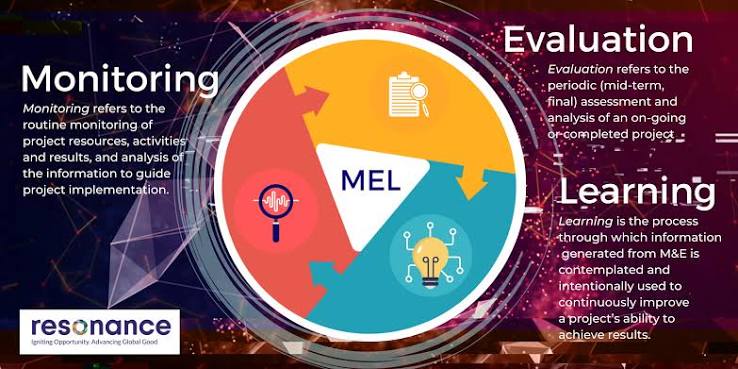
Monitoring, Evaluation & Learning (MEL)
M&E and MEL systems generate performance indicators and results data that can be strengthened through dashboards, statistical analysis, visualization and performance analytics.
Explore Service →
Digital Transformation & ICT Consulting
Digital transformation and ICT strategy can strengthen the data infrastructure, governance and organizational capabilities required for sustainable analytics and responsible AI adoption.
Explore Service →
Software Development & Information Systems
Custom software and information systems can operationalize analytical models, dashboards and decision-support capabilities within organizational workflows.
Explore Service →
Strategic Planning
Data analytics can strengthen strategic planning by providing evidence on organizational performance, trends, risks, opportunities and measurable strategic outcomes.
Explore Service →