
MDDA: From Doctoral Research to a Multidimensional Data-Driven Approach for Evidence-Based Decision-Making
Discover MDDA, the Multidimensional Data-Driven Approach developed from doctoral research by Dr. Abdulrahman A. M. Almutwafy, and how its integration of multidimensional data, analytics, machine learning, optimization, validation and decision support can inform evidence-based organizational decision-making.
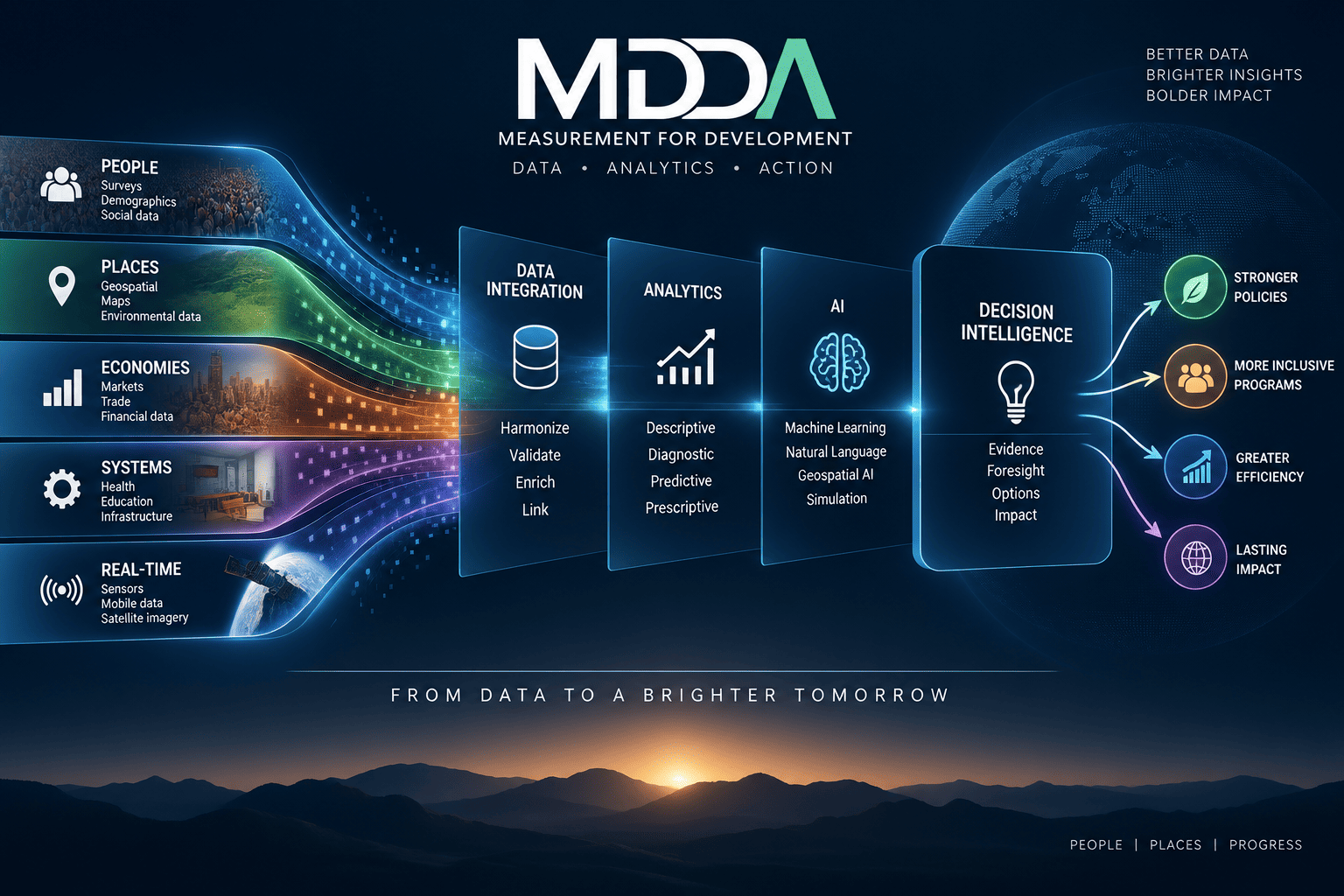
Organizations today generate and access more data than ever before. Strategic plans, surveys, operational systems, financial records, programme databases, geographic information, customer interactions, monitoring systems and external datasets can all provide valuable evidence for decision-making.
Yet having more data does not automatically produce better decisions.
Information is often fragmented across different systems, collected in different formats, measured at different levels and analysed independently. Decision-makers may therefore have access to substantial amounts of information while still lacking an integrated understanding of the problem they are trying to solve.
MDDA – the Multidimensional Data-Driven Approach addresses this challenge by bringing multiple dimensions of data, analytical methods, optimization, validation and decision support into a coordinated framework.
Developed from doctoral research by Dr. Abdulrahman A. M. Almutwafy, MDDA originated in research investigating how multidimensional data and optimized machine-learning techniques could improve poverty detection. The research provides the intellectual and methodological foundation from which the broader MDDA decision-intelligence concept is being developed.
This Insight explains the research origins of MDDA, the problem it seeks to address, its core principles, a practical six-stage framework and how its underlying logic can potentially support evidence-based decision-making across organizational and development contexts.
What Is MDDA?
MDDA stands for Multidimensional Data-Driven Approach.
At its core, MDDA is based on a simple proposition: complex organizational and development problems are rarely explained adequately by a single variable, dataset or perspective.
Better decisions can require the integration of multiple dimensions of evidence.
These dimensions may include:
- operational data;
- financial information;
- survey and research data;
- programme and beneficiary information;
- geographic and spatial data;
- demographic and socioeconomic indicators;
- customer and market information;
- institutional performance indicators;
- stakeholder perspectives;
- historical trends;
- external environmental data; and
- other problem-specific sources of evidence.
MDDA seeks to transform these potentially fragmented sources into an integrated analytical process that supports understanding, prediction, prioritization and informed action.
The Research Foundation of MDDA
MDDA emerged from doctoral research titled “An Optimized Machine Learning Model for Poverty Detection Using a Multidimensional Data-Driven Approach (MDDA).”
The research addressed a particularly difficult analytical problem: poverty is multidimensional.
Household welfare cannot necessarily be understood adequately through a single indicator. Economic conditions interact with housing, education, health, assets, demographics, access to services and other dimensions of deprivation and wellbeing.
The doctoral research therefore investigated an approach in which multiple dimensions of information could be integrated and analysed using machine-learning and optimization techniques to improve poverty detection.
The research application is important because it demonstrates the original context in which MDDA was developed. At the same time, the broader commercial MDDA framework described in this article represents a translation of the methodological principles into potential organizational applications. Those wider applications should not be interpreted as having all been empirically validated by the original poverty-detection study.
Explore the Research Behind MDDA
MDDA is grounded in a continuing programme of academic research in data-driven machine learning, multidimensional analytics, optimization and responsible artificial intelligence.
The principal research foundation is the doctoral thesis, “An Optimized Machine Learning Model for Poverty Detection Using a Multidimensional Data-Driven Approach (MDDA)”, completed at the Technical University of Mombasa. The research develops and evaluates MDDA within the specific context of multidimensional poverty detection.
Explore the MDDA PhD Research and Download the Thesis PDF →
The development of MDDA is also supported by scholarly work specifically examining the modelling of the Multidimensional Data-Driven Approach for optimized machine-learning-based poverty detection.
Explore MDDA and Related Research Publications →
Earlier research in data-driven ensemble machine learning also forms part of the wider research trajectory leading to the development of advanced data-driven analytical approaches.
View Earlier Data-Driven Machine Learning Research on IEEE Xplore →
From Research Methodology to Decision Intelligence
The transition from doctoral research to practical decision intelligence requires an important change in perspective.
Organizations generally do not purchase algorithms. They seek solutions to problems.
A government agency may need to determine which communities require intervention.
A development organization may need to understand why programme outcomes differ across locations.
A management team may need to identify the factors affecting organizational performance.
A strategic-planning team may need to integrate financial, operational, stakeholder and environmental evidence when establishing priorities.
A business may need to understand customer behaviour and forecast demand.
A continuity team may need to identify emerging operational vulnerabilities and prioritize resilience investments.
MDDA therefore translates the underlying research logic into a broader decision process:
MULTIPLE DATA SOURCES → INTEGRATION → ANALYTICS → OPTIMIZATION → VALIDATION → DECISION SUPPORT → ACTION AND LEARNING
Why Multidimensional Data Matters
Many important decisions are inherently multidimensional.
Consider organizational performance. Financial performance alone may not explain whether an institution is functioning effectively. Decision-makers may also need information about service delivery, staffing, customer satisfaction, process efficiency, technology, risk, stakeholder expectations and external conditions.
The same principle applies to development programmes. Programme expenditure alone cannot establish whether interventions are reaching the right populations or producing sustainable outcomes. Geographic, demographic, socioeconomic, beneficiary, implementation and contextual information may all contribute to the analysis.
MDDA therefore begins by recognizing that evidence should be structured around the decision problem rather than around the convenience of a single available dataset.
The Six-Stage MDDA Framework
For practical organizational application, the MDDA concept can be communicated through six interconnected stages:
DEFINE → INTEGRATE → ANALYZE → OPTIMIZE → VALIDATE → ACT & MONITOR
These stages simplify a technically sophisticated analytical process into a framework that decision-makers, analysts, researchers and organizational leaders can use to understand how evidence moves from a problem definition toward action.
Stage 1: DEFINE
The first stage is to define the problem clearly.
Analytics should begin with a decision requirement rather than with a dataset or software tool.
Important questions include:
- What problem is the organization trying to solve?
- What decision needs to be made?
- Who will use the resulting evidence?
- What outcomes are important?
- What constraints affect the decision?
- What populations, services, locations or processes are involved?
- What would constitute a useful result?
A poorly defined problem can produce sophisticated analysis that has little practical value. MDDA therefore treats problem definition as an essential analytical activity.
Stage 2: INTEGRATE
Once the problem has been defined, relevant data sources can be identified and integrated.
Depending on the application, this could involve combining structured and unstructured information from internal and external sources.
The objective is not to collect every available piece of data. It is to identify dimensions of information that materially contribute to understanding the problem.
Integration may require:
- data cleaning;
- data transformation;
- matching records from different sources;
- handling missing values;
- standardizing definitions;
- resolving inconsistencies;
- constructing analytical variables;
- integrating geographic information; and
- establishing appropriate data-governance controls.
This stage converts fragmented information into a coherent analytical foundation.
Stage 3: ANALYZE
The integrated data can then be analysed using methods appropriate to the decision problem.
MDDA is not restricted to one algorithm or analytical technique.
Depending on the application, analysis may involve:
- descriptive statistics;
- exploratory data analysis;
- business intelligence;
- data visualization;
- spatial analysis;
- segmentation and clustering;
- regression;
- classification;
- forecasting;
- anomaly detection;
- machine learning; and
- other quantitative or qualitative analytical techniques.
The analytical method should follow the problem rather than forcing every organizational challenge into an artificial-intelligence solution.
Stage 4: OPTIMIZE
Optimization is one of the important ideas carried forward from the doctoral research foundation of MDDA.
In analytical applications, optimization may involve improving model configuration, selecting useful variables, comparing alternatives or identifying combinations that produce stronger decision-support results.
In broader organizational applications, optimization can also refer to evaluating competing options against defined objectives and constraints.
The purpose is not simply to generate an analytical result but to improve the usefulness, efficiency or quality of the decision process.
Stage 5: VALIDATE
Analytical outputs should not automatically become organizational decisions.
MDDA therefore places validation between analysis and action.
Validation can occur at several levels:
- Technical validation – Does the model or analysis perform adequately?
- Data validation – Are the underlying data sufficiently reliable and appropriate?
- Domain validation – Do the findings make sense in the operational or policy context?
- Stakeholder validation – Do relevant stakeholders identify important contextual factors that the data may not capture?
- Fairness validation – Could the analytical process systematically disadvantage particular groups?
- Practical validation – Can the resulting recommendation realistically be implemented?
This is particularly important when machine learning or artificial intelligence is applied to decisions affecting people, communities or access to services.
Stage 6: ACT & MONITOR
Analytics creates organizational value when evidence contributes to action.
The final MDDA stage therefore connects analytical outputs with implementation and continuous learning.
Outputs may be delivered through:
- management dashboards;
- decision-support systems;
- priority maps;
- risk indicators;
- management reports;
- programme targeting tools;
- performance-monitoring systems;
- forecasting tools;
- strategic-planning evidence; and
- management recommendations.
Monitoring then creates new evidence that can feed back into the analytical process.
The framework therefore becomes cyclical rather than linear:
DEFINE → INTEGRATE → ANALYZE → OPTIMIZE → VALIDATE → ACT & MONITOR → LEARN → REFINE
Human Judgment Remains Central
MDDA should be understood as a decision-support approach, not a mechanism for replacing human responsibility.
Algorithms can identify patterns that may be difficult to detect manually, but analytical outputs exist within organizational, social and policy contexts.
Decision-makers may need to consider factors that are not fully represented in the data, including ethical considerations, legal obligations, implementation constraints, stakeholder perspectives and unintended consequences.
For high-impact decisions, particularly those affecting individuals or vulnerable populations, appropriate human oversight, transparency, validation and fairness assessment are essential.
Potential Application 1: Poverty and Vulnerability Intelligence
The original research foundation provides a direct application area for MDDA in poverty and vulnerability analysis.
Potential applications can include integrating socioeconomic, demographic, geographic, household and other relevant information to support:
- multidimensional poverty analysis;
- vulnerability profiling;
- geographic prioritization;
- programme targeting analysis;
- resource-allocation analysis; and
- monitoring changes in vulnerability over time.
Where such analysis influences eligibility or resource allocation, analytical outputs should support rather than automatically replace appropriate institutional decision processes.
Potential Application 2: Programme and MEL Intelligence
Monitoring, Evaluation and Learning systems frequently contain multiple forms of evidence: programme indicators, beneficiary information, expenditure, implementation records, survey findings, geographic information and contextual data.
An MDDA-oriented approach could integrate these dimensions to identify patterns that may not be visible through isolated indicators.
Potential uses include performance segmentation, identification of implementation risks, geographic comparison, outcome analysis and adaptive programme management.
Potential Application 3: Strategic Intelligence
Strategic planning requires organizations to understand both internal performance and the external environment.
An MDDA-oriented strategic-intelligence process could integrate:
- organizational performance data;
- financial information;
- stakeholder findings;
- customer or beneficiary information;
- market or sector information;
- risk information; and
- environmental trends.
This evidence can support the identification of strategic issues, prioritization of interventions and monitoring of strategy implementation.
Potential Application 4: Organizational Performance Analytics
Institutional performance problems rarely arise from one factor.
Workload, staffing, processes, systems, financial resources, organizational structure, service demand and management practices can interact.
Integrating these dimensions can help organizations move from isolated performance indicators toward a more comprehensive understanding of institutional capacity and operational performance.
Potential Application 5: Risk and Resilience Intelligence
Organizations face interconnected operational, financial, technological, supply-chain, human-resource and external risks.
An MDDA-oriented resilience application could integrate risk indicators with operational information, historical incidents, dependencies and continuity requirements to support risk monitoring and management prioritization.
This creates a natural connection between multidimensional analytics and Business Continuity Management.
Potential Application 6: Customer and Market Intelligence
Commercial organizations can also face multidimensional decision problems.
Customer behaviour, transactions, inventory, product characteristics, digital engagement, location, seasonality and market conditions may interact when determining demand.
Integrating these dimensions can support applications such as customer segmentation, demand forecasting, inventory decisions and targeted marketing analysis.
Potential Application 7: Data-Driven Policy and Development Decisions
Public policy and development decisions frequently involve competing objectives, heterogeneous populations and incomplete information.
Multidimensional analysis can help decision-makers examine relationships between socioeconomic, geographic, institutional and programme factors rather than relying exclusively on aggregate indicators.
The objective should remain evidence-informed decision support, with appropriate institutional accountability for final decisions.
MDDA, Artificial Intelligence and Responsible Analytics
Artificial intelligence and machine learning can form part of MDDA, but MDDA should not be defined simply as an AI methodology.
The broader framework includes problem definition, data integration, statistical analysis, optimization, validation, stakeholder knowledge, decision support and monitoring.
This distinction is important because some organizational problems require sophisticated machine learning while others may be addressed more effectively through descriptive analytics, statistical analysis or carefully designed management information.
Responsible application therefore requires selecting technology according to the problem rather than introducing AI merely because it is available.
From Prediction to Decision Support
A predictive model answers a specific analytical question. Organizational decision-making usually requires more.
Decision-makers may need to know:
- what is happening;
- why it may be happening;
- what is likely to happen next;
- which populations, services or processes are most affected;
- which intervention options are available;
- what constraints exist;
- how confident the organization should be in the evidence; and
- what should be monitored after action is taken.
This is why the commercial evolution of MDDA is better understood as decision intelligence rather than simply machine learning.
MDDA and Evidence-Based Decision-Making
Evidence-based decision-making requires more than collecting information.
Organizations need processes for determining which evidence is relevant, assessing its quality, combining different sources, analysing relationships, evaluating uncertainty and translating findings into practical action.
MDDA provides a conceptual framework for connecting these activities.
More broadly, organizations can strengthen this capability by using data analytics to move from fragmented information toward systematic evidence, insight and action. Explore how data analytics can improve evidence-based decision-making in organizations →
The next stage of this discussion is therefore not simply about using more sophisticated algorithms. It is about developing organizational capability to use data systematically, responsibly and strategically in decision-making.
MDDA as an Emerging GSC Decision-Intelligence Methodology
Global Signature Consultancy is developing the practical application of MDDA as a research-driven framework for supporting complex organizational and development decisions.
The intended commercial direction is to connect GSC's capabilities in research, data analytics, artificial intelligence, strategic planning, Monitoring, Evaluation and Learning, digital transformation and organizational development through a common multidimensional decision framework.
Potential MDDA engagements may ultimately include:
- MDDA diagnostic assessments;
- multidimensional data-integration projects;
- predictive and decision analytics;
- organizational decision-support systems;
- management dashboards and monitoring systems;
- programme and vulnerability intelligence;
- strategic and institutional analytics;
- risk and resilience intelligence; and
- capacity building in data-driven decision-making.
These applications represent the commercial development of the MDDA framework and should be distinguished from the specific empirical claims established by the original doctoral study.
Research, Practice and Continuous Development
The transition from research to consulting should remain evidence-driven.
The doctoral research provides MDDA with an academic foundation, but future organizational applications should generate their own evidence, lessons and case studies.
As MDDA is applied to different problems, its practical framework can be refined through implementation experience, stakeholder feedback, analytical evaluation and documented outcomes.
This creates a continuing relationship between:
RESEARCH → METHODOLOGY → APPLICATION → EVIDENCE → LEARNING → IMPROVEMENT
Conclusion
MDDA began with a doctoral research problem: how multidimensional information and optimized machine-learning techniques could contribute to improved poverty detection.
Its broader significance lies in a more general principle: complex problems frequently require multiple dimensions of evidence to be integrated before meaningful analytical and organizational decisions can be made.
The emerging MDDA framework translates that principle into six practical stages:
DEFINE → INTEGRATE → ANALYZE → OPTIMIZE → VALIDATE → ACT & MONITOR
Through this framework, multidimensional data can move from fragmented information toward analysis, validation and practical decision support.
As Global Signature Consultancy develops MDDA from its research foundation into an applied decision-intelligence methodology, the objective is not to replace professional or institutional judgment with algorithms. It is to strengthen that judgment with integrated evidence, appropriate analytics, responsible validation and continuous learning.
Related Insights
Related Expertise
Explore GSC services connected to this Insight and complementary expertise that can support wider institutional outcomes.

Data Analytics & Artificial Intelligence
Transforming organizational data into actionable insights through statistical analysis, business intelligence, dashboards, predictive analytics, machine learning and responsible AI-enabled decision support.
Explore Service →
Research & Surveys
Research and survey data can provide the evidence required for statistical analysis, stakeholder analytics, predictive modelling and data-driven organizational decision-making.
Explore Service →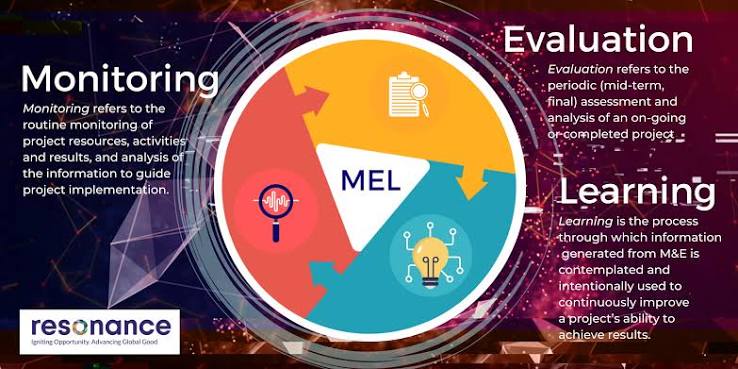
Monitoring, Evaluation & Learning (MEL)
M&E and MEL systems generate performance indicators and results data that can be strengthened through dashboards, statistical analysis, visualization and performance analytics.
Explore Service →
Digital Transformation & ICT Consulting
Digital transformation and ICT strategy can strengthen the data infrastructure, governance and organizational capabilities required for sustainable analytics and responsible AI adoption.
Explore Service →
Software Development & Information Systems
Custom software and information systems can operationalize analytical models, dashboards and decision-support capabilities within organizational workflows.
Explore Service →
Strategic Planning
Data analytics can strengthen strategic planning by providing evidence on organizational performance, trends, risks, opportunities and measurable strategic outcomes.
Explore Service →