
How to Conduct a Capacity Needs Assessment for an Organization: A Practical Guide
A practical guide to conducting an organizational capacity needs assessment, from defining required capabilities and collecting evidence to analysing skills gaps, identifying institutional constraints, prioritizing interventions and developing an actionable capacity development plan.
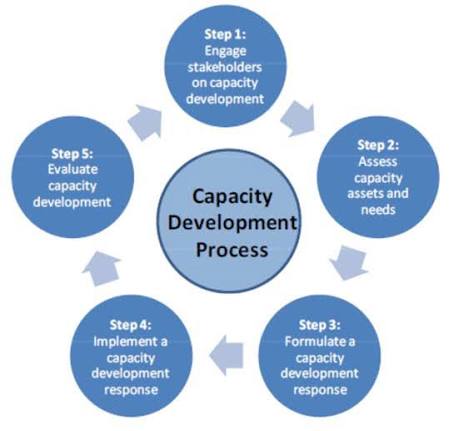
Organizations are expected to deliver increasingly complex mandates while responding to changing technologies, stakeholder expectations, regulatory requirements, resource constraints and emerging risks. Yet organizational performance depends not only on strategy, funding or technology. It also depends on whether an institution has the people, systems, structures, processes, competencies and resources required to perform effectively.
A Capacity Needs Assessment (CNA) provides a structured way of determining whether those capabilities exist, where important gaps occur, why the gaps exist and what interventions are required to address them.
When conducted properly, a capacity needs assessment goes considerably beyond asking employees which courses they would like to attend. It examines the relationship between an organization's strategic objectives, institutional arrangements, workforce competencies, operating systems and actual performance requirements.
This distinction is important because not every performance problem is a training problem. An employee may possess the required skills but still be unable to perform effectively because responsibilities are unclear, staffing is inadequate, information systems are weak, processes are inefficient, resources are unavailable or institutional policies do not support the required work.
This practical guide explains how organizations can conduct an evidence-based capacity needs assessment, distinguish capacity gaps from training needs, prioritize interventions and translate assessment findings into an actionable capacity development plan.
1. What Is a Capacity Needs Assessment?
A capacity needs assessment is a systematic process for identifying the difference between the capacity an organization requires to achieve its objectives and the capacity currently available.
In simple terms:
Required Capacity − Existing Capacity = Capacity Gap
However, capacity is multidimensional. It includes much more than individual knowledge and skills.
An effective assessment may examine:
- institutional mandate and strategic direction;
- organizational structure and governance;
- staffing levels and deployment;
- technical and behavioural competencies;
- leadership and management capability;
- policies, procedures and operating processes;
- technology and information systems;
- financial and physical resources;
- data and information-management capability;
- organizational culture;
- coordination and communication;
- monitoring, evaluation and learning systems; and
- relationships with external stakeholders and partners.
The purpose is therefore not merely to produce a list of courses. It is to establish what capabilities are required for successful organizational performance and determine the most appropriate interventions for closing identified gaps.
2. Why Organizations Conduct Capacity Needs Assessments
Organizations conduct capacity assessments for different reasons. Some undertake them as part of strategic planning, organizational restructuring or institutional reform. Others use them when introducing new technologies, implementing new policies, responding to audit findings, preparing succession plans or developing annual training programmes.
A capacity needs assessment can help an organization answer questions such as:
- Do we have the capabilities required to implement our strategic plan?
- Which departments have the most significant capacity gaps?
- Are employees equipped to perform their current and future roles?
- Which technical competencies require strengthening?
- Are performance challenges caused by skills, systems, staffing or organizational arrangements?
- Which capacity gaps should receive immediate attention?
- Which needs can be addressed through training?
- Which require recruitment, restructuring, technology or process improvement?
- How should limited capacity-development resources be prioritized?
- How will we determine whether capacity-building interventions are producing results?
The answers provide management with evidence for workforce planning, learning and development, budgeting, institutional strengthening and strategic implementation.
3. Capacity Needs Assessment, Training Needs Assessment and Skills Gap Analysis
The terms capacity needs assessment, training needs assessment and skills gap analysis are sometimes used interchangeably. They are related, but they are not identical.
3.1 Capacity Needs Assessment
A capacity needs assessment takes the broadest perspective. It examines whether the organization, its functional units and its people possess the capabilities required to fulfil the institutional mandate and achieve desired results.
Capacity gaps may therefore relate to people, structures, systems, policies, processes, technology, leadership, resources or institutional relationships.
3.2 Training Needs Assessment
A Training Needs Assessment (TNA) is narrower. It identifies knowledge, skill or competency gaps that can appropriately be addressed through structured learning and development.
A TNA therefore becomes one possible component of a broader capacity assessment.
3.3 Skills Gap Analysis
A skills gap analysis compares the competencies required for effective performance against the competencies currently demonstrated or available.
For example, if a position requires advanced data-analysis capability but current competency is assessed as basic, the difference represents a skills gap.
However, identifying that gap does not automatically mean classroom training is the only solution. Depending on its cause and context, the response could include coaching, mentoring, supervised practice, recruitment, job redesign, knowledge transfer or technology support.
4. The Three Levels of Organizational Capacity
A useful capacity assessment considers at least three interconnected levels.
4.1 Institutional or Organizational Level
This level considers the overall environment in which employees perform their work.
Areas may include:
- mandate and strategic direction;
- governance arrangements;
- organizational structure;
- leadership;
- institutional policies;
- financial sustainability;
- ICT infrastructure;
- organizational culture;
- knowledge management;
- performance-management systems; and
- external partnerships.
4.2 Departmental or Functional Level
This level examines whether departments, directorates, programmes or functional units have the capabilities required to perform their responsibilities.
Assessment questions may consider staffing, workflow, role clarity, coordination, systems, resources, departmental competencies and dependencies on other functions.
4.3 Individual Level
The individual level examines the competencies employees require to perform effectively.
These may include:
- technical knowledge;
- professional skills;
- digital competencies;
- analytical capability;
- leadership and supervisory skills;
- communication;
- problem-solving;
- project management;
- customer or stakeholder engagement; and
- behavioural competencies.
Looking at all three levels reduces the risk of attributing institutional problems entirely to individual employees.
5. Step 1: Define the Purpose and Scope of the Assessment
The first step is to establish why the assessment is being undertaken and how the results will be used.
The scope should identify:
- the organizational units covered;
- staff categories included;
- competency areas to be assessed;
- strategic priorities being supported;
- time period under consideration;
- key stakeholders;
- assessment methodology; and
- expected outputs.
A poorly defined scope can produce large amounts of data without providing management with useful answers.
For example, an organization preparing a five-year strategic plan may require an assessment of capabilities necessary to deliver future strategic objectives. An organization implementing a new enterprise system may instead focus on digital capability, process readiness, data management and change-management capacity.
6. Step 2: Understand the Organizational Strategy and Mandate
Capacity should always be assessed against what the organization is expected to accomplish.
This requires reviewing relevant institutional documents such as:
- strategic plans;
- enabling legislation or mandate documents;
- organizational structures;
- human-resource policies;
- job descriptions;
- performance contracts;
- departmental work plans;
- competency frameworks;
- audit and evaluation reports;
- digital strategies;
- risk registers; and
- previous training or capacity-development reports.
This document review helps establish the capabilities the organization requires rather than allowing the assessment to depend entirely on employee perceptions.
7. Step 3: Develop a Capacity or Competency Framework
Once organizational requirements are understood, the assessment should translate them into measurable capacity areas.
A competency framework may distinguish between:
Core Competencies
Capabilities expected across much of the organization, such as communication, teamwork, digital literacy, ethics, customer orientation and problem-solving.
Leadership and Management Competencies
Capabilities required for supervisory and leadership roles, including strategic thinking, decision-making, people management, performance management, change leadership and resource management.
Technical or Functional Competencies
Specialized capabilities associated with particular roles or departments, such as accounting, procurement, engineering, ICT, cybersecurity, research, monitoring and evaluation, data analytics, legal services or programme management.
Competency levels can then be defined using an appropriate scale—for example:
- Level 1 — Awareness;
- Level 2 — Basic;
- Level 3 — Proficient;
- Level 4 — Advanced; and
- Level 5 — Expert.
The exact labels matter less than having clear definitions that respondents and assessors can interpret consistently.
8. Step 4: Establish Required Capacity Levels
One of the most important stages is defining the level of capability actually required.
Without a required level, an organization can measure current competency but cannot meaningfully calculate a gap.
Required capacity should reflect:
- job responsibilities;
- professional standards;
- organizational strategy;
- regulatory requirements;
- future operating requirements;
- technology changes;
- risk exposure; and
- service-delivery expectations.
Different roles will legitimately require different proficiency levels. Not every employee needs expert-level competency in every area.
This prevents capacity assessments from producing unrealistic expectations and unnecessarily large training programmes.
9. Step 5: Collect Evidence on Existing Capacity
Reliable capacity assessment should use multiple evidence sources rather than relying exclusively on a single questionnaire.
Methods can include:
Surveys and Questionnaires
Structured surveys allow organizations to collect standardized information across large groups and compare capacity areas, departments or staff categories.
Key Informant Interviews
Interviews with executives, managers, technical specialists and other stakeholders can provide deeper explanations of institutional challenges and emerging capability requirements.
Focus Group Discussions
Focus groups are useful for exploring shared challenges, workflow issues, organizational culture, coordination and practical barriers to performance.
Document Review
Existing policies, reports, structures, job descriptions, performance data and previous assessments provide important objective context.
Direct Observation
Observation may reveal workflow, equipment, process or behavioural issues that employees may not identify through surveys.
Performance Data
Service-delivery indicators, productivity measures, audit findings, complaints, quality measures and other performance evidence can help validate perceived gaps.
Competency Tests or Practical Assessments
For selected technical capabilities, practical assessment may provide more reliable evidence than self-rating alone.
Using several methods creates triangulation: findings from one source can be compared with evidence from others.
10. The Limitations of Self-Assessment
Employee self-assessment is useful but should be interpreted carefully.
Individuals may overestimate or underestimate their competence. Ratings may also be influenced by confidence, misunderstanding of competency definitions or concern about how results will be used.
Where feasible, self-assessment can therefore be supplemented by:
- supervisor assessment;
- objective performance evidence;
- competency testing;
- peer input;
- professional qualifications; or
- demonstrated work outputs.
The objective is not to create a punitive assessment. It is to improve the reliability of evidence used for capacity-development decisions.
11. Step 6: Conduct the Capacity Gap Analysis
Once required and current capacity have been established, the organization can calculate or classify gaps.
A simple quantitative model is:
Capacity Gap = Required Competency Level − Current Competency Level
Suppose a role requires data-analysis proficiency at Level 4 but the current assessed level is Level 2. The competency gap is therefore two levels.
For survey-based assessments, organizations can aggregate results across:
- competencies;
- employees;
- departments;
- job groups;
- locations; or
- organizational functions.
Results can then be classified into categories such as low, moderate, high or critical gaps, provided the thresholds are defined transparently.
12. Look Beyond the Number: Diagnose the Cause of the Gap
Gap measurement identifies where a difference exists. Management still needs to determine why.
A performance or capacity gap might result from:
- insufficient knowledge;
- lack of practical experience;
- staff shortages;
- poor employee deployment;
- unclear job descriptions;
- duplicated responsibilities;
- weak supervision;
- inadequate equipment;
- obsolete technology;
- poorly designed processes;
- lack of operating procedures;
- weak internal communication;
- insufficient funding;
- inappropriate organizational structure;
- lack of performance incentives; or
- external constraints.
This diagnostic stage is crucial because interventions should address the cause rather than merely the visible symptom.
13. Step 7: Prioritize Capacity Needs
Organizations rarely have enough resources to address every identified capacity gap simultaneously.
Prioritization is therefore necessary.
Each gap can be assessed against factors such as:
- strategic importance;
- impact on service delivery;
- risk associated with the gap;
- number of employees affected;
- regulatory or compliance significance;
- urgency;
- future capability requirements;
- cost of intervention; and
- feasibility of closing the gap.
A useful prioritization question is:
If this capacity gap is not addressed, what organizational objective, service, obligation or strategic result will be at risk?
This shifts capacity development from a catalogue of training preferences to a strategic investment decision.
14. Step 8: Separate Training Needs from Non-Training Needs
This is one of the most important outputs of the assessment.
Where the cause is insufficient knowledge or skill, possible learning interventions include:
- formal training;
- workshops;
- professional certification;
- coaching;
- mentoring;
- job rotation;
- peer learning;
- communities of practice;
- e-learning;
- technical demonstrations; and
- on-the-job learning.
But where the gap is not caused by knowledge or skills, training may have little effect.
Non-training interventions may include:
- recruitment;
- redeployment;
- organizational restructuring;
- job redesign;
- policy development;
- development of standard operating procedures;
- technology acquisition;
- process automation;
- resource allocation;
- improved supervision;
- performance-management reform;
- knowledge-management systems; or
- partnerships and technical assistance.
This distinction can substantially improve the return on investment from capacity-development expenditure.
15. Step 9: Develop a Capacity Development Plan
The assessment should culminate in an actionable capacity development plan.
For each priority gap, the plan should ideally specify:
- capacity area;
- identified gap;
- root cause;
- target group or department;
- recommended intervention;
- priority level;
- responsible person or unit;
- implementation timeline;
- estimated resources or budget;
- expected output;
- expected outcome; and
- performance indicator.
This converts assessment findings into a management instrument.
16. Linking Capacity Development to Strategic Planning
Capacity development should not operate separately from organizational strategy.
A strategic plan defines what an organization intends to accomplish. A capacity assessment asks whether the institution possesses the capabilities required to accomplish it.
The two processes should therefore reinforce one another.
For each strategic objective, organizations can ask:
- What capabilities are required?
- Which capabilities already exist?
- Where are the most significant gaps?
- Which gaps threaten implementation?
- What interventions are required?
- What resources will be needed?
This is particularly important when strategies introduce new functions, technologies, services or operating models.
GSC discusses evidence-driven strategic development further in its guide to strategic planning and common implementation challenges.
17. Capacity Assessment and Workforce Planning
Capacity needs assessment also provides valuable evidence for workforce planning.
An organization may discover that a department has adequate staff numbers but the wrong competency mix. Another department may have highly capable employees but insufficient staffing. A third may require skills that do not currently exist anywhere within the organization.
This evidence can support decisions about:
- recruitment;
- succession planning;
- redeployment;
- staff establishment;
- career development;
- talent management;
- knowledge transfer; and
- future competency requirements.
Capacity assessment therefore provides a bridge between human-resource planning and organizational strategy.
18. Digital Capacity and Emerging Skills
Digital transformation is changing the competencies required across many organizations.
Capacity assessments should therefore consider not only current job requirements but also emerging capability needs.
Depending on the organization, these may include:
- digital literacy;
- data management;
- cybersecurity awareness;
- business intelligence;
- data analytics;
- cloud technologies;
- information security;
- automation;
- digital service delivery;
- artificial intelligence literacy; and
- responsible use of AI-enabled tools.
However, organizations should avoid adopting fashionable technologies without first establishing their strategic relevance, infrastructure requirements, governance implications and actual capability needs.
19. Using Data Analytics in Capacity Needs Assessment
Capacity assessments can generate substantial organizational data. Analytics can help transform this information into decision-support evidence.
Useful analyses may include:
- average gap by competency;
- capacity gaps by department;
- gap distribution by job group;
- critical competency heat maps;
- training priorities;
- cross-functional capacity requirements;
- future skills requirements;
- relationship between capacity gaps and performance indicators; and
- changes in competency levels over time.
Dashboards can also enable management to monitor implementation of the capacity development plan.
This reflects a broader principle discussed in GSC's article on how data analytics can improve evidence-based decision-making: data becomes valuable when it is converted into information that supports an organizational decision.
20. A Multidimensional View of Organizational Capacity
Capacity challenges are rarely one-dimensional.
For example, weak data-analysis capability may involve employee skills, software availability, data quality, system integration, management demand for evidence, governance arrangements and access to appropriate datasets.
Looking only at training would therefore provide an incomplete diagnosis.
A multidimensional approach brings together different forms of evidence to understand relationships between people, processes, technology, structures and organizational outcomes.
This principle is consistent with the broader thinking behind GSC's Multidimensional Data-Driven Approach (MDDA), which emphasizes the integration of multiple dimensions of evidence to support more informed decision-making.
MDDA should not be interpreted as a substitute for established capacity-assessment methodologies. Rather, its multidimensional perspective illustrates why complex institutional decisions can benefit from combining different sources and dimensions of evidence rather than relying on a single measure.
21. Step 10: Implement the Capacity Development Plan
A technically strong assessment has limited value if its recommendations are not implemented.
Implementation should therefore be integrated into:
- annual work plans;
- human-resource development plans;
- departmental plans;
- budgets;
- performance-management systems;
- procurement plans; and
- organizational change initiatives.
Responsibilities should be assigned clearly, and management should periodically review progress.
High-priority gaps may require immediate intervention, while medium- and long-term capacity requirements can be phased according to organizational priorities and available resources.
22. Step 11: Monitor and Evaluate Capacity Development
Capacity development should be monitored just like other organizational investments.
Organizations should distinguish between activities, outputs, outcomes and longer-term performance effects.
For example:
- Activity: Conduct data-analysis training.
- Output: 30 employees complete the programme.
- Immediate outcome: Participants demonstrate improved analytical competency.
- Intermediate outcome: Departments increasingly use analysis in planning and reporting.
- Organizational result: Better evidence is incorporated into management decisions.
Simply counting the number of people trained is therefore insufficient for determining whether organizational capacity has improved.
The relationship between indicators, baselines, targets, evaluation and organizational learning is discussed in greater depth in GSC's practical guide to building an effective Monitoring, Evaluation and Learning framework.
23. Indicators for Monitoring Capacity Development
Depending on the intervention, indicators might include:
- percentage of priority capacity gaps addressed;
- change in competency scores;
- percentage of staff meeting required competency levels;
- professional certifications achieved;
- reduction in identified critical skills gaps;
- application of newly acquired skills;
- improvements in process performance;
- reduction in errors or service delays;
- improved compliance;
- staff retention in critical skill areas;
- implementation rate of capacity-development actions; and
- changes in relevant organizational performance indicators.
The most appropriate indicators depend on the original reason for addressing the capacity gap.
24. Reassessment and Continuous Learning
Capacity requirements change over time.
New strategies, technologies, regulations, staff turnover, organizational restructuring and changes in stakeholder expectations can create new capability requirements.
Capacity assessment should therefore not be treated as a once-off exercise.
Organizations can establish periodic reassessment cycles and integrate capacity indicators into routine performance monitoring. This creates a feedback loop:
Assess → Prioritize → Intervene → Monitor → Learn → Reassess.
This approach helps the organization move from reactive training decisions toward continuous institutional capability development.
25. Common Mistakes in Capacity Needs Assessment
Mistake 1: Treating Every Gap as a Training Need
Training cannot solve problems caused primarily by structure, resources, systems or unclear responsibilities.
Mistake 2: Asking Employees Only What Training They Want
Employee preferences are useful inputs, but organizational needs should be derived from strategy, roles, performance evidence and future requirements.
Mistake 3: Measuring Current Competency Without Defining Required Competency
Without a target level, there is no meaningful basis for calculating a gap.
Mistake 4: Relying Exclusively on Self-Ratings
Self-assessment should ideally be triangulated with other evidence.
Mistake 5: Assessing Individuals but Ignoring the Institution
Employee capability cannot compensate indefinitely for weak systems, inadequate staffing or poor organizational design.
Mistake 6: Producing a Report Without an Implementation Plan
Assessment findings should translate into actions, responsibilities, timelines and resources.
Mistake 7: Prioritizing by Popularity Rather Than Strategic Importance
The most requested course is not necessarily the organization's most important capacity requirement.
Mistake 8: Measuring Attendance Instead of Capacity Improvement
Training completion is an output. The real question is whether capability and subsequent performance improved.
26. What Should a Capacity Needs Assessment Report Contain?
A comprehensive report may include:
- executive summary;
- organizational context;
- assessment objectives;
- scope;
- methodology;
- respondent or stakeholder profile;
- institutional capacity findings;
- departmental findings;
- competency assessment;
- skills-gap analysis;
- training needs;
- non-training capacity gaps;
- priority matrix;
- capacity development plan;
- implementation arrangements;
- monitoring and evaluation framework;
- conclusions and recommendations; and
- supporting tools or annexes.
The exact structure should reflect the purpose and complexity of the organization rather than following a template mechanically.
27. A Practical Capacity Needs Assessment Roadmap
Organizations planning an assessment can use the following sequence:
- Define the purpose. Determine why the assessment is required and what decisions it should support.
- Establish the scope. Identify organizational units, roles, locations and capacity dimensions to be assessed.
- Review strategic and institutional documents. Understand the mandate, objectives and operating context.
- Define required capabilities. Develop or refine competency and capacity requirements.
- Design the assessment methodology. Select appropriate quantitative and qualitative methods.
- Collect evidence. Use surveys, interviews, document review, performance evidence and other appropriate sources.
- Assess current capacity. Determine existing competency and institutional capability.
- Calculate and classify gaps. Compare required and current capacity.
- Diagnose root causes. Determine why significant gaps exist.
- Prioritize needs. Rank gaps according to strategic importance, risk, urgency and feasibility.
- Determine interventions. Separate training solutions from organizational and systemic interventions.
- Develop the capacity development plan. Assign actions, responsibilities, timelines, resources and indicators.
- Implement. Integrate actions into institutional plans and budgets.
- Monitor results. Track whether interventions are improving capability.
- Reassess. Update capacity priorities as organizational requirements evolve.
28. From Capacity Assessment to Institutional Development
The greatest value of a capacity needs assessment is not the assessment itself. Its value lies in the decisions and improvements that follow.
A strong process enables an organization to move from statements such as "our staff need more training" to much more precise conclusions:
- which capabilities are required;
- where they are required;
- how large the gaps are;
- what is causing them;
- which gaps matter most;
- which interventions are appropriate;
- what resources are required; and
- how improvement will be measured.
That is the difference between isolated training activity and strategic capacity development.
Conclusion
An effective capacity needs assessment provides organizations with a structured, evidence-based understanding of the capabilities required to achieve their mandates and strategic objectives.
The process should examine organizational, departmental and individual capacity; establish required competency levels; gather evidence from multiple sources; identify and diagnose gaps; prioritize needs; distinguish training from non-training interventions; and translate findings into an actionable capacity development plan.
Most importantly, capacity development should remain connected to organizational performance. The objective is not simply to train more people. It is to strengthen the institutional capabilities required to deliver better services, implement strategy, manage change and achieve sustainable results.
Organizations that approach capacity development in this way can make better decisions about people, systems, technology, resources and institutional improvement—and can direct limited capacity-building resources toward the areas where they are most likely to make a meaningful difference.
Global Signature Consultancy supports organizations with capacity needs assessments, training needs assessments, skills-gap analysis, workforce analysis, competency frameworks and capacity-development planning. These services can be integrated with strategic planning, research, data analytics, organizational development and monitoring, evaluation and learning to provide a broader evidence base for institutional strengthening.
Related Projects
Related Expertise
Explore GSC services connected to this Insight and complementary expertise that can support wider institutional outcomes.

Capacity Building and Training
Strengthening institutional and professional capability through capacity needs assessment, customized training, Training of Trainers, workshop facilitation and practical learning programmes.
Explore Service →
Strategic Planning
Strategic Planning provides specialist consultancy for institutional strategy development, while Capacity Building and Training can strengthen the knowledge and skills of boards, management teams and staff involved in strategy formulation and implementation.
Explore Service →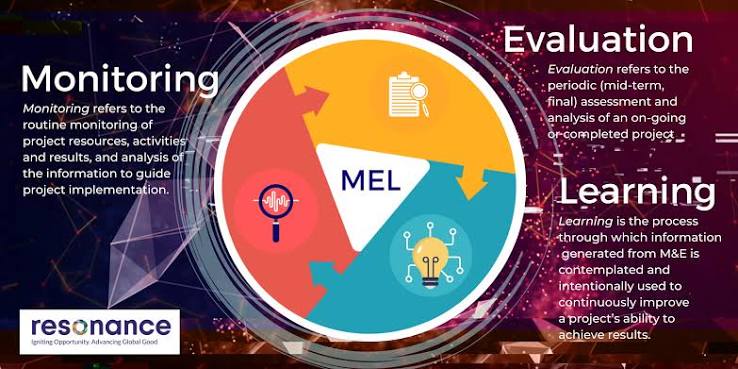
Monitoring, Evaluation & Learning (MEL)
MEL provides specialist consulting on results frameworks, indicators, monitoring and evaluation systems, while Capacity Building and Training can develop staff competency in applying M&E and MEL concepts, tools and practices.
Explore Service →
Data Analytics & Artificial Intelligence
Data Analytics & Artificial Intelligence provides specialist analytical and AI consulting, while Capacity Building and Training can strengthen professionals’ practical understanding and responsible use of data analytics and AI tools.
Explore Service →
Digital Transformation & ICT Consulting
Digital Transformation & ICT Consulting addresses organizational digital strategy and technology governance, while Capacity Building and Training can strengthen digital awareness, adoption and professional capability required to support transformation.
Explore Service →
Business Continuity Planning
Business Continuity Planning develops organizational continuity and resilience arrangements, while Capacity Building and Training can prepare staff and management to understand, apply and exercise their continuity responsibilities.
Explore Service →