
Beyond AI Awareness: Why Organizations Struggle to Turn Artificial Intelligence into Measurable Results
Why do organizations invest in AI workshops and digital tools yet struggle to achieve measurable results? Explore the barriers to AI adoption and a practical framework for readiness assessment, governance, implementation, change management and performance evaluation.
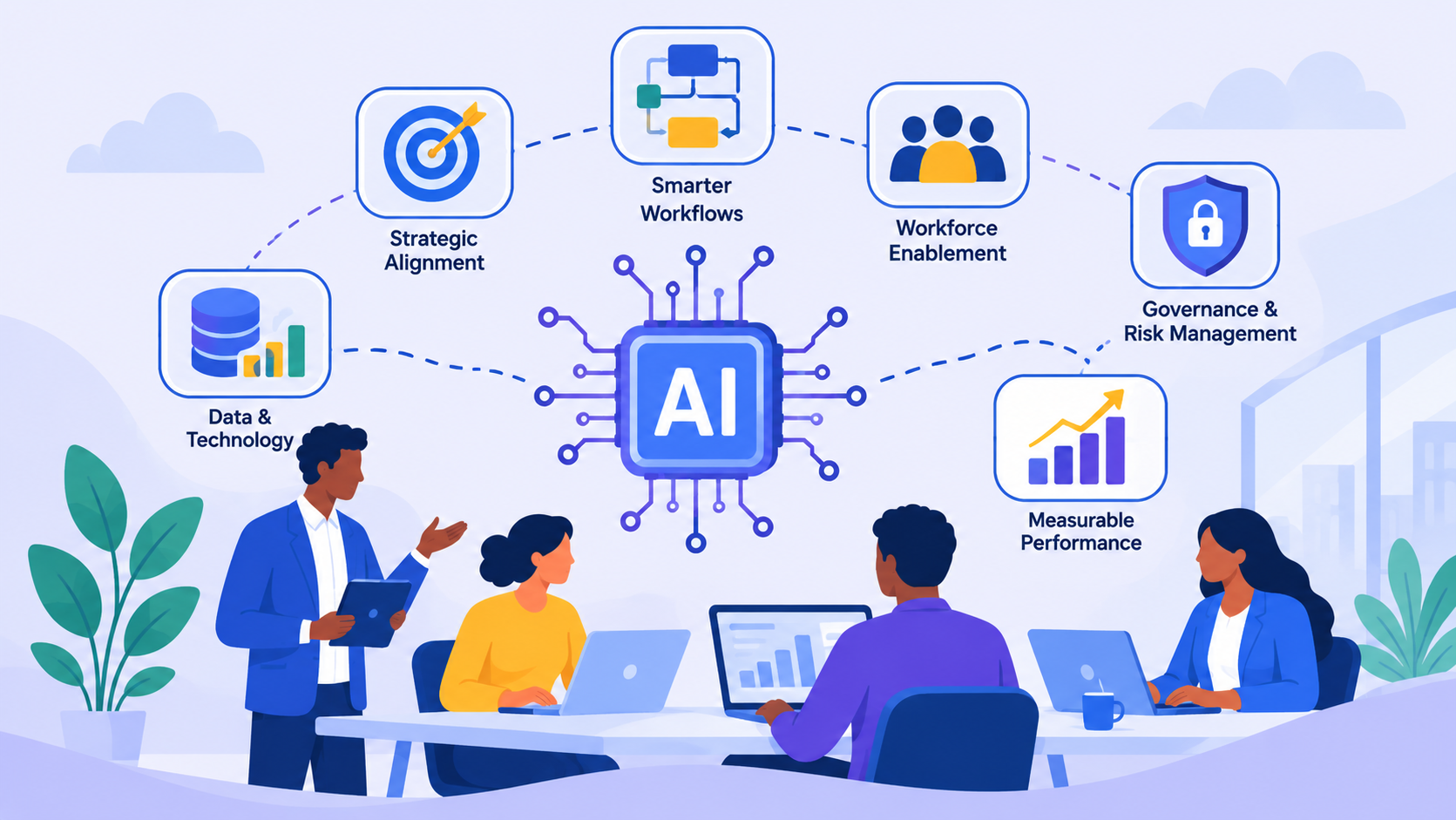
Artificial intelligence has moved rapidly from a specialized technology into mainstream organizational discussions. Boards are asking about AI strategy, executives are exploring productivity opportunities, employees are attending workshops, and institutions are investing in digital tools intended to improve operations and service delivery.
Yet an important management question remains: How much of this activity is producing measurable organizational value?
An organization may conduct several AI awareness workshops, subscribe to new applications, establish an innovation committee and publish an AI strategy without significantly changing how work is performed. Employees may understand AI concepts but remain uncertain about acceptable use, while managers struggle to identify suitable applications, assign accountability or demonstrate performance improvements.
This is the central challenge of AI adoption: awareness is not implementation, and implementation is not automatically organizational transformation.
For public institutions, county governments, SACCOs, NGOs, educational institutions, SMEs and private businesses, the next priority should be moving from technology enthusiasm to structured, responsible and measurable adoption.
This article examines why organizations struggle to translate AI investments into results and proposes a practical framework for AI readiness assessment, use-case selection, governance, implementation, change management and performance evaluation.
1. The AI Adoption Paradox
The AI adoption paradox describes a situation in which organizational interest, training and technology expenditure increase without corresponding evidence of operational improvement.
Consider a hypothetical institution that organizes several AI workshops during the year. Participants learn about generative AI, automated reporting, data analytics and productivity applications. The institution reports successful sensitization because employees attended and provided positive feedback.
However, six months later, its core processes remain unchanged. Reports still require the same approval cycles, employees continue duplicating data entry, customer requests take the same time to resolve, and managers cannot demonstrate measurable productivity gains.
Was the training unsuccessful?
Not necessarily. It may have achieved its awareness objectives. The weakness lies in assuming that awareness automatically produces implementation and measurable performance improvements.
Organizations should therefore distinguish between activities, outputs, outcomes and impact.
- Activity: Conducting AI training.
- Output: Employees completing the training.
- Intermediate outcome: Employees applying approved AI tools competently in selected workflows.
- Operational outcome: Improved speed, quality, accessibility or efficiency of those workflows.
- Organizational impact: Sustainable improvements in service delivery, institutional effectiveness or other strategic results.
Each level requires different evidence. Training attendance cannot substitute for evidence of improved performance.
2. Kenya's AI Policy Direction: From Ambition to Implementation
Kenya launched its National Artificial Intelligence Strategy 2025–2030 in March 2025. The strategy establishes a national direction for AI development and adoption, including infrastructure, data and AI governance, research, innovation and commercialization.
In September 2026, Kenya's Ministry of Information, Communications and the Digital Economy further emphasized the importance of translating digital and AI initiatives into measurable gains in productivity, enterprise growth, employment and public services.
These developments provide a supportive policy environment for organizations exploring responsible AI adoption.
However, national policy direction does not automatically establish that every organization is ready to implement AI or that particular AI applications are appropriate for every institutional process.
Individual organizations must determine their own priorities, risks, capabilities, governance responsibilities and implementation requirements.
References:
- Kenya AI Strategy 2025–2030 — Ministry of ICT
- Government Moves Digital and AI Agenda from Policy to Action — Ministry of ICT
3. Understanding the Five Stages of Organizational AI Adoption
A practical organizational adoption pathway can be described through five stages.
Stage 1: Awareness
Employees and leaders understand basic AI concepts, possible applications and major limitations.
Typical activities include introductory workshops, demonstrations, discussions and awareness campaigns.
Stage 2: Readiness
The organization evaluates whether it has the leadership, skills, data, processes, infrastructure and governance required for responsible implementation.
Readiness may vary significantly across departments.
Stage 3: Piloting
Selected AI applications are tested within defined operational boundaries, with responsible owners, baseline measures, safeguards and evaluation criteria.
Stage 4: Adoption
Applications that demonstrate sufficient value and acceptable risk are incorporated into approved organizational workflows.
Employees receive practical support, procedures are updated and responsibilities are assigned.
Stage 5: Measurable Value and Institutionalization
The organization monitors whether AI-enabled practices continue delivering useful results and whether they remain secure, appropriate and sustainable.
These stages form a proposed GSC conceptual pathway. They should not be interpreted as a universally validated maturity scale or a requirement that every organization follow exactly the same sequence.
Governance, risk management and evaluation should operate throughout the pathway.
4. Why Organizations Remain Stuck After AI Workshops
Several factors can prevent organizations from moving beyond initial awareness.
4.1 Unclear Business Problems
Organizations sometimes begin by asking which AI tools they should purchase instead of identifying the operational problems they need to solve.
This reverses the appropriate planning sequence.
The starting point should be a clearly defined challenge, such as excessive report preparation time, delayed customer responses, inefficient document processing or difficulty analysing institutional data.
4.2 Weak Executive Ownership
AI initiatives may be delegated entirely to ICT personnel without active ownership by the departments responsible for business outcomes.
Technology teams are essential, but operational managers must define requirements, approve process changes and take responsibility for performance.
4.3 Insufficient Workforce Readiness
Employees may understand AI terminology but lack confidence in applying tools to their actual responsibilities.
Generic demonstrations rarely provide the same practical value as discipline-specific or role-specific exercises.
4.4 Poor Data Quality
AI systems that depend on organizational data may produce unreliable outputs when underlying records are incomplete, inconsistent, outdated or poorly governed.
4.5 Unclear Governance
Employees may be uncertain about which tools are approved, what information may be uploaded, who verifies outputs or who is accountable when errors occur.
4.6 Limited Implementation Follow-Up
Organizations may complete training programmes without establishing practical assignments, departmental implementation plans or monitoring mechanisms.
4.7 Inadequate Performance Measurement
Without baseline information and agreed indicators, management cannot reliably determine whether an AI initiative has improved performance.
5. Employee Resistance or Legitimate Professional Concern?
Employee hesitation is frequently described as resistance to change. However, this description can conceal different underlying issues.
Employees may hesitate because they lack skills, distrust the accuracy of AI outputs, fear inappropriate disclosure of confidential information or do not understand management's expectations.
Others may be concerned about job redesign, increased monitoring, accountability or the possibility that AI adoption will introduce additional workload.
Some concerns may be legitimate. A financial officer who questions whether an AI-generated reconciliation is accurate is exercising professional judgement, not necessarily resisting innovation.
Management should therefore distinguish among:
- limited awareness;
- skills gaps;
- unclear responsibilities;
- reasonable risk concerns;
- insufficient incentives;
- resource constraints; and
- active opposition to approved organizational changes.
These conditions require different interventions.
A credible change-management process should involve employees in identifying problems, testing solutions, documenting risks and evaluating results.
6. Technology-First Transformation: An Expensive Mistake
Organizations can become attracted to AI products because they are new, widely discussed or promoted as productivity solutions.
However, purchasing a tool before defining the intended operational outcome can create unnecessary costs.
These may include subscription fees, integration expenses, training requirements, security reviews, additional infrastructure and recurring support costs.
The correct sequence is:
- Identify the organizational problem.
- Understand the existing workflow.
- Establish baseline performance.
- Examine alternative solutions.
- Determine whether AI is appropriate.
- Evaluate costs, benefits and risks.
- Test the preferred solution.
- Scale only where justified.
Sometimes the best solution is not AI. A poorly designed approval process may benefit more from process simplification than from a sophisticated AI application.
Digital transformation should be driven by organizational needs, not by the availability of technology.
7. Conducting an Organizational AI Readiness Assessment
Before making substantial commitments, organizations should examine their readiness across interconnected dimensions.
Leadership and Strategy
Does leadership understand why AI is being considered? Are proposed applications linked to strategic objectives? Is there an accountable executive sponsor?
People and Skills
Do employees possess relevant digital and AI competencies? Are practical training and support arrangements available?
Processes and Operations
Are priority workflows documented? Are inefficiencies understood? Can the process be improved before introducing AI?
Data Readiness
Are relevant datasets accessible, accurate, sufficiently complete and appropriately governed?
Technology and Integration
Can proposed applications work with existing systems? Are security, reliability and maintenance requirements understood?
Governance and Risk
Are there appropriate policies, approval procedures, accountability mechanisms, privacy safeguards and human oversight arrangements?
Organizational Culture
Are employees encouraged to test improvements responsibly, report problems and learn from implementation experience?
Performance Measurement
Can the organization establish credible baselines and measure whether AI changes operational outcomes?
A readiness assessment should produce actionable findings, not merely an overall score.
8. A Practical AI Readiness Diagnostic Checklist
Management can begin with the following questions:
- Have we identified specific organizational problems that AI might help address?
- Are the proposed applications linked to strategic priorities?
- Is a senior executive accountable for implementation?
- Have the relevant business-process owners been involved?
- Do we understand the quality and sensitivity of the required data?
- Have we established rules for approved AI tools and information handling?
- Can employees explain the limitations of the tools they use?
- Have we identified practical training needs?
- Have we assessed alternative non-AI solutions?
- Are expected benefits defined and measurable?
- Do we have baseline performance information?
- Have we estimated implementation and recurring costs?
- Are risks and mitigation responsibilities documented?
- Is there a process for verifying important AI-generated outputs?
- Do we have criteria for continuing, modifying or stopping a pilot?
These questions form a preliminary management diagnostic. They are not a validated assessment scale, and affirmative answers should be supported by evidence.
Organizations may use the findings to prioritize areas requiring further investigation.
9. Selecting High-Value AI Use Cases
Not every possible AI application deserves immediate investment.
A structured selection process should consider:
- strategic relevance;
- the significance of the problem;
- expected operational benefits;
- technical feasibility;
- data readiness;
- implementation cost;
- workforce readiness;
- risk exposure; and
- ability to measure results.
For example, an organization might identify opportunities in:
- drafting and reviewing routine correspondence;
- classifying administrative documents;
- summarizing internal reports;
- supporting customer-service staff;
- analysing operational trends;
- assisting with inventory forecasting;
- improving internal knowledge retrieval; or
- supporting management reporting.
Each application requires its own suitability and risk assessment.
A customer-service assistant operating with approved public information presents different risks from an AI system making recommendations about credit eligibility, employment or access to essential services.
10. Illustrative AI Use-Case Prioritization
Consider three hypothetical applications within an institution.
| Potential application | Expected benefit | Key consideration |
|---|---|---|
| Internal document summarization | Reduced time reviewing lengthy documents | Confidentiality, factual accuracy and human verification |
| Customer enquiry assistance | Faster initial responses | Accuracy, escalation procedures and service quality |
| Automated credit decisions | Potentially faster application processing | Fairness, explainability, regulatory compliance and accountability |
The third application may require substantially more rigorous assessment because it can affect individuals' financial opportunities.
Use-case selection should therefore consider risk alongside potential value. High expected benefits do not automatically justify high-risk automation.
11. Responsible AI Governance Is a Management Responsibility
AI governance establishes the principles, responsibilities and controls that guide the selection, development, procurement, deployment and monitoring of AI systems.
The US National Institute of Standards and Technology's AI Risk Management Framework identifies four complementary functions: Govern, Map, Measure and Manage.
The framework emphasizes continuous risk management and recognizes that governance should operate across the AI lifecycle.
Similarly, the OECD AI Principles emphasize human-centred values, fairness, transparency, security, robustness and accountability.
These frameworks provide useful international guidance, although their applicability and legal status differ across jurisdictions.
References:
For organizations operating in Kenya, governance arrangements should also account for applicable laws, contractual obligations, sector-specific requirements and data protection responsibilities.
A practical AI governance arrangement should identify:
- who approves AI use cases;
- who owns the affected business process;
- who assesses privacy and security risks;
- who verifies important outputs;
- who responds to incidents;
- who monitors performance; and
- who can suspend or discontinue an unsafe application.
12. Human Oversight and Accountability
AI can assist organizational decision-making, but accountability should not disappear when technology is introduced.
For important decisions, institutions should determine which tasks may be automated, which require human review and which should remain under direct human control.
Human oversight must be meaningful. A manager who routinely approves AI-generated recommendations without sufficient information or opportunity to challenge them may provide little effective protection.
Organizations should therefore design review procedures that match the significance and potential consequences of the decision.
13. Moving From Isolated Pilots to Operational Adoption
Many organizations can demonstrate an AI application successfully during a workshop or pilot. The harder task is integrating it into routine operations.
Operational adoption may require:
- revised workflows;
- updated standard operating procedures;
- clear staff responsibilities;
- appropriate system integration;
- data-quality controls;
- training and user support;
- performance monitoring;
- incident management; and
- budgeting for recurring costs.
A successful demonstration should therefore be treated as preliminary evidence, not proof of organizational readiness to scale.
Before expansion, management should confirm that the application performs reliably under realistic conditions and that the organization can sustain the required controls.
14. Measuring AI Adoption and Organizational Performance
Organizations should establish performance measures before implementing a pilot.
Useful indicators depend on the business problem.
Efficiency
- Average processing time per task.
- Staff hours required per completed activity.
- Number of cases processed within a defined period.
Quality
- Error rates.
- Rework requirements.
- Accuracy of outputs after independent verification.
Service Delivery
- Response time.
- Resolution time.
- Customer or citizen satisfaction.
- Accessibility of services.
Financial Performance
- Implementation cost.
- Recurring operating cost.
- Verified cost savings.
- Additional revenue attributable to the intervention, where measurable.
Responsible Use
- Reported incidents.
- Compliance with approved procedures.
- Human-review exceptions.
- Privacy and security concerns.
Organizations should avoid equating high tool usage with successful transformation. Employees may use AI frequently without producing better outcomes.
15. Measuring AI Return on Investment
AI return on investment should be evaluated using benefits and costs attributable to the intervention over a defined period.
A simplified financial measure is:
ROI (%) = [(Financial Benefits − Total Costs) ÷ Total Costs] × 100
This formula requires consistent measurement periods and defensible estimates of benefits and costs.
Total costs may include subscriptions, implementation, integration, training, oversight, maintenance and additional security requirements.
Financial benefits may include verified reductions in expenditure, additional contribution from increased sales or other demonstrable financial gains.
Not all time savings translate into cash savings. If an employee completes a task faster but continues receiving the same salary, the organization has gained capacity; it has not necessarily reduced expenditure.
The value of that capacity depends on whether it is redeployed to productive activities, improves service levels or avoids additional future costs.
Illustrative Calculation
Suppose an organization spends KES 300,000 implementing and operating a narrowly defined AI-assisted workflow during an evaluation period.
If the intervention produces KES 420,000 in independently verified financial benefits during the same period, the simplified ROI would be:
ROI = [(420,000 − 300,000) ÷ 300,000] × 100 = 40%
This is a hypothetical example, not a reported GSC client outcome. It excludes any benefits or costs not captured in the stated assumptions.
Organizations should also assess non-financial outcomes, such as improved accessibility, employee experience, quality and risk reduction, without automatically converting them into unsupported monetary values.
16. A Practical 90-Day Organizational AI Adoption Pilot
A focused pilot can help organizations move from general interest to evidence-based implementation.
Days 1–30: Assess and Prioritize
Review organizational priorities, identify operational problems, document relevant workflows and evaluate readiness.
Key activities include:
- leadership consultations;
- departmental process reviews;
- staff capability assessment;
- data and technology readiness checks;
- initial risk screening;
- use-case prioritization; and
- baseline performance measurement.
Expected output: An AI readiness and use-case prioritization report with a recommended pilot.
Days 31–60: Design and Test
Develop the pilot workflow, establish controls, prepare staff and test the proposed application within an approved environment.
Key activities include:
- defining pilot objectives;
- assigning process ownership;
- documenting permitted uses;
- testing accuracy and reliability;
- training participating employees;
- establishing verification procedures; and
- monitoring initial performance.
Expected output: A controlled pilot with documented procedures, risk controls and preliminary performance evidence.
Days 61–90: Evaluate and Decide
Compare pilot results with baseline performance and assess whether the application is sufficiently valuable, reliable and sustainable.
Evaluation should consider:
- operational performance;
- quality of outputs;
- staff experience;
- financial implications;
- security and privacy;
- implementation challenges;
- scalability; and
- remaining risks.
Expected output: An evidence-based recommendation to scale, revise, extend or discontinue the pilot.
The 90-day period is a proposed planning horizon, not a guarantee that all organizations can complete these activities within that time. More complex or higher-risk applications may require longer preparation and evaluation.
17. Sector-Specific Considerations
Public Institutions and County Governments
Priority areas may include document processing, administrative reporting, service enquiries, records management and decision support.
Public accountability, procurement requirements, data protection, transparency and equitable service access require particular attention.
SACCOs and Financial Institutions
Potential applications include member service support, operational analytics, document classification and management reporting.
Applications affecting lending decisions, member financial information or regulatory obligations require stronger controls.
NGOs and Development Organizations
AI may assist with programme reporting, knowledge management, research synthesis and monitoring activities.
Organizations must consider beneficiary privacy, data quality, donor requirements and the possibility of biased or inaccurate outputs.
SMEs and Private Businesses
Potential applications include customer support, inventory analysis, marketing assistance, internal administration and sales reporting.
For resource-constrained businesses, a small number of well-selected applications may be more valuable than a broad technology investment programme.
Educational and Research Institutions
Beyond teaching and assessment, AI may support administration, research management, institutional analytics and service delivery.
Academic integrity, research ethics and student data protection remain essential considerations.
18. Building an AI Adoption Performance Dashboard
Management should establish a concise dashboard linking implementation progress with operational outcomes.
| Dimension | Illustrative indicator | Management question |
|---|---|---|
| Readiness | Priority capability gaps addressed | Are we prepared to implement responsibly? |
| Adoption | Approved workflow usage | Is the application being used as intended? |
| Efficiency | Processing time per task | Is work becoming more efficient? |
| Quality | Verified error rate | Are outputs reliable? |
| Financial value | Verified net financial benefit | Does the intervention justify its cost? |
| Risk | Material incidents and control exceptions | Are risks being managed? |
| Sustainability | Continued performance after the pilot | Can the organization maintain the improvement? |
Indicators should be adapted to the specific use case. Targets should be established from credible baseline information rather than invented benchmarks.
19. Common Mistakes in Organizational AI Adoption
Mistake 1: Confusing Training With Transformation
Training is an enabling activity. Transformation requires changes in organizational practice and outcomes.
Mistake 2: Purchasing Technology Before Defining the Problem
Technology should address an established operational need.
Mistake 3: Delegating All Responsibility to ICT
Business-process owners and institutional leaders must remain accountable for results.
Mistake 4: Ignoring Data Quality
Unreliable information can undermine otherwise capable AI applications.
Mistake 5: Treating Employee Concerns as Mere Resistance
Some concerns reveal genuine risks or implementation weaknesses.
Mistake 6: Failing to Establish Baselines
Without baseline evidence, performance improvement is difficult to demonstrate.
Mistake 7: Scaling Before Evaluating
A successful demonstration does not establish readiness for institution-wide deployment.
Mistake 8: Overstating Financial Benefits
Time saved, capacity created and cash saved are not interchangeable financial outcomes.
Mistake 9: Neglecting Human Oversight
Automation should not remove appropriate professional accountability.
Mistake 10: Failing to Monitor After Deployment
AI applications require continuing evaluation as workflows, data, risks and organizational needs change.
20. From AI Projects to Sustainable Institutional Capability
The long-term objective should not be to accumulate AI applications. It should be to develop the institutional capability to identify, evaluate, implement and govern useful technologies responsibly.
This requires coordination among leadership, operational departments, ICT, human resources, finance, risk management and other relevant functions.
Organizations should also document lessons from unsuccessful pilots. A decision not to proceed with a particular AI application can be a successful management outcome when the evidence shows that costs, risks or limitations outweigh expected benefits.
Sustainable adoption therefore depends on organizational learning, not merely technology deployment.
21. A Practical Management Framework for Sustainable AI Transformation
Organizations can apply the following integrated approach:
- Align: Connect AI opportunities to strategic and operational priorities.
- Assess: Examine readiness across leadership, people, processes, data, technology and governance.
- Prioritize: Select use cases based on expected value, feasibility and risk.
- Govern: Establish accountability, policies, safeguards and human oversight.
- Pilot: Test selected applications under realistic conditions.
- Measure: Compare actual results with credible baselines.
- Decide: Scale, improve, extend or discontinue based on evidence.
- Institutionalize: Integrate successful practices into approved workflows and continuous improvement arrangements.
This proposed management framework combines organizational change, responsible technology implementation and performance management.
Its value lies in providing a disciplined decision process rather than assuming that every AI opportunity should be pursued.
22. The Strategic Question for Organizational Leaders
Boards and executives should periodically ask:
Are our AI activities changing how the organization performs, or are they primarily increasing awareness and technology expenditure?
The answer should be supported by evidence.
Organizations should be able to identify which processes have changed, which benefits have been achieved, what costs have been incurred, which risks remain and who is accountable for further improvement.
These questions are more consequential than simply counting software subscriptions, workshops or demonstrations.
Conclusion
Artificial intelligence presents significant opportunities for organizations seeking to improve productivity, decision-making, service delivery and institutional effectiveness.
However, these opportunities do not translate automatically into results.
AI workshops can create awareness. Software can provide new capabilities. Strategies can establish direction. None of these, individually, guarantees meaningful organizational transformation.
Measurable value emerges when organizations identify appropriate problems, establish readiness, select suitable applications, implement responsible governance, support employees, redesign workflows and evaluate outcomes.
For organizations in Kenya and across East Africa, the priority should therefore be moving from AI enthusiasm toward disciplined implementation.
The measure of successful AI adoption is not how much technology an organization uses, but whether its use produces demonstrable, responsible and sustainable improvements in performance.
How Global Signature Consultancy Can Support Organizations
Global Signature Consultancy supports organizations seeking to translate digital and AI opportunities into practical institutional improvements.
Relevant consulting capabilities include:
- AI readiness and organizational capability assessments;
- digital transformation and AI strategy development;
- institutional governance and policy frameworks;
- business-process review and improvement;
- AI use-case identification and prioritization;
- capacity development and practical training;
- implementation planning and change management;
- data analytics and decision-support frameworks; and
- monitoring, evaluation and performance measurement.
The objective is to help institutions make evidence-based decisions about where AI can add value, what capabilities are required and how implementation results should be assessed.
Organizations considering AI adoption can begin with a focused readiness assessment and a practical implementation roadmap aligned with their strategic objectives and available resources.
References and Further Reading
- Ministry of Information, Communications and the Digital Economy, Republic of Kenya. (2025). Kenya Artificial Intelligence Strategy 2025–2030. Official strategy publication.
- Ministry of Information, Communications and the Digital Economy, Republic of Kenya. (2026). Government Moves Digital and AI Agenda from Policy to Action. Official ministry publication.
- National Institute of Standards and Technology. (2023). Artificial Intelligence Risk Management Framework (AI RMF 1.0). Official framework.
- Organisation for Economic Co-operation and Development. (2024 update). OECD AI Principles. Official principles.
Related Insights
Related Expertise
Explore GSC services connected to this Insight and complementary expertise that can support wider institutional outcomes.

Data Analytics & Artificial Intelligence
Transforming organizational data into actionable insights through statistical analysis, business intelligence, dashboards, predictive analytics, machine learning and responsible AI-enabled decision support.
Explore Service →
Research & Surveys
Research and survey data can provide the evidence required for statistical analysis, stakeholder analytics, predictive modelling and data-driven organizational decision-making.
Explore Service →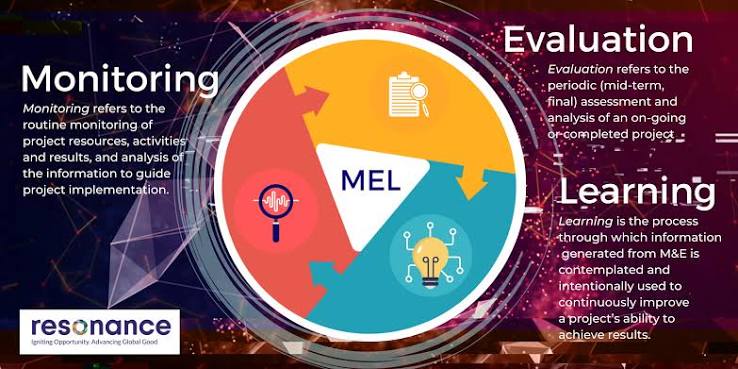
Monitoring, Evaluation & Learning (MEL)
M&E and MEL systems generate performance indicators and results data that can be strengthened through dashboards, statistical analysis, visualization and performance analytics.
Explore Service →
Digital Transformation & ICT Consulting
Digital transformation and ICT strategy can strengthen the data infrastructure, governance and organizational capabilities required for sustainable analytics and responsible AI adoption.
Explore Service →
Software Development & Information Systems
Custom software and information systems can operationalize analytical models, dashboards and decision-support capabilities within organizational workflows.
Explore Service →
Strategic Planning
Data analytics can strengthen strategic planning by providing evidence on organizational performance, trends, risks, opportunities and measurable strategic outcomes.
Explore Service →