
From AI Detection to Responsible AI Integration: Rethinking Teaching, Assessment and Research in Kenyan Universities
Kenyan universities are confronting a growing gap between students' use of generative AI and institutional approaches to teaching, assessment and research. This article examines the limitations of detection-led responses and proposes a practical framework for responsible AI integration, authentic assessment, academic integrity and institutional change.
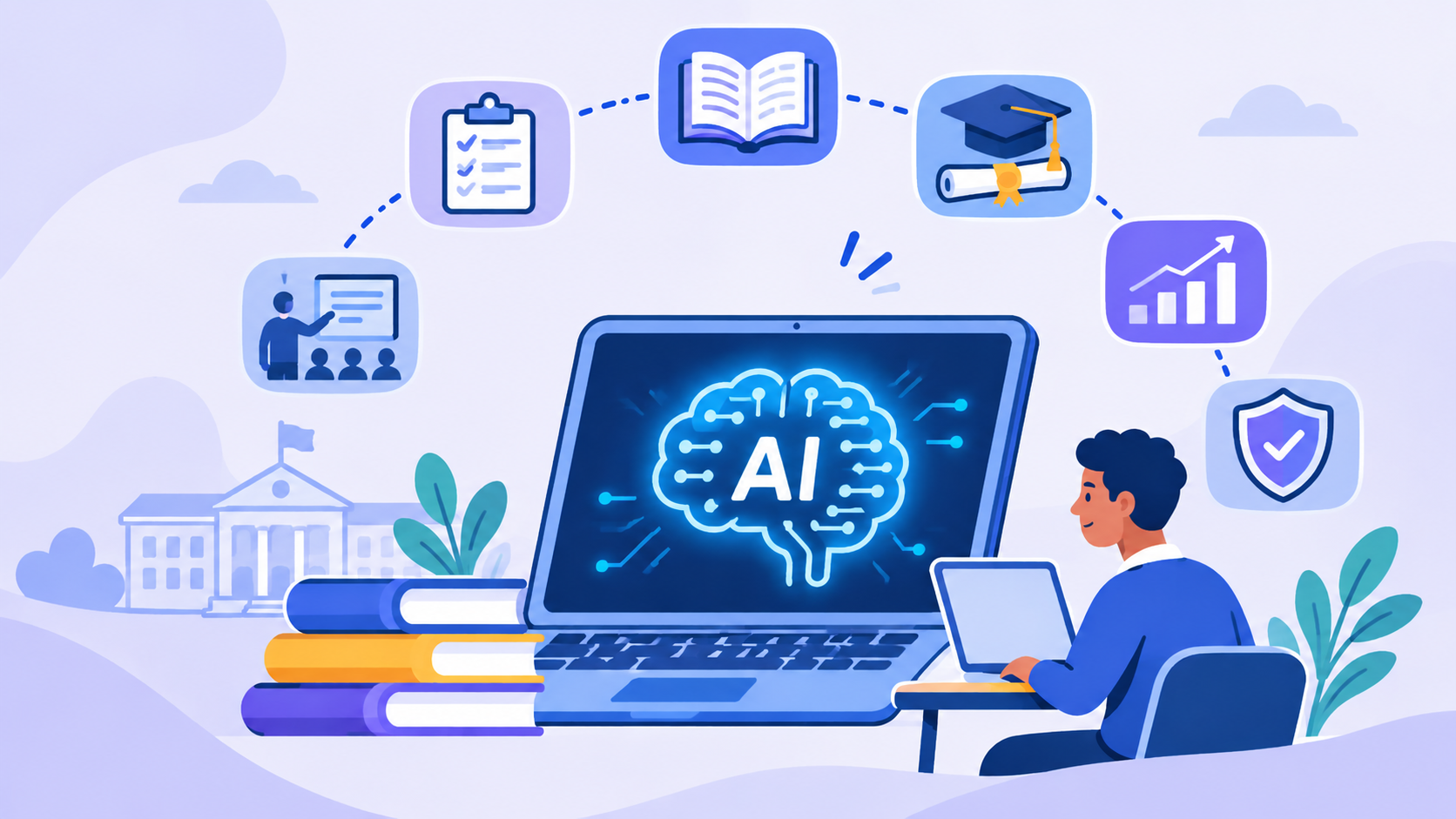
Artificial intelligence is changing how university students learn, complete assignments, write computer programs, conduct research and prepare academic work. For universities, these developments create opportunities to improve education, but they also raise difficult questions about academic integrity, assessment credibility, institutional readiness and the future competencies expected of graduates.
In Kenya, the conversation is especially important because national policy increasingly recognizes artificial intelligence as a strategic technology. Yet policy ambition, institutional awareness and actual implementation are different stages of organizational change.
A university may organize AI awareness workshops, encourage lecturers to explore emerging tools and invest in academic integrity software without necessarily transforming how teaching, assessment or research supervision takes place.
The challenge is therefore not simply whether universities should adopt artificial intelligence. It is how they can integrate AI responsibly while ensuring that students continue to demonstrate genuine knowledge, independent reasoning, disciplinary competence and research integrity.
The central argument of this article is that AI detection should be one component of academic integrity management—not the foundation of a university's entire response to generative AI.
1. Artificial Intelligence Is Changing the Higher Education Environment
Generative AI systems can produce text, explain concepts, generate code, summarize information, assist with data analysis and support numerous academic workflows. These capabilities are creating new possibilities for students, lecturers, researchers and university administrators.
Potential educational applications include:
- preparing instructional materials;
- developing practice questions and examples;
- supporting personalized learning;
- explaining difficult concepts;
- assisting programming and debugging;
- supporting research discovery;
- improving administrative workflows;
- assisting with accessibility and language support; and
- developing digital and professional competencies.
However, these opportunities are accompanied by risks, including inaccurate outputs, fabricated references, excessive dependence, privacy breaches, unauthorized assistance, unequal access and uncertainty about authorship.
Institutions therefore need policies and practices that address both the educational benefits and the potential harms of AI.
2. Kenya's National AI Direction and the University Implementation Challenge
Kenya launched its National Artificial Intelligence Strategy 2025–2030 in March 2025. The strategy identifies AI infrastructure, data and AI governance, and research, innovation and commercialization as major pillars of national development.
The strategy provides an important policy context for responsible AI development and institutional capability building.
Official source: Ministry of Information, Communications and the Digital Economy — Kenya's AI Strategy Launch.
Nevertheless, a national strategy should not be confused with an automatically binding instruction requiring every university lecturer to use a particular AI application. Universities must translate relevant policy directions into their own approved governance frameworks, academic procedures, implementation plans and quality assurance arrangements.
The real management question is whether institutional activity is producing demonstrable changes in educational practice.
3. The Gap Between AI Awareness and AI Adoption
University management may organize workshops, sensitization programmes and demonstrations to introduce employees to AI. Such initiatives can improve awareness and familiarity, but attendance alone does not establish successful adoption.
Four stages should be distinguished:
- Awareness: Lecturers and administrators understand that AI technologies exist and recognize their potential applications.
- Readiness: The institution has the competencies, policies, resources and willingness required to evaluate AI use.
- Adoption: Approved AI-supported practices are being used in actual teaching, research or administration.
- Institutionalization: Responsible practices are supported by governance, monitoring, quality assurance and continuous improvement.
Workshops primarily contribute to awareness and readiness. They do not automatically produce sustained behavioural change.
Consequently, institutions should assess practical outcomes rather than measuring progress solely through training attendance or the number of AI tools demonstrated.
4. Why Lecturers May Be Hesitant to Adopt AI
Hesitation should not automatically be interpreted as hostility toward technology or professional incompetence.
Possible explanations include:
- uncertainty about institutional rules;
- concerns over academic integrity;
- limited practical training;
- lack of time to redesign courses;
- concerns about unreliable AI outputs;
- data protection and confidentiality risks;
- unequal access to technology;
- uncertainty about intellectual property;
- fear of increased workload; and
- limited evidence of educational benefits in particular contexts.
Some lecturers may already be experimenting with AI privately while remaining reluctant to discuss its use openly. Others may have legitimate concerns about its suitability for particular learning outcomes.
Universities should therefore investigate actual barriers before designing interventions.
A constructive institutional response is to establish clear expectations, demonstrate discipline-specific applications, provide appropriate safeguards and evaluate educational outcomes.
5. Students' AI Use Is Challenging Traditional Assessment Assumptions
One of the most significant challenges is the growing ability of AI systems to produce academic work that resembles human-generated submissions.
Traditional assessment approaches often rely heavily on the assumption that a completed assignment provides meaningful evidence of the student's own knowledge and reasoning.
Generative AI complicates that assumption.
For example:
- A written assignment may be polished without demonstrating independent understanding.
- A programming submission may function correctly even when the student cannot explain its architecture.
- A literature review may appear comprehensive while containing inaccurate or fabricated references.
- A research proposal may use sophisticated terminology without demonstrating sound methodological reasoning.
- An online examination may not adequately establish independent competence if unauthorized external assistance is readily available.
These risks do not mean that all AI-assisted academic work is misconduct. Whether particular assistance is permissible depends on the assessment objectives and the institution's clearly communicated rules.
The fundamental issue is whether assessment provides credible evidence that students have achieved the intended learning outcomes.
6. Why AI Detection Alone Is Insufficient
Many universities use plagiarism and similarity-checking software as part of academic integrity management. Some also use AI-writing detection capabilities.
These functions should be distinguished.
Similarity Detection
Similarity checking identifies textual matches between submitted work and material available in a comparison database. A similarity score is not, by itself, a determination that plagiarism occurred.
AI-Writing Detection
AI-writing detection estimates whether qualifying passages may have originated from generative AI systems. Such estimates are probabilistic and may be inaccurate.
Turnitin's official guidance acknowledges that AI-writing detection can misidentify human-written and AI-generated material. It explicitly advises that detection results should not be used as the sole basis for adverse action against a student.
Official source: Turnitin — Using the AI Writing Report.
Accordingly, academic misconduct decisions should be based on applicable institutional policy, appropriate evidence, human judgement and fair procedures.
Importantly, an assignment with a low similarity score or no AI-writing flag does not necessarily establish that the student independently understands the subject.
Detection can raise questions about a submission. It cannot, on its own, establish learning.
7. The Three Dimensions of an Effective Institutional Response
A more comprehensive university response can be organized around three complementary dimensions.
Detection and Academic Integrity
This includes similarity review, appropriate use of detection tools, investigation procedures, academic integrity education and fair treatment of students.
Prevention and Assessment Reform
This includes assessment redesign, clear rules about permitted AI assistance, authentic learning tasks, progressive assessment and appropriate verification of student competence.
Responsible AI Integration
This includes AI literacy, discipline-specific teaching applications, research governance, staff development, digital skills and continuous institutional learning.
None of these dimensions should operate in isolation.
8. Assessment Reform: From Submitted Products to Demonstrated Competence
Assessment reform does not require universities to abandon examinations, essays, programming assignments or research projects.
Instead, institutions should reconsider how different assessment methods establish reliable evidence of learning.
Australia's Tertiary Education Quality and Standards Agency (TEQSA) has published guidance recognizing the need to reconsider assessment practices in response to generative AI.
Reference: TEQSA — Assessment Reform for the Age of Artificial Intelligence.
Although developed for the Australian higher education environment, its principles provide useful comparative guidance for institutions elsewhere.
For Kenyan universities, a balanced assessment approach could distinguish three categories.
A. AI-Restricted Assessment
Students complete specified tasks without generative AI assistance under clearly communicated conditions.
Examples include supervised examinations, practical demonstrations, oral questioning and selected foundational skills assessments.
These approaches are particularly relevant when independent competence is itself the learning outcome.
B. AI-Assisted Assessment
Students may use AI for clearly defined purposes while remaining responsible for the quality, accuracy and integrity of their work.
Assessment can require students to verify information, identify errors, explain their decisions and disclose permitted assistance.
C. AI-Integrated Authentic Assessment
Students use AI within realistic professional or disciplinary tasks and are assessed on their ability to apply human judgement, evaluate outputs and solve meaningful problems.
For example, an information technology student might develop an AI-assisted application but must explain the architecture, test the code, address security concerns and defend design decisions.
The appropriate category depends on the intended learning outcomes. An assessment model that works in computer science may not be suitable without modification for medicine, law, education or other disciplines.
9. What AI-Resilient Assessment Can Look Like in Practice
Universities can strengthen assessment integrity without necessarily purchasing additional software.
Written Assignments
Require students to connect arguments to course-specific evidence, explain reasoning, justify source selection and respond to focused follow-up questions.
Programming Assignments
Require code demonstrations, debugging exercises, test-case development, explanation of design choices and modification of submitted solutions.
Quantitative Courses
Require students to demonstrate mathematical reasoning, interpret results, check assumptions and explain why a particular method is appropriate.
Research Projects
Use staged submissions, documented research decisions, verified data analysis and oral defence of important methodological choices.
Professional and Applied Courses
Use case studies, simulations, practical tasks, portfolios and workplace-related problems where appropriate.
These methods should be designed proportionately. Oral verification of every assignment, for example, may create excessive staff workload. Institutions should target verification where risks are greatest and use assessment sampling or structured checkpoints where appropriate.
10. Master's Dissertations and PhD Theses Require Particular Attention
Research assessment presents additional challenges because generative AI can assist with literature discovery, academic writing, coding, analysis and document preparation.
These activities can be legitimate in some circumstances, but they can also conceal weak research understanding or introduce unreliable material.
Research supervision should therefore emphasize evidence of the student's ownership of the research process.
Students should be able to explain:
- how the research problem was identified;
- why the study is significant;
- how relevant literature was selected and verified;
- why the research methodology is appropriate;
- how data were collected or generated;
- how analytical procedures were selected;
- how results were validated;
- what limitations affect the findings; and
- what constitutes the student's original contribution.
Useful safeguards include documented supervision milestones, appropriate research records, source verification, clear AI-disclosure requirements and focused oral defence.
Universities should also establish rules governing the uploading of confidential research data, unpublished manuscripts, personal information and protected intellectual property into external AI systems.
11. Universities Need Clear AI Governance
Without clear institutional guidance, students and lecturers may interpret acceptable AI use differently.
A university AI governance framework should address:
- permitted and prohibited AI uses;
- assessment-specific AI requirements;
- academic integrity;
- AI-use disclosure;
- research ethics;
- data protection;
- confidentiality;
- intellectual property;
- procurement and approved tools;
- accessibility and equity;
- human accountability;
- staff and student training; and
- monitoring and review.
The framework should complement existing university statutes, academic regulations, research policies and applicable Kenyan legal requirements.
Importantly, an AI policy should not consist only of prohibitions. It should explain how AI can be used responsibly to support the institution's educational and research objectives.
12. Academic Staff Development Must Become Practical
General awareness sessions are useful at the beginning of institutional change, but they should be followed by practical, discipline-specific professional development.
For example, lecturers could work in small groups to:
- redesign an existing assignment;
- develop an assessment rubric;
- test AI-generated answers for accuracy;
- create discipline-specific disclosure instructions;
- develop practical demonstrations;
- evaluate AI-related risks; and
- compare student performance under different assessment approaches.
This approach connects professional development to actual academic work.
It also enables institutions to measure outputs and outcomes rather than relying exclusively on workshop attendance.
13. Students Must Be Partners in Responsible AI Adoption
Students should not be treated solely as potential academic misconduct offenders.
They are also stakeholders whose future professional environments are likely to involve AI-enabled tools and processes.
Universities should provide students with practical guidance on:
- AI literacy;
- critical evaluation of generated information;
- verification of academic references;
- appropriate disclosure;
- academic honesty;
- data privacy;
- limitations and bias;
- discipline-specific responsible use; and
- independent learning.
Students should understand both what AI may help them do and what intellectual responsibilities remain theirs.
14. A Proposed Institutional Framework for Responsible AI Integration
Universities can organize their response around five interconnected pillars.
Pillar 1: AI Governance and Policy
Establish clear institutional responsibilities, acceptable-use guidance, safeguards and accountability mechanisms.
Pillar 2: AI Literacy and Capacity Development
Build practical competencies among academic staff, students, researchers and administrators.
Pillar 3: Assessment and Examination Reform
Redesign selected assessments to establish authentic evidence of learning while clarifying where AI assistance is permitted.
Pillar 4: Responsible AI in Research
Strengthen research supervision, source verification, disclosure, data governance and methodological accountability.
Pillar 5: Monitoring, Evaluation and Continuous Improvement
Track adoption, educational outcomes, academic integrity concerns, workload, equity and implementation challenges.
This is a proposed institutional management framework, not a claim that every Kenyan university is required to adopt these exact five pillars.
15. A Practical 90-Day Pilot for Kenyan Universities
Rather than immediately attempting institution-wide transformation, universities can begin with a carefully governed pilot involving selected departments or courses.
Days 1–30: Institutional and Assessment Readiness Review
Review selected assessment methods, academic regulations, staff competencies, student practices and available institutional resources.
Expected outputs include an assessment-readiness report, priority risks and proposed pilot courses.
Days 31–60: Redesign and Preparation
Develop revised assessment tasks, clear AI-use instructions, appropriate rubrics, disclosure guidance and staff-support materials.
Expected outputs include approved pilot assessment instruments and an implementation plan.
Days 61–90: Implementation and Evaluation
Implement the pilot, document experiences, gather feedback and evaluate whether the revised approaches provide credible evidence of learning.
Potential evaluation criteria include:
- student understanding;
- quality of demonstrated competence;
- academic integrity;
- staff workload;
- student experience;
- accessibility;
- fairness;
- implementation cost; and
- practical sustainability.
The pilot should be approved through the appropriate institutional processes. Its results should inform further implementation rather than being presented as proof of effectiveness before evaluation.
16. Measure Outcomes, Not Merely AI Activity
Institutions should distinguish implementation indicators from educational outcomes.
Possible implementation indicators include:
- number of courses with clear AI-use instructions;
- proportion of selected assessments redesigned;
- number of lecturers completing practical assessment training;
- availability of approved guidance; and
- implementation of research AI-disclosure procedures.
Outcome measures may examine:
- student competence;
- quality of assessment evidence;
- staff confidence;
- fairness of academic integrity processes;
- quality of research supervision;
- student AI literacy; and
- sustainability of revised teaching practices.
These measures should be interpreted carefully. For example, an increase in reported AI-related concerns could reflect improved reporting rather than a genuine increase in misconduct.
17. Leadership and Institutional Change Management
Responsible AI integration cannot be delegated entirely to individual lecturers or ICT departments.
University leadership should establish the institutional direction, define responsibilities and provide a coordinated implementation environment.
Depending on the institution, this may involve academic leadership, quality assurance, examinations, ICT, research offices, legal and data protection functions, teaching and learning units, and student representation.
Leadership should also recognize that different disciplines may require different AI arrangements.
A university-wide framework can establish common principles while allowing faculties and departments to develop appropriate assessment and research practices.
18. The Cost of Reform and the Importance of Proportionality
Responsible AI integration does not necessarily require expensive equipment, new studios or large software subscriptions.
Universities may already possess many of the resources needed to begin assessment reform, including academic expertise, existing learning-management systems, quality assurance structures and established research supervision arrangements.
However, low-cost does not mean cost-free. Assessment redesign, staff development, student consultation, policy development and evaluation require time and institutional capacity.
The appropriate question is therefore whether the expected educational and institutional benefits justify the resources required.
Institutions should prioritize interventions that address demonstrated needs rather than assuming that purchasing additional technology automatically constitutes transformation.
19. What Universities Should Avoid
Several responses can undermine institutional progress:
- treating all AI use as academic misconduct;
- assuming that all AI-generated outputs are accurate;
- using detection percentages as conclusive proof of wrongdoing;
- organizing repeated awareness workshops without implementation follow-up;
- adopting tools without clear governance;
- redesigning assessments without considering staff workload;
- assuming that traditional supervised examinations have no remaining value;
- ignoring unequal student access to technology;
- uploading sensitive information into external AI systems without appropriate safeguards; and
- measuring success only through technology adoption statistics.
Responsible integration requires educational judgement, institutional accountability and continuous evaluation.
20. From AI Detection to Educational Transformation
The most important shift is conceptual.
A detection-led approach asks:
How can the university identify students who may have used AI?
A responsible integration approach asks:
How can the university ensure that students learn, demonstrate genuine competence and develop the ability to use AI responsibly in academic and professional settings?
The second question does not eliminate the need for academic integrity controls. It places those controls within a broader educational strategy.
Universities should be capable of protecting independent learning while also preparing graduates for environments in which AI is increasingly available.
Conclusion
Generative AI presents Kenyan universities with an institutional challenge that extends beyond software, plagiarism detection or staff sensitization.
The critical task is to align AI governance, teaching practices, assessment design, research supervision, staff development and institutional quality assurance with a changing technological environment.
Detection software can contribute to academic integrity processes, but it cannot independently establish student understanding, verify research ownership or replace well-designed assessment.
Likewise, awareness workshops can introduce emerging technologies, but meaningful adoption requires clear policies, practical implementation, monitoring and institutional learning.
The future of credible university education will depend not on whether students can produce convincing academic submissions, but on whether universities can establish that graduates possess the knowledge, skills, judgement and integrity represented by their qualifications.
For Kenyan universities, the opportunity is to move beyond reactive responses and develop evidence-based, proportionate and responsible approaches to AI integration.
Global Signature Consultancy supports institutions through AI readiness assessment, digital transformation strategy, AI governance, institutional policy development, academic capacity building, research support, monitoring and evaluation, and evidence-based organizational change. These capabilities can help institutions translate AI awareness into practical, accountable and sustainable implementation.
Selected References and Further Reading
- Ministry of Information, Communications and the Digital Economy, Republic of Kenya. (2025). Kenya Artificial Intelligence Strategy 2025–2030. Official strategy publication.
- Ministry of Information, Communications and the Digital Economy, Republic of Kenya. (2025). Kenya National AI Strategy 2025–2030 Implementation Roadmap. Official implementation roadmap.
- Tertiary Education Quality and Standards Agency. (2023). Assessment Reform for the Age of Artificial Intelligence. Official guidance.
- Tertiary Education Quality and Standards Agency. (2025). Enacting Assessment Reform in a Time of Artificial Intelligence. Implementation resource.
- Turnitin. (n.d.). Using the AI Writing Report. Official product guidance.
Related Projects
Related Insights
Related Expertise
Explore GSC services connected to this Insight and complementary expertise that can support wider institutional outcomes.

Data Analytics & Artificial Intelligence
Transforming organizational data into actionable insights through statistical analysis, business intelligence, dashboards, predictive analytics, machine learning and responsible AI-enabled decision support.
Explore Service →
Research & Surveys
Research and survey data can provide the evidence required for statistical analysis, stakeholder analytics, predictive modelling and data-driven organizational decision-making.
Explore Service →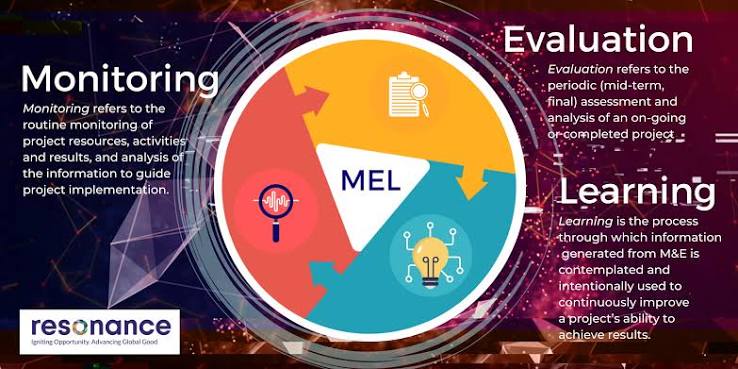
Monitoring, Evaluation & Learning (MEL)
M&E and MEL systems generate performance indicators and results data that can be strengthened through dashboards, statistical analysis, visualization and performance analytics.
Explore Service →
Digital Transformation & ICT Consulting
Digital transformation and ICT strategy can strengthen the data infrastructure, governance and organizational capabilities required for sustainable analytics and responsible AI adoption.
Explore Service →
Software Development & Information Systems
Custom software and information systems can operationalize analytical models, dashboards and decision-support capabilities within organizational workflows.
Explore Service →
Strategic Planning
Data analytics can strengthen strategic planning by providing evidence on organizational performance, trends, risks, opportunities and measurable strategic outcomes.
Explore Service →