
Artificial Intelligence for Organizations in Kenya: Opportunities, Risks and Responsible Adoption
Explore how organizations in Kenya can approach artificial intelligence responsibly, from identifying practical opportunities and assessing AI readiness to managing data quality, privacy, security, bias, governance and human oversight.

Artificial intelligence is rapidly becoming part of how organizations analyse information, automate processes, communicate with customers, manage knowledge and support decisions.
For organizations in Kenya, the question is increasingly moving from “Should we pay attention to AI?” toward “Where can AI create genuine organizational value, what capabilities do we need, and how can we adopt it responsibly?”
The answer should not begin with a particular AI product.
Successful adoption starts with organizational problems, reliable data, appropriate governance, people and processes. Artificial intelligence then becomes one possible tool for solving clearly defined problems rather than an objective in itself.
This article examines practical AI opportunities for organizations in Kenya, the risks that require management, the foundations required for adoption and a structured approach for introducing AI responsibly.
What Is Artificial Intelligence?
Artificial intelligence is a broad field involving computer systems designed to perform tasks that normally require aspects of human intelligence, such as recognizing patterns, interpreting language, making predictions, generating content or supporting decisions.
AI includes several related areas, including:
- machine learning;
- natural language processing;
- computer vision;
- predictive modelling;
- recommendation systems;
- generative artificial intelligence;
- intelligent automation; and
- decision-support systems.
These technologies differ significantly in their capabilities, data requirements, risks and appropriate applications.
Organizations should therefore avoid treating AI as a single technology.
AI Should Begin with an Organizational Problem
A common mistake is beginning an AI initiative by asking which technology an organization should purchase.
A stronger starting point is:
ORGANIZATIONAL PROBLEM → DECISION REQUIREMENT → AVAILABLE DATA → APPROPRIATE ANALYTICAL METHOD → AI WHERE JUSTIFIED → VALIDATION → IMPLEMENTATION
Examples of useful questions include:
- Which repetitive processes consume significant staff time?
- Which decisions could benefit from better forecasting?
- Where are large volumes of information difficult to analyse manually?
- Which operational risks could benefit from earlier detection?
- Where could customer or beneficiary services be improved?
- Which organizational knowledge is difficult for staff to access?
- Where could predictive analytics improve planning or resource allocation?
This problem-first approach reduces the risk of investing in technology that has little practical organizational value.
AI, Data Analytics and Evidence-Based Decision-Making
Artificial intelligence should normally build on a broader data and analytics capability.
Organizations first need to understand what data they possess, whether it is reliable, how it can be integrated and which decisions it should support.
Descriptive and diagnostic analytics may already solve some organizational problems without requiring advanced AI.
Predictive or machine-learning approaches become valuable when the decision problem, data and expected benefits justify additional complexity.
Explore How Data Analytics Can Improve Evidence-Based Decision-Making in Organizations →
A useful principle is therefore: do not use AI where simpler, reliable analytics can solve the problem adequately.
Where Can Organizations Use AI?
Potential applications vary by sector, organizational maturity and available data.
The following areas illustrate where AI may create practical value.
1. Predictive Analytics and Forecasting
Machine-learning models can help organizations identify patterns in historical information and estimate future outcomes.
Potential applications include:
- demand forecasting;
- revenue forecasting;
- workforce planning;
- customer churn analysis;
- inventory forecasting;
- programme risk identification;
- operational forecasting; and
- early-warning indicators.
Predictions remain estimates and should be evaluated against actual outcomes and changing operating conditions.
2. Customer and Citizen Service
AI-enabled systems can support customer-service and information-access processes.
Potential applications include:
- automated responses to common enquiries;
- knowledge assistants;
- customer-request classification;
- service recommendation;
- sentiment analysis; and
- routing enquiries to appropriate personnel.
Human escalation should remain available where enquiries are complex, sensitive or consequential.
3. Document and Knowledge Management
Organizations generate large volumes of reports, policies, correspondence, contracts, research and operational documentation.
AI can potentially assist with:
- document classification;
- information retrieval;
- summarization;
- knowledge search;
- drafting support;
- document comparison; and
- extraction of structured information from documents.
Outputs should be reviewed where accuracy, confidentiality, contractual obligations or institutional policy are important.
4. Operational Efficiency
AI and intelligent automation can help identify repetitive processes or patterns that can be handled more efficiently.
Potential examples include:
- workflow classification;
- anomaly detection;
- process monitoring;
- maintenance prediction;
- resource scheduling; and
- operational decision support.
The objective should be improved processes rather than automation for its own sake.
5. Research, Monitoring and Evaluation
Research and MEL functions often work with surveys, programme records, qualitative information, indicators and other forms of evidence.
Appropriate AI and analytical methods may support:
- data classification;
- pattern identification;
- segmentation;
- text analysis;
- programme-risk detection;
- predictive analysis; and
- management dashboards.
Analytical findings should remain subject to research quality standards and appropriate interpretation.
6. Strategic and Management Decision Support
AI can contribute to decision support where organizations need to analyse multiple sources of information, identify patterns, evaluate scenarios or forecast possible outcomes.
This is particularly relevant when decisions involve multiple interacting dimensions.
The Multidimensional Data-Driven Approach (MDDA) provides one research-driven framework for integrating multidimensional evidence, analytics, optimization, validation and decision support.
Explore the MDDA Decision-Intelligence Framework →
From Research to Applied AI and Decision Intelligence
AI becomes more useful when it operates within a structured decision process rather than as an isolated model.
For example, MDDA emphasizes:
DEFINE → INTEGRATE → ANALYZE → OPTIMIZE → VALIDATE → ACT & MONITOR
Artificial intelligence or machine learning may contribute to the ANALYZE or OPTIMIZE stages, but the wider process also requires problem definition, data integration, validation, human judgment, implementation and monitoring.
This distinction is important because an accurate model does not automatically produce a good organizational decision.
Generative AI: A Different Type of Opportunity
Generative AI has expanded organizational interest in artificial intelligence because it can produce text, images, software code and other forms of content.
Potential organizational applications include:
- drafting and editing support;
- knowledge assistants;
- document summarization;
- research assistance;
- customer-service support;
- software-development assistance;
- internal knowledge retrieval; and
- idea generation.
However, generated outputs may contain incorrect, incomplete or fabricated information. Human verification remains necessary, particularly for legal, financial, technical, policy or other consequential uses.
Is Your Organization Ready for AI?
AI readiness is not determined simply by whether an organization can purchase an AI platform.
Several foundations should be assessed.
1. Strategic Readiness
The organization should understand why AI is being considered and which business or institutional objectives it supports.
2. Data Readiness
Relevant data should be sufficiently available, reliable, representative and appropriately governed for the intended application.
3. Technology Readiness
The organization should assess whether existing systems, infrastructure, integration capabilities and cybersecurity arrangements can support the proposed solution.
4. Human-Capability Readiness
Staff need sufficient knowledge to use, interpret, supervise or manage AI-enabled processes.
5. Governance Readiness
Roles, responsibilities, approval processes, risk controls and accountability should be clear.
6. Change Readiness
AI may change workflows, responsibilities and required skills. Organizational change therefore needs to be managed rather than assumed.
Major Risks Organizations Need to Manage
AI creates opportunities, but inappropriate adoption can introduce significant organizational risk.
Data Quality Risk
AI systems trained or operated on poor-quality data may produce unreliable outputs.
Missing, inaccurate, outdated or inconsistent information can affect model performance and decision quality.
Bias and Fairness Risk
Historical data may contain patterns reflecting unequal treatment, incomplete representation or structural differences between groups.
Models can reproduce or amplify these patterns if fairness is not considered during design and validation.
Organizations should therefore evaluate whether AI systems perform differently across relevant groups, particularly where decisions affect people, opportunities or access to services.
Privacy and Confidentiality Risk
AI applications may process personal, confidential, commercially sensitive or institutionally sensitive information.
Organizations should understand what information is being collected, where it is processed, who can access it and whether its use is consistent with applicable obligations and organizational policies.
Cybersecurity Risk
AI systems introduce additional technologies, integrations and data flows that may create new security considerations.
Cybersecurity should therefore be integrated into AI architecture and implementation rather than added after deployment.
Accuracy and Reliability Risk
AI outputs are not automatically correct.
Models can fail when operating conditions change, when they encounter unfamiliar data or when assumptions no longer hold.
Generative AI systems can also produce confident but inaccurate outputs.
Over-Automation Risk
Organizations may be tempted to automate decisions simply because automation is technically possible.
High-impact decisions often require contextual understanding, professional judgment, ethical consideration and accountability.
Automation should therefore be proportionate to the consequences of the decision.
Vendor and Technology Dependency
Organizations should consider the consequences of becoming dependent on a particular platform, provider or proprietary model.
Important considerations can include data portability, integration, continuity, cost changes, contractual arrangements and the ability to migrate systems if required.
Responsible AI Adoption
Responsible AI involves designing, procuring, deploying and monitoring AI systems in ways that are appropriate to their intended purpose and risk.
Important principles include:
- Purpose: use AI to address a clearly defined organizational need;
- Data quality: understand the suitability and limitations of the underlying data;
- Fairness: examine whether outcomes may systematically disadvantage relevant groups;
- Transparency: ensure decision-makers understand what the system does and its important limitations;
- Human oversight: retain appropriate human review and accountability;
- Privacy: protect personal and sensitive information;
- Security: manage cybersecurity risks throughout the system lifecycle;
- Validation: test systems before relying on their outputs;
- Monitoring: evaluate performance after deployment; and
- Accountability: establish responsibility for decisions and system governance.
Human Oversight Is Not Optional
The level of human oversight should reflect the potential consequences of the AI-supported decision.
A tool suggesting alternative wording for an internal document presents a very different level of risk from a model influencing access to employment, financial resources, public services or programme benefits.
For higher-impact applications, organizations may require:
- human review before action;
- clear escalation procedures;
- documentation of model limitations;
- mechanisms for challenging or correcting decisions;
- regular performance monitoring; and
- periodic independent or management review.
The objective is not to prevent innovation but to ensure that accountability remains clear.
AI Governance for Organizations
As AI adoption expands, organizations need governance arrangements that move beyond individual experiments.
An AI governance framework can define:
- which AI applications are permitted;
- who can approve new AI systems;
- what data may be used;
- how vendors are evaluated;
- how risks are classified;
- what validation is required;
- when human review is mandatory;
- how incidents are managed;
- how performance is monitored; and
- who remains accountable for outcomes.
Governance should be proportionate. A low-risk productivity assistant does not necessarily require the same controls as an AI system supporting consequential decisions.
The Kenyan Organizational and Policy Context
Organizations in Kenya operate across highly diverse sectors and levels of digital maturity.
Some institutions have mature enterprise systems and substantial historical datasets, while others continue to rely heavily on spreadsheets, manual processes and fragmented information systems. AI adoption therefore needs to begin from the organization's actual level of digital and data maturity.
Kenya has established a national policy direction for artificial intelligence through the Kenya National Artificial Intelligence Strategy 2025–2030. The Strategy identifies three core pillars: AI Digital Infrastructure; Data and AI Governance; and AI Research, Innovation and Commercialization.
This national direction reinforces an important organizational principle: sustainable AI adoption requires more than access to AI tools. It depends on appropriate infrastructure, reliable and responsibly governed data, institutional capability, innovation and mechanisms for managing risk.
Organizations considering AI in Kenya should therefore assess factors including:
- availability and quality of organizational data;
- digital infrastructure;
- cybersecurity capability;
- staff skills and AI literacy;
- cost and long-term sustainability;
- integration with existing information systems;
- data protection and privacy requirements;
- local language and contextual requirements;
- appropriate governance and accountability; and
- organizational capacity to maintain and monitor systems after implementation.
AI and Data Protection in Kenya
Organizations using AI systems that process personal data should also consider their obligations under Kenya's data-protection framework.
The Data Protection Act, 2019 establishes principles and rights governing the processing of personal data. Of particular relevance to some AI applications, the Act addresses decisions based solely on automated processing, including profiling, where those decisions produce legal effects or significantly affect an individual.
This makes responsible design especially important where AI may influence consequential decisions involving people. Depending on the application, organizations may need to consider appropriate transparency, safeguards, human review, data-subject rights and mechanisms for reconsidering automated decisions.
The Office of the Data Protection Commissioner has also emphasized the importance of applying data-protection principles when personal data is processed using AI, including appropriate technical and organizational safeguards and Data Protection Impact Assessments where required.
AI governance in Kenya is continuing to evolve alongside implementation of the National AI Strategy and wider policy development. Organizations should therefore monitor relevant regulatory, policy and sector-specific developments as AI adoption expands.
The objective should not be to replicate an AI programme developed for a different organization or market. AI adoption should reflect Kenyan requirements, institutional capacity, organizational risk and the specific decision problem being addressed.
A Practical AI Adoption Roadmap
Organizations considering AI can use a staged approach.
Stage 1: Identify Priority Problems
Start with organizational challenges where better analysis, prediction, automation or knowledge access could create measurable value.
Stage 2: Assess Readiness
Review data, systems, skills, governance, cybersecurity and organizational capacity.
Stage 3: Prioritize Use Cases
Evaluate potential applications according to expected value, feasibility, data availability, implementation complexity and risk.
Stage 4: Establish Governance
Define responsibilities, data requirements, privacy controls, security arrangements, validation standards and human-oversight requirements.
Stage 5: Pilot Before Scaling
Test a manageable use case before committing to organization-wide deployment.
A pilot can help determine whether the proposed system actually creates value in the organization's environment.
Stage 6: Validate
Evaluate technical performance, data quality, operational usefulness, fairness where relevant, security and stakeholder acceptance.
Stage 7: Integrate with Organizational Processes
Successful pilots should be integrated into actual workflows rather than remaining isolated demonstrations.
Stage 8: Monitor and Improve
Continue monitoring performance, user behaviour, errors, emerging risks and changes in the operating environment.
The overall process can be summarized as:
PROBLEM → READINESS → PRIORITIZATION → GOVERNANCE → PILOT → VALIDATE → DEPLOY → MONITOR → IMPROVE
Start Small, but Build for Responsible Scale
Organizations do not need to transform every process simultaneously.
A focused pilot with a clear problem, measurable objectives and manageable risk can provide more useful evidence than a large AI programme built primarily around technology enthusiasm.
Early applications can help the organization understand:
- what data problems exist;
- which skills are required;
- how staff interact with AI systems;
- which governance controls are necessary;
- where integration challenges arise; and
- whether the expected benefits are actually being achieved.
These lessons can then inform subsequent scaling.
How Should AI Success Be Measured?
Technical accuracy alone is not sufficient.
Organizations should evaluate AI according to the value and risks associated with the intended use.
Possible measures include:
- time saved;
- cost reduction;
- forecast accuracy;
- service-response time;
- error reduction;
- customer or user experience;
- staff productivity;
- decision quality;
- fairness measures where relevant;
- system reliability; and
- achievement of the original organizational objective.
If an AI system performs well technically but does not improve the underlying organizational process, its practical value may be limited.
AI Is an Organizational Transformation Issue
Artificial intelligence is often described primarily as a technology issue.
In practice, meaningful adoption may affect organizational processes, roles, skills, policies, data governance, cybersecurity, management practices and decision-making.
AI adoption therefore intersects naturally with digital transformation.
An organization may need to strengthen its information systems, data architecture, policies, workforce capability and management processes before advanced AI can be used sustainably.
Building Sustainable AI Capability
Long-term AI capability requires more than access to models or software.
Organizations should progressively develop:
- data governance;
- analytical capability;
- AI literacy among decision-makers;
- technical expertise;
- responsible-AI policies and procedures;
- cybersecurity capability;
- vendor-management capability;
- monitoring and evaluation mechanisms; and
- organizational learning.
The aim should be an institution capable of evaluating when AI is useful, when it is not, and how to manage it responsibly when deployed.
Conclusion
Artificial intelligence presents significant opportunities for organizations in Kenya, from predictive analytics and operational efficiency to knowledge management, customer service and organizational decision support.
Those opportunities should be approached with the same seriousness as the risks.
Reliable data, privacy, cybersecurity, fairness, transparency, validation, human oversight and organizational accountability are not barriers to AI adoption. They are foundations for sustainable adoption.
The most useful question is therefore not “How quickly can we adopt AI?”
It is:
“Which organizational problems can AI help us solve, what evidence supports its use, what risks must we manage, and how will people remain accountable for the resulting decisions?”
Organizations that approach AI from this perspective can move beyond experimentation toward responsible, evidence-driven and sustainable adoption.
Related Projects
Related Insights
Related Expertise
Explore GSC services connected to this Insight and complementary expertise that can support wider institutional outcomes.

Data Analytics & Artificial Intelligence
Transforming organizational data into actionable insights through statistical analysis, business intelligence, dashboards, predictive analytics, machine learning and responsible AI-enabled decision support.
Explore Service →
Research & Surveys
Research and survey data can provide the evidence required for statistical analysis, stakeholder analytics, predictive modelling and data-driven organizational decision-making.
Explore Service →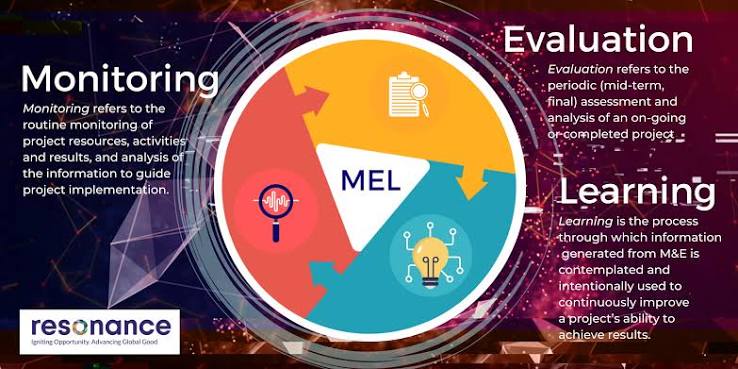
Monitoring, Evaluation & Learning (MEL)
M&E and MEL systems generate performance indicators and results data that can be strengthened through dashboards, statistical analysis, visualization and performance analytics.
Explore Service →
Digital Transformation & ICT Consulting
Digital transformation and ICT strategy can strengthen the data infrastructure, governance and organizational capabilities required for sustainable analytics and responsible AI adoption.
Explore Service →
Software Development & Information Systems
Custom software and information systems can operationalize analytical models, dashboards and decision-support capabilities within organizational workflows.
Explore Service →
Strategic Planning
Data analytics can strengthen strategic planning by providing evidence on organizational performance, trends, risks, opportunities and measurable strategic outcomes.
Explore Service →