
How to Develop a Bankable Business Plan: A Practical Guide for Entrepreneurs and Organizations
A practical guide to developing a credible and bankable business plan, covering the business model, market analysis, competitive positioning, operations, management, revenue model, financial projections, funding requirements, risk analysis and implementation.
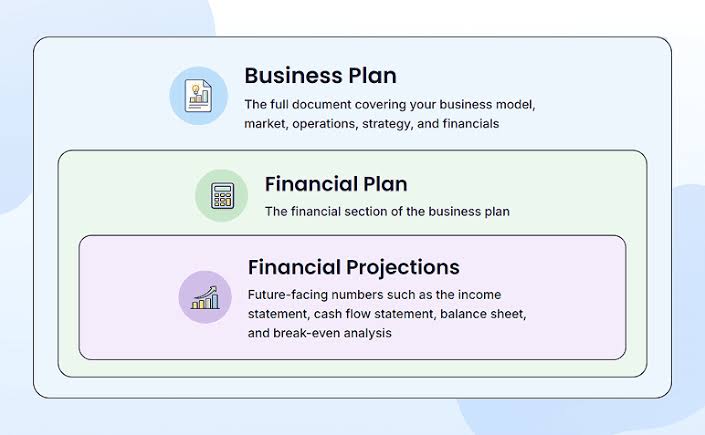
A business plan translates a business idea, organizational initiative or investment opportunity into a structured explanation of how value will be created, delivered and sustained. It connects the market opportunity with the operating model, management capability, implementation requirements, financial projections, risks and funding needs of the proposed venture.
However, producing a lengthy document does not automatically make a business plan bankable. Investors, lenders, boards, development partners and other decision-makers are ultimately interested in whether the underlying assumptions are credible, the opportunity is sufficiently understood, the proposed model is commercially and operationally feasible, and the financial projections are supported by defensible evidence.
A strong business plan should therefore function as both a decision-support document and an implementation framework. It should help management determine whether an opportunity is worth pursuing while showing potential financiers and partners how the venture is expected to operate, generate value and manage risk.
This guide presents a practical framework for developing a credible and bankable business plan for entrepreneurs, established businesses, institutions, investors and organizations considering new ventures, products, services or expansion opportunities.
1. What Is a Business Plan?
A business plan is a structured document explaining the commercial or institutional rationale for a proposed business, investment or expansion and how it will be implemented.
A comprehensive business plan normally addresses several interconnected questions:
- What opportunity or problem is being addressed?
- Who are the intended customers or beneficiaries?
- What products or services will be offered?
- Why will customers choose the proposed offering?
- How large and attractive is the market?
- Who are the competitors?
- How will the organization operate?
- What people, systems and resources are required?
- How will revenue be generated?
- What will implementation cost?
- How much financing is required?
- When can the venture become financially sustainable?
- What are the major risks?
- How will performance be measured?
The business plan brings these questions together into one coherent investment and management case.
2. What Makes a Business Plan “Bankable”?
The term bankable should not be interpreted as meaning that a particular lender or investor is guaranteed to provide financing. Financing decisions depend on the requirements, risk appetite, due-diligence processes and lending or investment criteria of the institution concerned.
Rather, a bankable business plan is one that presents the proposed venture with sufficient analytical depth, internal consistency and supporting evidence to withstand serious commercial and financial scrutiny.
A credible plan should demonstrate:
- a clearly defined opportunity;
- evidence of market demand;
- a viable business model;
- realistic operating assumptions;
- capable management;
- credible revenue projections;
- understood cost structures;
- appropriate funding requirements;
- financial sustainability;
- identified risks and mitigation measures; and
- a practical implementation roadmap.
Bankability therefore comes from the quality of the underlying business case rather than the appearance of the document.
3. Business Plan, Strategic Plan and Feasibility Study
These three documents can overlap, but they serve different primary purposes.
Strategic Plan
A strategic plan defines an organization's longer-term direction, strategic priorities, objectives, intended results and implementation framework.
Feasibility Study
A feasibility study examines whether a proposed project, investment or venture is sufficiently viable to justify proceeding. It may assess market, technical, operational, legal, institutional, environmental and financial feasibility.
Business Plan
A business plan explains how the proposed or existing business will operate and create sustainable value. It normally combines market analysis, strategy, operations, organization, marketing, financial modelling, risk and implementation.
In major investments, a feasibility study may therefore precede or inform the business plan.
4. Start With the Decision the Business Plan Must Support
Before writing begins, determine why the business plan is being developed.
The purpose may be to:
- launch a new enterprise;
- introduce a new product or service;
- expand an existing business;
- enter a new market;
- attract investors;
- seek debt financing;
- establish a joint venture;
- commercialize an institutional service;
- restructure an existing operation;
- assess a diversification opportunity; or
- provide management with an implementation roadmap.
The intended decision influences the depth of analysis required. A business plan intended primarily for internal management may differ from one being presented to an external investor or financial institution.
5. Step 1: Define the Business Opportunity
A credible business plan should begin with a clear explanation of the opportunity being pursued.
This should answer:
- What customer problem or unmet need exists?
- Who experiences that problem?
- How significant is it?
- What solution is being proposed?
- Why is the opportunity commercially or institutionally attractive?
- Why is the organization positioned to pursue it?
- Why is the timing appropriate?
Starting with the opportunity prevents the plan from becoming a description of products without explaining why a viable market should exist for them.
6. Step 2: Define the Product or Service Offering
The business plan should clearly describe what the organization intends to provide.
For each major product or service, consider:
- the customer need addressed;
- the principal features;
- the value delivered;
- pricing approach;
- delivery model;
- quality requirements;
- support requirements;
- potential substitutes; and
- future development opportunities.
The description should focus on customer value rather than merely technical characteristics.
7. Develop a Clear Value Proposition
The value proposition explains why the intended customer should choose the proposed product or service rather than an alternative.
A strong value proposition may be based on:
- quality;
- cost;
- convenience;
- speed;
- accessibility;
- specialized expertise;
- technology;
- customer experience;
- reliability;
- local market knowledge;
- integration of services; or
- another meaningful source of differentiation.
Statements such as “high-quality service” or “excellent customer care” are usually insufficient unless the plan explains how that advantage will actually be created and sustained.
8. Step 3: Conduct Market Research
Market assumptions are among the most important assumptions in a business plan because revenue projections ultimately depend on customers purchasing the proposed products or services.
Market research should examine relevant factors such as:
- market size;
- market growth;
- customer segments;
- customer needs;
- purchasing behaviour;
- pricing;
- distribution channels;
- technology trends;
- regulatory developments;
- economic conditions;
- competitive intensity; and
- barriers to entry.
Depending on the assignment, evidence may come from secondary research, surveys, interviews, administrative data, industry reports, competitor analysis and direct market observation.
9. Understand the Target Customer
A market is rarely homogeneous. The business plan should identify the customer groups most likely to purchase or use the proposed offering.
Segmentation may consider:
- geography;
- income;
- organization size;
- industry;
- customer behaviour;
- needs;
- purchasing capacity;
- service preferences; or
- other characteristics relevant to the particular market.
The objective is to move from a broad claim such as “everyone is a potential customer” toward a clear understanding of the customers the business intends to serve first.
10. Estimate the Addressable Market Carefully
Market size should not automatically be treated as achievable revenue.
A useful analysis can distinguish between:
- Total Addressable Market (TAM): the broad theoretical market for the offering;
- Serviceable Available Market (SAM): the portion that the business can realistically serve given its geography, capabilities and offering; and
- Serviceable Obtainable Market (SOM): the share the business could reasonably capture within the planning period.
The assumptions connecting these levels should be transparent.
A large market is not sufficient evidence of a viable business if the venture has no credible pathway for reaching and converting customers.
11. Step 4: Analyse the Competition
Competitor analysis should examine both direct and indirect alternatives available to customers.
Relevant questions include:
- Who are the major competitors?
- What products and services do they provide?
- How do they price?
- What customer segments do they serve?
- What are their strengths?
- Where are their weaknesses?
- What alternatives can customers use instead?
- How difficult will it be for competitors to imitate the proposed offering?
Competitive analysis should not be designed merely to prove that the proposed venture is superior. Its purpose is to understand the competitive environment realistically.
12. Step 5: Define the Business Model
The business model explains how the organization will create, deliver and capture value.
It should connect:
- customer segments;
- value propositions;
- distribution channels;
- customer relationships;
- key activities;
- key resources;
- key partnerships;
- revenue streams; and
- cost structure.
This provides the commercial logic that connects the market opportunity to financial performance.
13. Establish the Revenue Model
A business plan should clearly explain how money will be generated.
Depending on the business, revenue may come from:
- direct product sales;
- professional fees;
- subscriptions;
- licensing;
- commissions;
- service contracts;
- usage charges;
- rentals;
- membership fees;
- transaction fees;
- partnership arrangements; or
- multiple complementary revenue streams.
Each revenue stream should have explicit assumptions regarding price, volume, utilization, customer growth or other relevant drivers.
14. Pricing Should Be Evidence-Based
Pricing influences revenue, customer acquisition, positioning and profitability.
Pricing analysis may consider:
- customer willingness to pay;
- competitor pricing;
- cost structure;
- target margin;
- perceived value;
- market positioning;
- volume;
- discounts;
- payment terms; and
- regulatory considerations where applicable.
The plan should avoid selecting a price simply because it produces an attractive financial forecast.
15. Step 6: Develop the Marketing and Sales Strategy
Market demand does not automatically translate into customers.
The business plan should explain how customers will become aware of, evaluate, purchase and continue using the proposed offering.
The marketing and sales strategy may address:
- brand positioning;
- digital marketing;
- direct sales;
- partnerships;
- referrals;
- distribution channels;
- institutional sales;
- customer acquisition;
- customer retention;
- promotional activity; and
- sales targets.
Customer-acquisition assumptions should be consistent with the revenue projections.
16. Step 7: Design the Operating Model
The operating model explains how the business will deliver its products or services consistently.
Depending on the venture, it may address:
- facilities;
- equipment;
- technology;
- suppliers;
- inventory;
- procurement;
- production;
- service delivery;
- quality control;
- logistics;
- customer support;
- information systems; and
- business continuity.
The operating model should be capable of supporting the level of sales assumed in the financial projections.
17. Capacity and Utilization Matter
Many financial models assume that a business will immediately operate near full capacity. This can significantly overstate early revenue.
A more realistic model may consider phased utilization.
For example, a new facility might operate at lower capacity during its initial months as customers are acquired, processes stabilize and employees gain experience.
The relationship between capacity, utilization, volume and revenue should therefore be explicitly modelled.
18. Step 8: Define the Organization and Management Structure
Investors and lenders assess not only the opportunity but also the people responsible for delivering it.
The business plan should explain:
- ownership;
- governance;
- management structure;
- key leadership roles;
- technical capabilities;
- staffing requirements;
- skills gaps;
- recruitment requirements; and
- external expertise or partnerships required.
Where key positions have not yet been filled, the plan should identify the required competencies rather than implying that capacity already exists.
19. Step 9: Determine the Investment Requirement
The plan should identify what investment is required before and during implementation.
This may include:
- land or premises;
- construction or renovation;
- equipment;
- vehicles;
- technology;
- software;
- furniture;
- licenses;
- professional services;
- initial inventory;
- marketing;
- staff recruitment;
- training; and
- working capital.
Separating capital expenditure from operating expenditure improves financial clarity.
20. Do Not Underestimate Working Capital
A venture can be profitable on paper and still experience serious cash-flow problems.
Working capital may be required to finance:
- inventory;
- payroll;
- rent;
- utilities;
- supplier payments;
- marketing;
- receivables; and
- other operating expenses before sufficient cash is collected from customers.
The amount required depends heavily on the business's operating cycle and payment arrangements.
21. Step 10: Build the Financial Model
The financial model should translate operational assumptions into measurable financial outcomes.
At minimum, a serious model should consider:
- revenue assumptions;
- cost of sales or direct costs;
- gross profit;
- operating expenses;
- capital expenditure;
- working capital;
- financing;
- tax assumptions where applicable;
- profitability;
- cash flow; and
- financial position.
Depending on the scale and purpose of the plan, forecasts may cover three to five years or another period appropriate to the investment.
22. Revenue Forecasting Should Begin With Drivers
One of the most important principles in financial modelling is that revenue should be derived from business drivers rather than selected as an arbitrary target.
For example:
Revenue = Customers × Transactions per Customer × Average Price
or:
Revenue = Available Capacity × Utilization Rate × Average Revenue per Unit
The appropriate formula depends on the business model.
This makes assumptions visible and allows management to understand what must actually happen operationally for the forecast to be achieved.
23. Develop an Income Statement Forecast
The projected income statement typically considers:
- revenue;
- cost of sales;
- gross profit;
- operating expenses;
- operating profit;
- finance costs;
- taxation where applicable; and
- net profit.
Margins should be tested against the realities of the industry and operating model.
Very high projected profits require particularly strong supporting assumptions.
24. Develop a Cash-Flow Forecast
Profit and cash are not the same.
The cash-flow forecast should examine when money actually enters and leaves the business.
This is particularly important where:
- customers purchase on credit;
- suppliers require advance payment;
- inventory levels are high;
- large capital investments are required;
- loan repayments begin early; or
- the venture experiences seasonal demand.
A business may report accounting profit while still requiring additional financing to meet short-term obligations.
25. Develop a Projected Balance Sheet Where Appropriate
For significant investments, the financial model should also consider the projected financial position of the enterprise.
This includes:
- assets;
- liabilities;
- equity;
- cash;
- receivables;
- inventory;
- borrowings; and
- retained earnings.
An integrated financial model connects the income statement, cash-flow statement and balance sheet so that changes in one part of the business are reflected throughout the forecast.
26. Calculate the Break-Even Point
Break-even analysis estimates the level of activity required for revenue to cover relevant costs.
A simplified unit-based calculation is:
Break-Even Units = Fixed Costs ÷ Contribution per Unit
where contribution per unit is the selling price less the variable cost associated with each unit.
For more complex businesses with multiple products and services, break-even analysis may require a blended contribution structure.
The purpose is not merely to produce a number but to understand how much activity the venture must generate before becoming operationally sustainable.
27. Assess Profitability and Investment Returns
Depending on the nature of the investment and intended audience, the business plan may examine measures such as:
- gross margin;
- operating margin;
- net profit margin;
- return on investment;
- payback period;
- net present value;
- internal rate of return; and
- debt-service capacity.
Not every metric is necessary for every business plan. The measures selected should correspond to the type of venture and financing decision.
28. Step 11: Conduct Scenario Analysis
A single forecast creates false precision if the underlying business is exposed to uncertainty.
Scenario analysis can therefore test alternative outcomes such as:
- Base case: the most reasonable current assumptions;
- Upside case: stronger demand, faster growth or better operating performance; and
- Downside case: slower customer acquisition, lower pricing, higher costs or delayed implementation.
Scenario analysis helps management and financiers understand how sensitive the venture is to changes in major assumptions.
29. Conduct Sensitivity Analysis
Sensitivity analysis examines what happens when one or more important assumptions change.
Variables commonly tested include:
- sales volume;
- price;
- capacity utilization;
- customer growth;
- direct costs;
- operating expenses;
- capital expenditure;
- interest rates;
- exchange rates; and
- implementation delays.
This can reveal which assumptions have the greatest effect on financial viability and therefore deserve the closest management attention.
30. Step 12: Identify and Assess Business Risks
A credible business plan should acknowledge uncertainty rather than presenting only the expected benefits.
Relevant risks may include:
- market risk;
- competitive risk;
- financial risk;
- operational risk;
- regulatory risk;
- technology risk;
- cybersecurity risk;
- supply-chain risk;
- human-resource risk;
- reputational risk;
- implementation risk;
- foreign-exchange risk; and
- business-continuity risk.
Each major risk should be considered in terms of likelihood, potential impact and appropriate mitigation.
Risk disclosure strengthens rather than weakens a serious business plan when it demonstrates that management understands the operating environment and has considered appropriate responses.
31. Step 13: Define the Funding Requirement
If external financing is required, the business plan should explain:
- how much funding is required;
- when it is required;
- what it will finance;
- whether financing is expected as debt, equity or another structure;
- what the owners are contributing;
- how financing supports implementation;
- how debt could be serviced where applicable; and
- how investors may ultimately obtain returns where relevant.
The funding request should reconcile with the financial model.
A common weakness is requesting a round amount without demonstrating how it was calculated.
32. Step 14: Develop the Implementation Roadmap
The business plan should explain how the proposal will move from planning to operation.
Implementation stages may include:
- financing;
- legal and regulatory approvals;
- procurement;
- facility development;
- technology implementation;
- recruitment;
- supplier contracting;
- marketing preparation;
- testing;
- launch;
- market development; and
- performance review.
Each major activity should have an owner, timeline and expected output.
33. Establish Business Performance Indicators
Once implementation begins, management needs evidence showing whether the assumptions underlying the business plan are being achieved.
Depending on the venture, useful indicators may include:
- customer acquisition;
- sales volume;
- revenue;
- average transaction value;
- capacity utilization;
- gross margin;
- operating expenses;
- cash balance;
- receivables;
- inventory turnover;
- customer retention;
- customer satisfaction;
- market share; and
- profitability.
This transforms the business plan from a document prepared before investment into an ongoing management framework.
34. Use Data to Test Business Assumptions
Business planning is fundamentally an evidence-based decision process.
Organizations can strengthen their assumptions through:
- market surveys;
- customer data;
- industry statistics;
- competitor information;
- historical sales;
- financial records;
- operational data;
- pricing analysis;
- digital analytics; and
- scenario modelling.
GSC's guide on data analytics and evidence-based decision-making explains how organizations can transform different forms of organizational evidence into more structured decision support.
35. A Multidimensional Approach to Business Planning
Business viability cannot normally be determined from financial projections alone.
An opportunity may appear financially attractive while facing substantial market, regulatory, operational or institutional constraints.
Conversely, a venture with strong social or strategic value may still require a different commercial model before it becomes financially sustainable.
A robust assessment should therefore consider multiple dimensions together:
Market + Commercial + Technical + Operational + Organizational + Legal + Risk + Financial + Implementation
This multidimensional reasoning is consistent with the broader principles described in GSC's Multidimensional Data-Driven Approach (MDDA), which emphasizes bringing multiple dimensions of evidence together to support complex decisions.
MDDA does not replace established business-planning or financial-analysis techniques. Rather, its relevance here is the principle that major organizational decisions should not be based on a single variable or perspective when multiple interacting dimensions affect the outcome.
36. Common Business Planning Mistakes
Mistake 1: Starting With Financial Projections
Financial projections should emerge from market and operational assumptions. Beginning with the desired profit and working backwards can create unrealistic forecasts.
Mistake 2: Overestimating Market Share
A large market does not mean a new venture can immediately capture a large percentage of it.
Mistake 3: Assuming Immediate Full Capacity
New businesses often require time to acquire customers, establish processes and build market confidence.
Mistake 4: Underestimating Operating Costs
Small recurring expenses can materially affect profitability when aggregated over time.
Mistake 5: Ignoring Working Capital
Insufficient cash can disrupt an otherwise viable operation.
Mistake 6: Treating Profit as Cash
Revenue recognized in accounts may not yet have been collected.
Mistake 7: Weak Competitor Analysis
Claiming that the business has “no competitors” often indicates that substitutes or indirect competition have not been adequately considered.
Mistake 8: Unrealistic Growth
High growth rates should be supported by corresponding marketing, sales, capacity and financing assumptions.
Mistake 9: Ignoring Downside Scenarios
Decision-makers need to understand what happens when assumptions are not achieved.
Mistake 10: Treating the Plan as a Fundraising Document Only
A business plan should continue supporting management decisions after financing has been secured.
37. A Practical Business Planning Roadmap
A comprehensive process can be summarized as follows:
- Define the purpose. Clarify the decision the plan must support.
- Define the opportunity. Establish the problem, need or commercial opening.
- Develop the offering. Define products, services and customer value.
- Research the market. Assess demand, customers, trends and market size.
- Analyse competitors. Understand direct and indirect alternatives.
- Define the business model. Explain how value will be created, delivered and captured.
- Develop the revenue model. Identify pricing, volume and revenue drivers.
- Develop the marketing strategy. Explain how customers will be reached and retained.
- Design operations. Determine how products and services will be delivered.
- Define organization and management. Establish governance, staffing and capability requirements.
- Estimate investment requirements. Determine capital and working-capital needs.
- Build the financial model. Forecast revenue, costs, profitability, cash flow and financial position.
- Test scenarios. Examine alternative outcomes.
- Analyse risks. Identify major uncertainties and mitigation measures.
- Determine funding requirements. Connect financing directly to implementation needs.
- Develop the implementation roadmap. Translate the plan into actions and milestones.
- Establish performance indicators. Define how implementation and business performance will be monitored.
- Review assumptions continuously. Update the plan as actual evidence becomes available.
38. What Should a Complete Business Plan Contain?
The final structure will vary according to the venture, but a comprehensive business plan may contain:
- Executive Summary
- Business Background
- Opportunity and Problem Definition
- Products and Services
- Market and Industry Analysis
- Customer Analysis
- Competitive Analysis
- Business Model and Value Proposition
- Marketing and Sales Strategy
- Operations Plan
- Organization and Management
- Legal and Regulatory Considerations
- Investment Requirements
- Financial Assumptions
- Financial Projections
- Scenario and Sensitivity Analysis
- Risk Analysis
- Funding Requirement
- Implementation Roadmap
- Monitoring and Performance Framework
- Appendices and Supporting Evidence
39. The Executive Summary Should Be Written Last
Although it appears at the beginning of the business plan, the executive summary is generally best finalized after the underlying analysis has been completed.
It should concisely explain:
- the business opportunity;
- the proposed solution;
- target market;
- competitive advantage;
- business model;
- investment requirement;
- key financial projections;
- major risks;
- implementation approach; and
- funding requirement where applicable.
The executive summary should accurately reflect the detailed analysis rather than introduce unsupported claims.
40. From Business Plan to Management Tool
The usefulness of a business plan should not end when an investor, board or lender has reviewed it.
Once implementation begins, actual results should be compared with the assumptions in the plan.
Management can monitor:
Actual Revenue vs Forecast Revenue
Actual Costs vs Budgeted Costs
Actual Customers vs Customer Targets
Actual Capacity Utilization vs Planned Utilization
Actual Cash Flow vs Forecast Cash Flow
Actual Implementation Milestones vs Planned Milestones
Significant variances should trigger analysis and, where necessary, management action.
In this way, the business plan becomes a living management instrument rather than a document stored after financing or approval.
Conclusion
A bankable business plan is built from evidence, coherent assumptions and a realistic understanding of how the proposed venture will operate.
The process begins with a clearly defined opportunity and progresses through market research, customer and competitor analysis, business-model development, operational planning, organizational design, financial modelling, risk assessment and implementation planning.
The financial projections should not stand independently from the rest of the plan. Revenue should reflect market and capacity assumptions; costs should reflect the operating model; financing should reflect actual investment requirements; and profitability should be tested against realistic scenarios.
Most importantly, a business plan should help decision-makers determine not merely whether an opportunity appears attractive, but what must be true for the venture to succeed.
Organizations that continually compare actual performance with the assumptions underlying their plans are better positioned to identify emerging problems, adapt their strategies and make evidence-based investment decisions.
Global Signature Consultancy supports entrepreneurs, businesses and institutions with business planning, feasibility analysis, market research, financial modelling, investment analysis, organizational development, strategic planning, data analytics and implementation frameworks. The objective is to connect commercial opportunities with evidence, realistic financial assumptions and practical implementation arrangements.
Related Projects
Related Expertise
Explore GSC services connected to this Insight and complementary expertise that can support wider institutional outcomes.

Business Planning & Organizational Development
Supporting organizations and enterprises with business planning, business models, financial projections, investment readiness, organizational assessment, institutional strengthening and organizational development.
Explore Service →
Strategic Planning
Strategic planning establishes an organization’s long-term direction and priorities, while business planning and organizational development can translate that direction into viable business models, organizational structures and implementation requirements.
Explore Service →
Research & Surveys
Research and stakeholder evidence can support market analysis, organizational assessments, customer understanding and other evidence requirements within business-planning and organizational-development assignments.
Explore Service →
Capacity Building and Training
Organizational assessments and institutional-strengthening assignments may identify competency gaps that require targeted capacity building, professional training or other structured learning interventions.
Explore Service →
Digital Transformation & ICT Consulting
Business and organizational-development priorities may identify opportunities to improve processes, information management, technology governance and institutional performance through digital transformation.
Explore Service →
Policy Development & Institutional Frameworks
Organizational-development recommendations may require supporting policies, procedures, governance frameworks or other institutional documentation to formalize roles, processes and accountability arrangements.
Explore Service →