
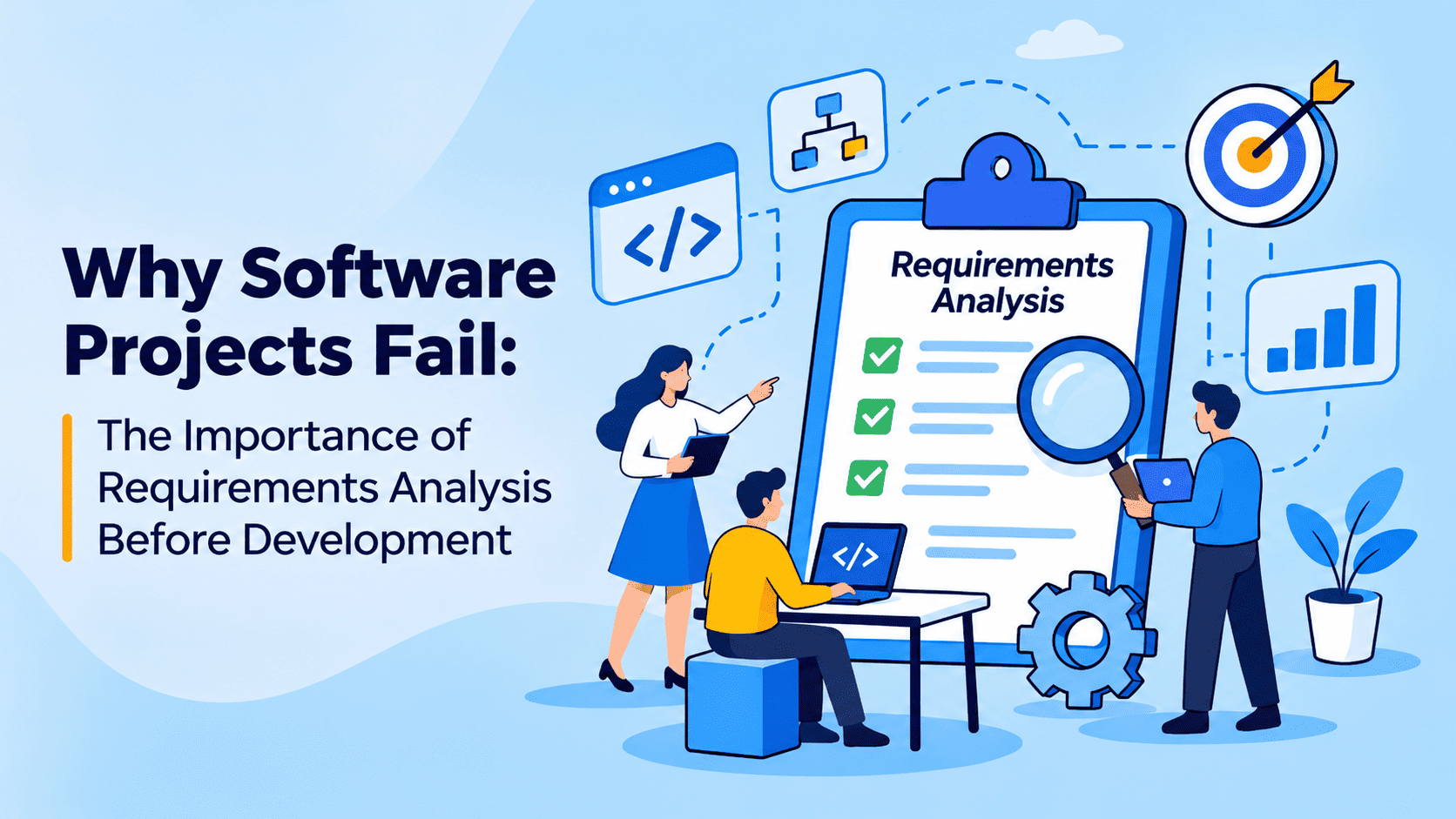
Why Software Projects Fail: The Importance of Requirements Analysis Before Development
Why do software projects exceed budgets, miss deadlines or fail to meet user expectations? Explore how requirements analysis, user involvement, scope management, testing and project governance contribute to successful software development.
Software development offers organizations opportunities to automate operations, improve efficiency, strengthen information management and deliver better services. However, not every software project achieves its intended objectives.
Some projects exceed their budgets, miss implementation deadlines or deliver applications that employees struggle to use. Others meet technical specifications but fail to solve the problems that motivated the investment.
These difficulties are not always caused by poor programming. They often arise from weaknesses in requirements analysis, communication, project governance, scope management and testing.
Successful software development begins with understanding the problem before writing the code.
This article examines common causes of software project difficulties and presents a practical approach to requirements engineering and successful system implementation.
1. Why Software Projects Encounter Difficulties
A software project can encounter problems at any stage of its development lifecycle, from initial planning to deployment and maintenance.
Common contributing factors include:
- Unclear or incomplete business requirements.
- Limited involvement of actual system users.
- Unrealistic budgets and implementation schedules.
- Frequent changes without effective scope management.
- Weak communication between developers and management.
- Inadequate testing and quality assurance.
- Poor data migration and integration planning.
- Insufficient technical support after deployment.
These factors can interact. For example, incomplete requirements may lead to inaccurate cost estimates, repeated development changes and delayed implementation.
A technically functional application can also fail to deliver business value if its workflows do not reflect how employees actually perform their duties.
Organizations should therefore evaluate software project success using more than completion dates and expenditure. Functionality, usability, reliability, adoption and operational outcomes are equally important.
2. Requirements Analysis: The Foundation of Software Development
Requirements analysis is the process of identifying, examining, documenting and validating what a proposed software system must accomplish.
It connects organizational needs with technical development activities.
Consider a business that approaches a developer requesting an inventory management system.
Without proper analysis, the developer might create an application that records products, stock quantities and sales.
However, further consultations could reveal additional essential requirements:
- Managing inventory across multiple branches.
- Recording stock transfers between locations.
- Restricting transactions according to employee roles.
- Tracking returns and product exchanges.
- Integrating sales with online orders.
- Generating branch-specific management reports.
- Maintaining reliable transaction audit trails.
These requirements significantly influence the proposed system's architecture, database structure, workflows, development effort and implementation costs.
Discovering them after development has started may require substantial redesign.
Requirements analysis reduces the risk of building a technically correct system that solves the wrong business problem.
3. Functional and Non-Functional Requirements
Software requirements are commonly grouped into functional and non-functional categories.
3.1 Functional Requirements
Functional requirements describe the activities and services that the software must provide.
For example, a point-of-sale application may need to:
- Register products and their prices.
- Record completed sales.
- Update inventory quantities.
- Generate transaction receipts.
- Restrict access according to user roles.
- Produce daily sales reports.
3.2 Non-Functional Requirements
Non-functional requirements establish the conditions under which the system must operate.
They may address:
- Security and protection of sensitive information.
- System reliability and availability.
- Performance under expected transaction volumes.
- Usability and accessibility.
- Backup and disaster recovery.
- Scalability and maintainability.
Both categories are essential. An application may contain all requested features but remain unsuitable if it performs poorly, exposes sensitive data or is difficult to use.
4. The Importance of Stakeholder and User Involvement
One of the most important requirements engineering activities is involving the people who will operate, manage and maintain the proposed system.
Senior management may understand strategic objectives, but operational employees often possess detailed knowledge of daily workflows and practical challenges.
For example, management may request an automated purchasing system, while procurement officers understand the approval procedures, documentation requirements and exceptional cases that the system must support.
Requirements gathering should therefore involve relevant stakeholders through methods such as:
- Structured interviews.
- Staff consultations and workshops.
- Observation of existing business processes.
- Review of current forms and reports.
- Demonstrations and interactive prototypes.
- Review and validation of documented requirements.
Different stakeholder groups may express conflicting requirements. These should be examined and resolved through an agreed decision process rather than leaving developers to make unsupported assumptions.
User participation should continue throughout development, not end after the initial requirements meeting.
5. Managing Scope and Changing Requirements
Software projects frequently encounter new requirements during implementation.
Some changes are necessary because users discover previously overlooked needs or organizational circumstances evolve.
However, uncontrolled changes can increase development costs, extend schedules and introduce technical complications.
This situation is commonly described as scope creep.
Effective scope management requires:
- Documenting the agreed project objectives and deliverables.
- Prioritizing essential functionality.
- Identifying requirements excluded from the initial release.
- Assessing the cost and schedule implications of proposed changes.
- Obtaining appropriate approval before significant modifications.
- Maintaining an updated requirements register or product backlog.
An incremental development approach can help organizations deliver essential functionality first and introduce additional capabilities through subsequent releases.
Agile development methods also accommodate evolving requirements through prioritized backlogs, regular feedback and iterative delivery.
However, Agile does not eliminate the need for clear objectives, accountability, documentation or acceptance criteria.
6. Testing, Quality Assurance and User Acceptance
Software should be evaluated throughout development rather than tested only when implementation is almost complete.
Different forms of testing address different risks.
| Testing Activity | Primary Purpose |
|---|---|
| Unit testing | Verify individual software components. |
| Integration testing | Verify interactions between connected components and systems. |
| System testing | Evaluate the complete application against defined requirements. |
| Security testing | Identify vulnerabilities and weaknesses in security controls. |
| Performance testing | Evaluate system behaviour under expected workloads. |
| User acceptance testing | Confirm that the solution satisfies agreed business needs and acceptance criteria. |
Testing should be supported by documented scenarios and expected results.
Example: Testing a Stock Transfer Requirement
Consider the following hypothetical requirement:
Requirement: An authorized stock officer must be able to transfer inventory between branches while maintaining accurate stock records.
Acceptance criteria:
- Only authorized users can initiate stock transfers.
- The system records the originating and receiving branches.
- The transfer quantity cannot exceed available transferable stock.
- Stock records reflect the approved dispatch and receipt workflow without duplication.
- The system maintains an audit trail of the transaction.
These criteria allow developers and users to evaluate whether the requirement has been implemented correctly.
User acceptance does not replace other quality assurance activities. A feature may be accepted by users while still requiring additional security or performance testing.
7. Project Governance and Implementation Responsibilities
Effective software development requires clear responsibilities among organizational management, business-process owners, developers and users.
Management should define who is responsible for:
- Approving project objectives, budgets and major changes.
- Defining and prioritizing business requirements.
- Designing and developing the application.
- Evaluating technical risks and security requirements.
- Coordinating testing and user acceptance.
- Approving deployment and operational handover.
- Providing maintenance and technical support.
Projects should also establish realistic milestones, communication arrangements, issue escalation procedures and progress reporting.
A project sponsor or designated business owner should remain accountable for intended organizational outcomes, while the technical team remains responsible for agreed engineering deliverables.
This distinction helps prevent situations where developers are blamed for unresolved business decisions or management assumes that technical completion automatically means organizational success.
8. A Practical Framework for Successful Software Development
Organizations can improve software project delivery by following a structured development approach.
- Define the problem: Establish the organizational need, project objectives and expected benefits.
- Engage stakeholders: Consult management, operational users and relevant technical personnel.
- Document requirements: Identify functional, non-functional, integration and regulatory requirements.
- Validate and prioritize: Resolve ambiguities, agree on essential functionality and establish acceptance criteria.
- Plan development: Define architecture, deliverables, milestones, responsibilities and budgets.
- Develop incrementally: Implement agreed functionality with regular technical reviews and user feedback.
- Test and accept: Verify quality, security and functionality against agreed requirements.
- Deploy and evaluate: Train users, monitor performance, provide support and measure operational outcomes.
This framework can be adapted to different development methodologies and project sizes.
A small business application may require relatively simple documentation and governance, while a complex financial or institutional system may demand more extensive controls and formal assurance.
The objective is to apply sufficient discipline to manage risk without introducing unnecessary administrative complexity.
Conclusion
Software project difficulties are not always the result of inadequate programming skills. Many arise because organizations begin development before fully understanding their requirements, involving users or establishing clear implementation responsibilities.
Requirements engineering provides the foundation for aligning technical development with organizational objectives.
Effective stakeholder engagement, controlled scope management, continuous testing and clear governance help reduce avoidable implementation risks.
Organizations should therefore treat software development as a coordinated business and technical process rather than simply an exercise in writing code.
Successful software development is not measured only by whether an application works, but by whether it reliably meets agreed requirements and delivers meaningful organizational value.
How Global Signature Consultancy Can Support Organizations
Global Signature Consultancy supports organizations seeking to design and implement software solutions aligned with their operational requirements.
Relevant capabilities include:
- Software requirements analysis and documentation.
- Business-process assessment and system design.
- Custom web application development.
- Database and management information systems.
- Software integration and implementation support.
- Testing, technical documentation and maintenance planning.
Organizations planning a software development project can begin with a structured requirements assessment to establish the intended functionality, implementation priorities and technical considerations before committing substantial development resources.
References and Further Reading
- International Organization for Standardization. (2018). ISO/IEC/IEEE 29148:2018: Systems and Software Engineering - Life Cycle Processes - Requirements Engineering. Official standard information.
- United States Government Accountability Office. (2023). Agile Assessment Guide: Best Practices for Agile Adoption and Implementation. Official guide.
- National Institute of Standards and Technology. (2022). Secure Software Development Framework (SSDF) Version 1.1. Official publication.
Related Insights
Related Expertise
Explore GSC services connected to this Insight and complementary expertise that can support wider institutional outcomes.

Software Development & Information Systems
Designing and developing custom software, management information systems, web applications, databases, APIs, system integrations, e-commerce platforms and digital solutions tailored to organizational requirements.
Explore Service →
Digital Transformation & ICT Consulting
Digital Transformation & ICT Consulting helps organizations define digital strategy, technology governance, architecture and transformation priorities, while Software Development & Information Systems translates approved requirements into implemented digital applications and systems.
Explore Service →
Data Analytics & Artificial Intelligence
Operational systems generate structured data that can support dashboards, advanced analytics, predictive modelling and AI-enabled decision support through GSC’s Data Analytics & Artificial Intelligence expertise.
Explore Service →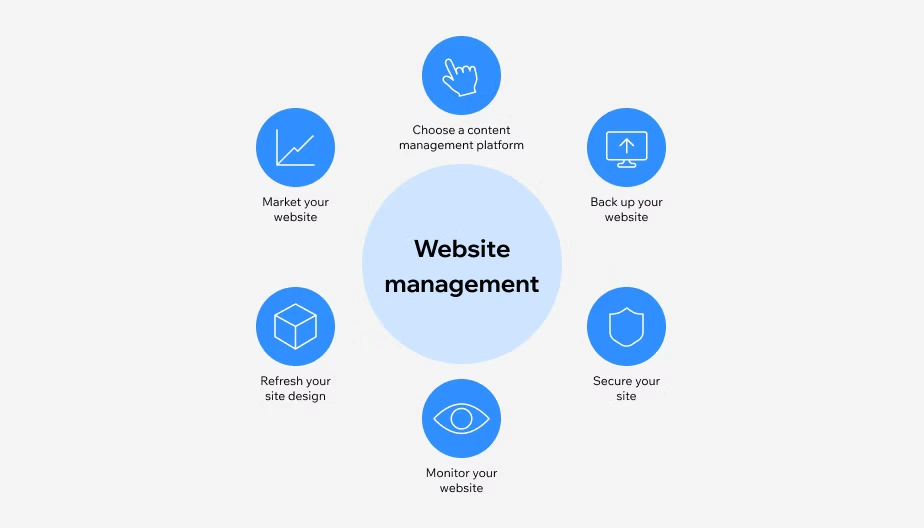
Website Management & Digital Presence
Custom web applications and transactional platforms belong to Software Development, while ongoing maintenance, performance, content, technical SEO and management of public-facing corporate websites are supported through Website Management & Digital Presence.
Explore Service →
Business Continuity Planning
Information systems may support critical organizational services, while Business Continuity Planning establishes the wider continuity requirements, recovery priorities, BIA, RTO/RPO and organizational resilience arrangements within which technology recovery should operate.
Explore Service →