
Custom Software vs Off-the-Shelf Solutions: How Organizations Can Make the Right Technology Investment
Should your organization build custom software, buy an existing system, or adapt a ready-made platform? Discover how to compare costs, functionality, security, integration, scalability and long-term value before making a software investment.
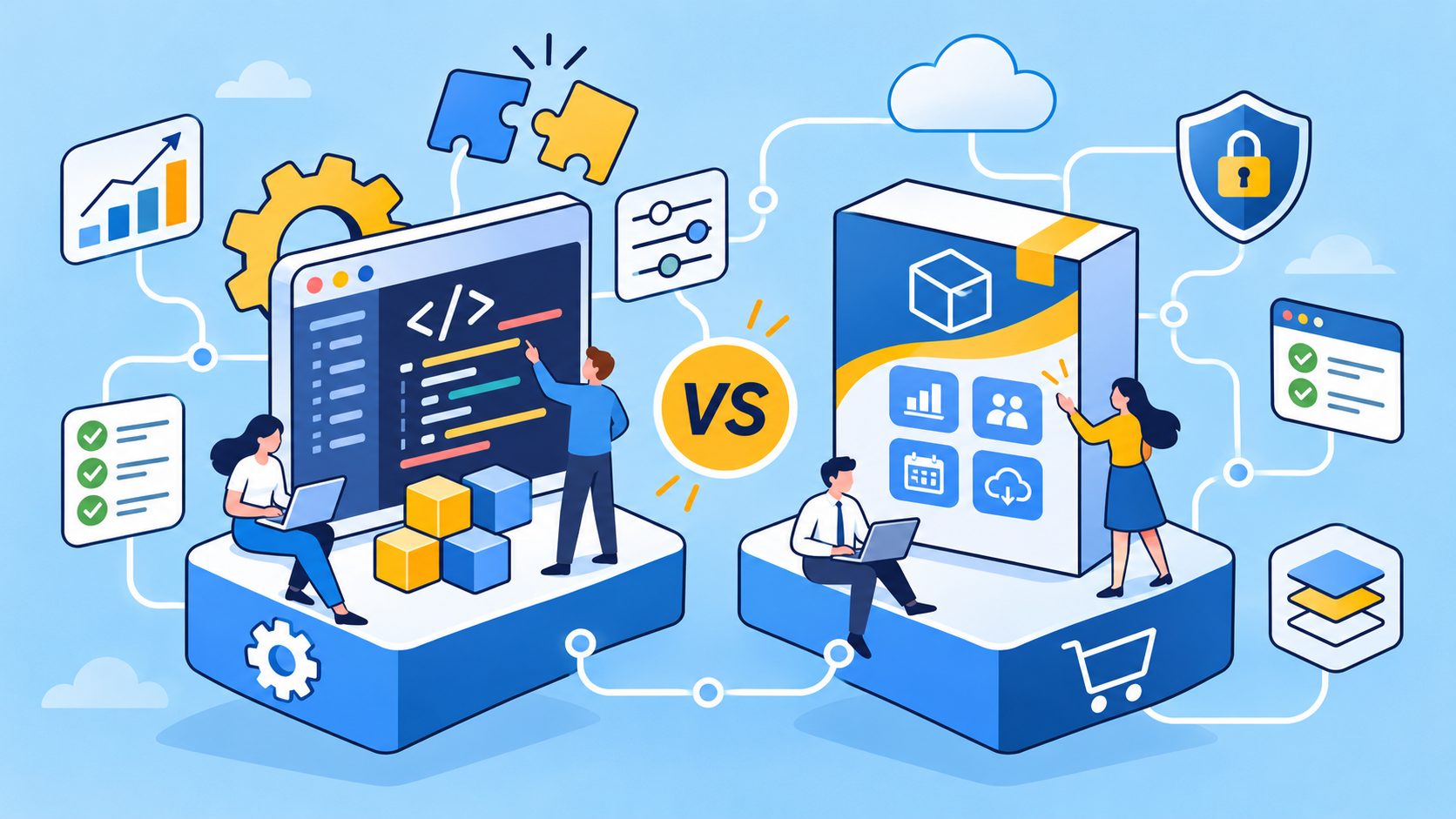
Choosing the right software is an important investment decision for any growing organization. Businesses increasingly rely on digital systems to manage sales, inventory, finances, customers, employees and management reporting.
However, as operations become more complex, organizations face a critical question: Should they invest in custom software, purchase an existing solution or adapt a ready-made platform?
The answer depends on business requirements, implementation costs, integration needs, security, scalability and long-term sustainability. This article provides a practical guide to making an informed software investment decision.
1. Understanding the Three Software Options
1.1 Custom Software Development
Custom software is designed and developed to meet the specific operational requirements of an organization.
For example, a retail business operating several branches may require an integrated system for point-of-sale transactions, stock transfers, inventory control, payment reconciliation and management reporting.
Advantages:
- Alignment with unique business processes.
- Flexibility to introduce new features.
- Greater control over system integration and functionality.
- Potential ownership of developed source code, depending on contractual terms.
Limitations:
- Potentially higher initial development costs.
- Longer implementation periods.
- Dependence on technical expertise and ongoing maintenance.
1.2 Off-the-Shelf Software
Off-the-shelf software consists of existing applications developed for organizations with common operational requirements. Examples include accounting packages, payroll systems and customer relationship management applications.
Advantages:
- Generally faster deployment for standard requirements.
- Established functionality and documentation.
- Vendor-supported updates and maintenance, subject to agreed terms.
- Potentially lower initial expenditure.
Limitations:
- Limited flexibility for specialized workflows.
- Recurring subscription or licensing fees.
- Possible dependence on vendor decisions and available integrations.
1.3 Configurable or Hybrid Solutions
A hybrid approach involves configuring or extending an existing platform instead of developing an entirely new system.
For example, an organization may retain its accounting software while developing a specialized inventory application that exchanges information with it.
This approach can reduce unnecessary development, although integration compatibility and maintenance responsibilities must be carefully evaluated.
2. Begin With Business Requirements
One of the most common software investment mistakes is choosing technology before identifying the operational problem it should solve.
Before selecting a solution, management should establish:
- The business problem and its operational consequences.
- Essential functions and user requirements.
- Existing processes requiring automation or improvement.
- Integration with current systems.
- Security, privacy and regulatory requirements.
- Expected transaction volumes and organizational growth.
- Available implementation and maintenance budgets.
For example, a business requesting a point-of-sale system may discover that its main challenge is inaccurate inventory information across branches. Purchasing a basic sales application without stock synchronization may fail to address the actual problem.
Effective software investment begins with requirements analysis, not product selection.
3. Comparing the Available Solutions
The following comparison highlights important considerations when evaluating custom, commercial and hybrid software.
| Factor | Custom | Off-the-Shelf | Hybrid |
|---|---|---|---|
| Business fit | Designed for specific needs | Standard functionality | Adaptable |
| Deployment | Development required | Often faster | Configuration required |
| Initial cost | May be higher | Often lower | Variable |
| Flexibility | Potentially high | Vendor-dependent | Moderate to high |
| Maintenance | Developer or internal team | Vendor-supported | Shared responsibilities |
These comparisons describe general tendencies rather than guaranteed outcomes. A well-established commercial system may outperform poorly developed custom software, particularly in reliability, security and maintenance.
4. Consider the Total Cost of Ownership
Software investment decisions should consider more than the initial purchase or development price.
Total Cost of Ownership (TCO) includes acquisition, implementation, data migration, hosting, licensing, maintenance, upgrades, training and transition costs.
Illustrative Five-Year Cost Comparison
Consider two hypothetical software alternatives:
| Cost Component | Custom (KES) | Commercial (KES) |
|---|---|---|
| Development or setup | 1,500,000 | 250,000 |
| Integration and migration | 250,000 | 200,000 |
| Training | 100,000 | 100,000 |
| Annual support and operations | 250,000 | 500,000 |
| Five-year total | 3,100,000 | 3,050,000 |
Note: These amounts are hypothetical and do not represent actual market quotations. The totals include five years of recurring expenditure but exclude inflation, discounting and exceptional costs.
Although the custom application has a higher initial cost, its annual operating expenditure is lower in this example. Over five years, the commercial solution remains slightly less expensive.
However, management must also consider functionality, operational benefits, future modifications and risks before deciding.
The cheapest initial quotation is not necessarily the most economical long-term investment.
5. Security, Integration and Sustainability
Regardless of the software acquisition approach, organizations should evaluate three essential areas.
Cybersecurity and Data Protection
Software should provide appropriate authentication, access controls, data protection, audit trails, backup procedures and security updates.
Organizations operating in Kenya should assess applicable obligations under the Data Protection Act, 2019, and relevant sector-specific requirements.
Integration and Scalability
Business systems often need to exchange information across sales, inventory, accounting, payments and reporting functions.
Organizations should assess available APIs, data compatibility and the ability to accommodate additional users, branches and transaction volumes.
Maintenance and Vendor Dependence
Management should establish who maintains the software, how technical incidents are resolved and whether organizational data can be exported when changing suppliers.
Source-code ownership, software licensing, documentation and support arrangements should be clearly addressed in contractual agreements.
6. A Practical Software Investment Decision Framework
Organizations can compare alternatives using a structured evaluation framework.
| Evaluation Criterion | Suggested Weight |
|---|---|
| Business requirements | 25% |
| Total cost of ownership | 20% |
| Security and compliance | 20% |
| Integration capability | 15% |
| Maintenance and support | 10% |
| Implementation feasibility | 10% |
| Total | 100% |
Each alternative can be rated against documented criteria using a consistent scoring scale.
These weights are illustrative and should be adjusted to organizational priorities. Mandatory requirements, including legal compliance and minimum security standards, should be evaluated separately as pass/fail conditions.
The framework supports informed management judgement rather than replacing technical, financial or professional assessment.
7. Practical Applications Across Organizations
SMEs and retail businesses: Standard accounting needs may be satisfied by commercial software, while specialized inventory, branch management and fulfilment requirements may justify additional development.
SACCOs and financial institutions: Software decisions should prioritize transaction integrity, member information security, regulatory compliance and reliable financial reporting.
Schools and universities: Existing student management platforms may support routine administration, while specialized academic or institutional processes may require configuration or integration.
NGOs and public institutions: Systems may need to support data collection, programme monitoring, records management, approvals and institutional reporting.
In every sector, the final decision should follow documented requirements and an assessment of available alternatives.
8. Questions to Ask Before Investing
Before approving software procurement or development, management should answer the following questions:
- What specific business problem will the software solve?
- Can an existing product meet our essential requirements?
- What will the system cost throughout its expected useful life?
- How will organizational data be protected?
- Can the application integrate with existing systems?
- Who will maintain and support the software?
- What happens if the supplier relationship ends?
- How will implementation success be measured?
Clear answers reduce procurement uncertainty and improve the likelihood of selecting a sustainable solution.
Conclusion
The decision between custom software and off-the-shelf solutions should be guided by business needs, available resources, technical requirements and long-term organizational value.
Commercial software may be appropriate where operational requirements are standard and suitable products already exist.
Custom development may provide greater value where specialized processes require functionality that available products cannot adequately support.
Hybrid approaches may offer a practical balance between established software capabilities and organizational flexibility.
The best software investment is not the most sophisticated or the cheapest. It is the solution that reliably addresses organizational needs and delivers sustainable business value.
How Global Signature Consultancy Can Support Organizations
Global Signature Consultancy supports organizations in evaluating, designing and implementing digital solutions aligned with their operational requirements.
Relevant capabilities include software requirements analysis, custom application development, management information systems, database solutions, system integration, e-commerce platforms and implementation support.
Organizations planning a software investment can begin with a structured assessment of their business requirements and available technology options.
References and Further Reading
- National Institute of Standards and Technology. (2022). Secure Software Development Framework (SSDF) Version 1.1. Official publication.
- Cybersecurity and Infrastructure Security Agency. (2024). Software Acquisition Guide for Government Enterprise Consumers. Official publication.
- Republic of Kenya. (2019). Data Protection Act, No. 24 of 2019. Kenya data protection framework.
Related Insights
Related Expertise
Explore GSC services connected to this Insight and complementary expertise that can support wider institutional outcomes.

Software Development & Information Systems
Designing and developing custom software, management information systems, web applications, databases, APIs, system integrations, e-commerce platforms and digital solutions tailored to organizational requirements.
Explore Service →
Digital Transformation & ICT Consulting
Digital Transformation & ICT Consulting helps organizations define digital strategy, technology governance, architecture and transformation priorities, while Software Development & Information Systems translates approved requirements into implemented digital applications and systems.
Explore Service →
Data Analytics & Artificial Intelligence
Operational systems generate structured data that can support dashboards, advanced analytics, predictive modelling and AI-enabled decision support through GSC’s Data Analytics & Artificial Intelligence expertise.
Explore Service →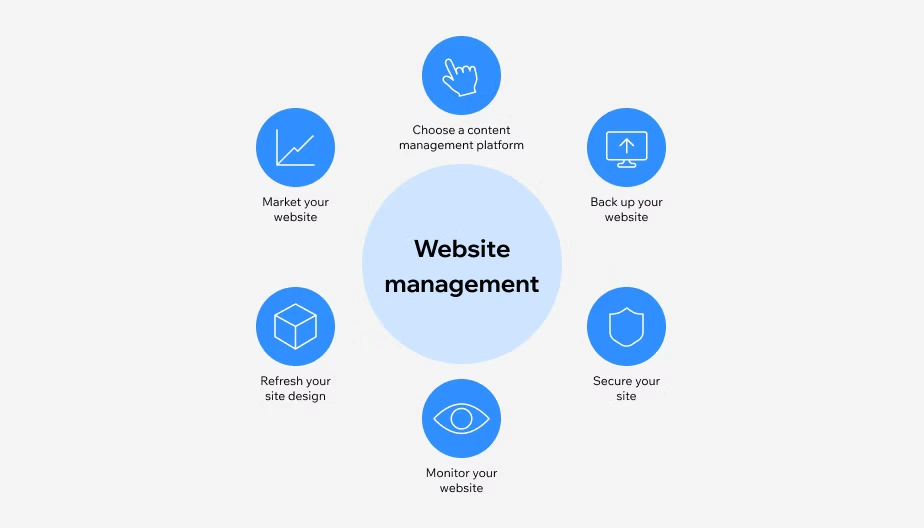
Website Management & Digital Presence
Custom web applications and transactional platforms belong to Software Development, while ongoing maintenance, performance, content, technical SEO and management of public-facing corporate websites are supported through Website Management & Digital Presence.
Explore Service →
Business Continuity Planning
Information systems may support critical organizational services, while Business Continuity Planning establishes the wider continuity requirements, recovery priorities, BIA, RTO/RPO and organizational resilience arrangements within which technology recovery should operate.
Explore Service →